
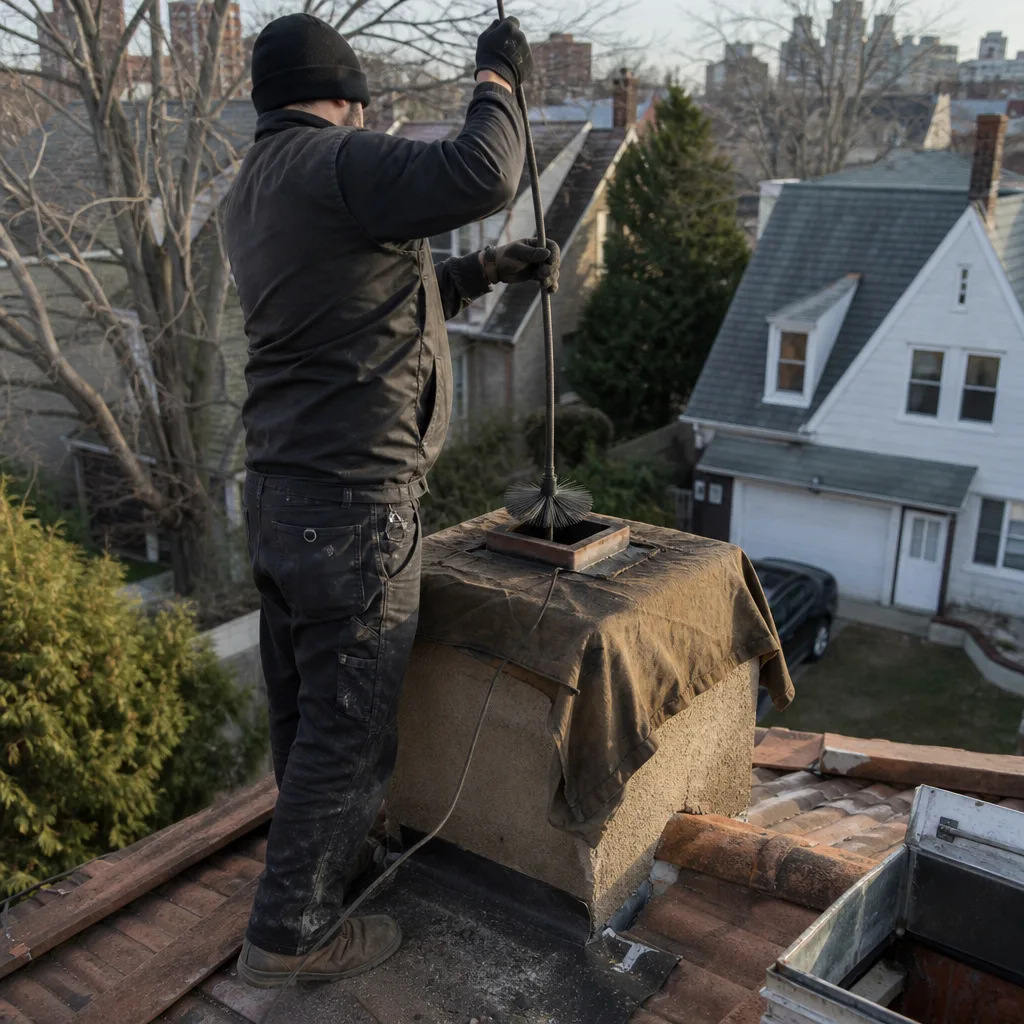
Level 1 sweep and inspection to the NFPA 211 annual standard - flue, crown, cap, and flashing checked and photographed
Chimney sweep logs do not sweep chimneys. They loosen some creosote - which then falls where a brush and vacuum still have to collect it.
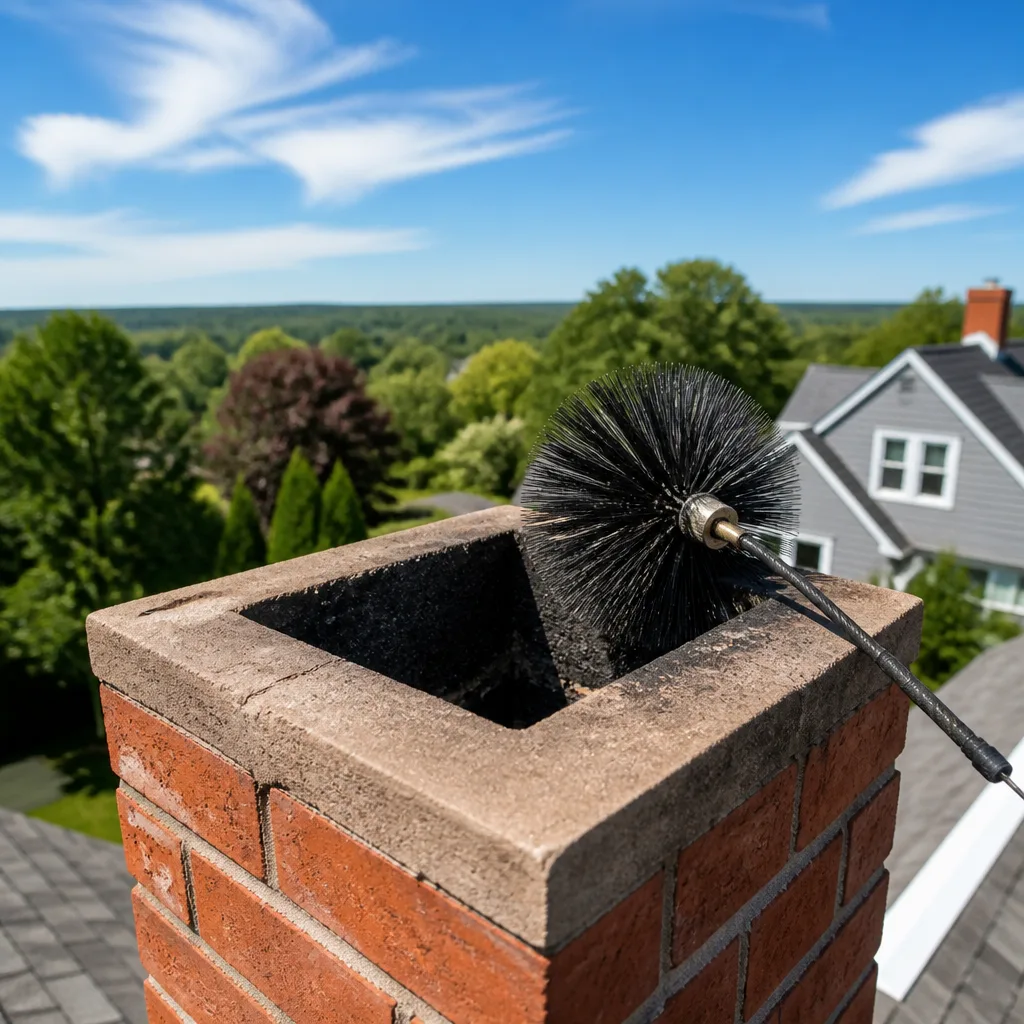
Caps & crowns
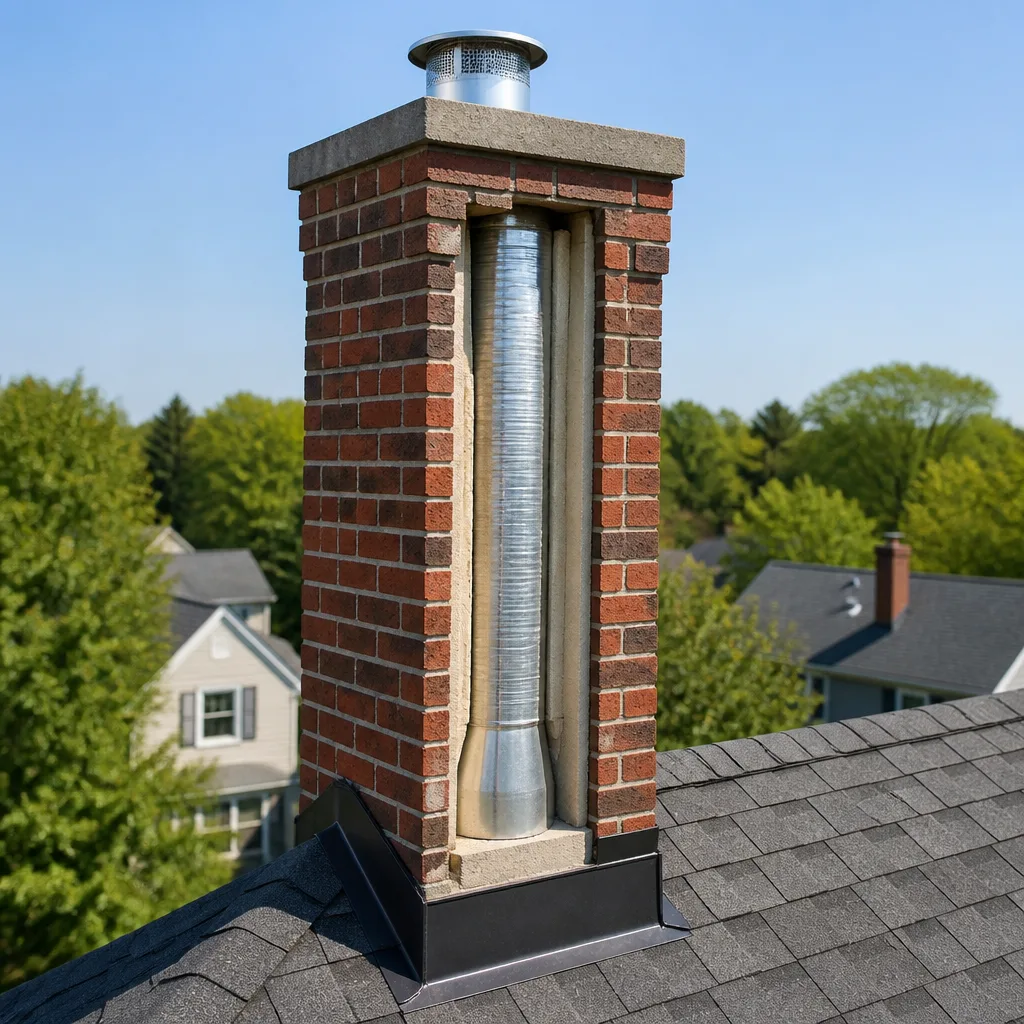
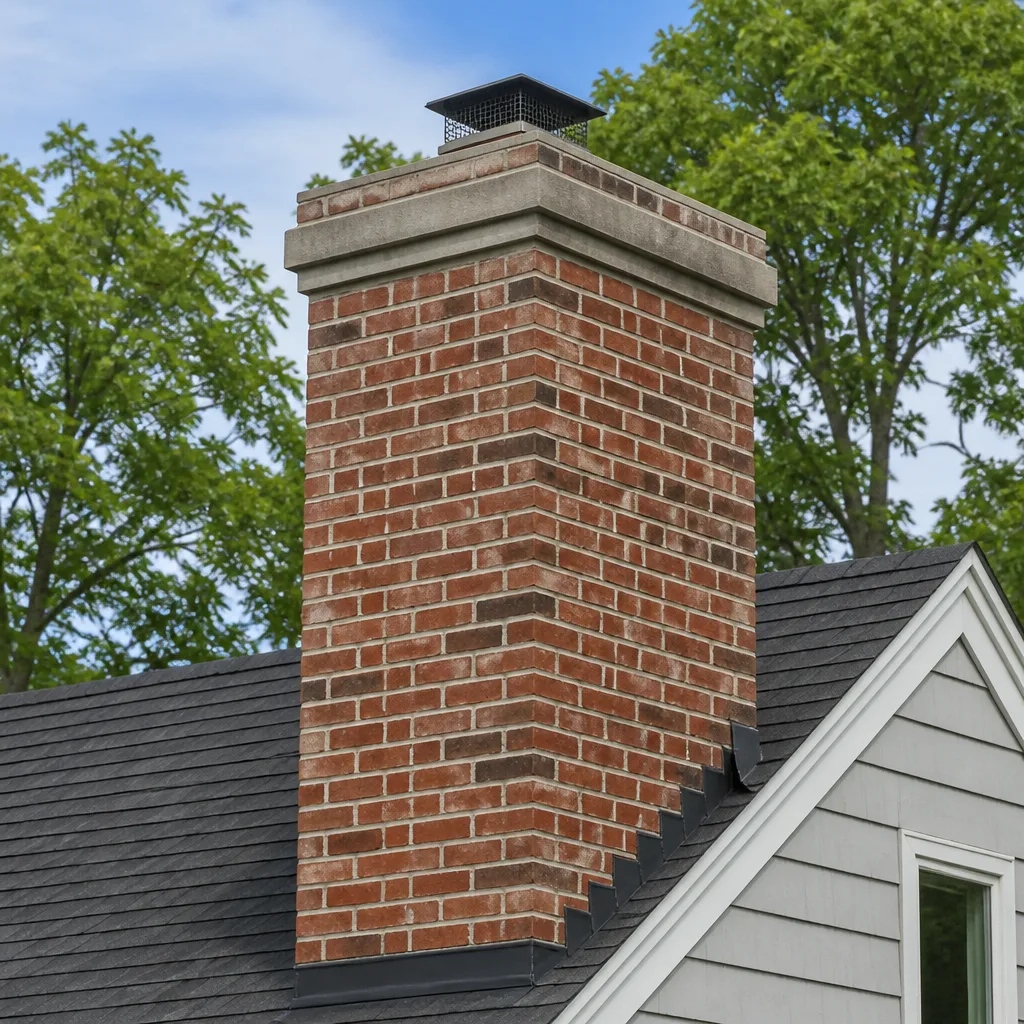
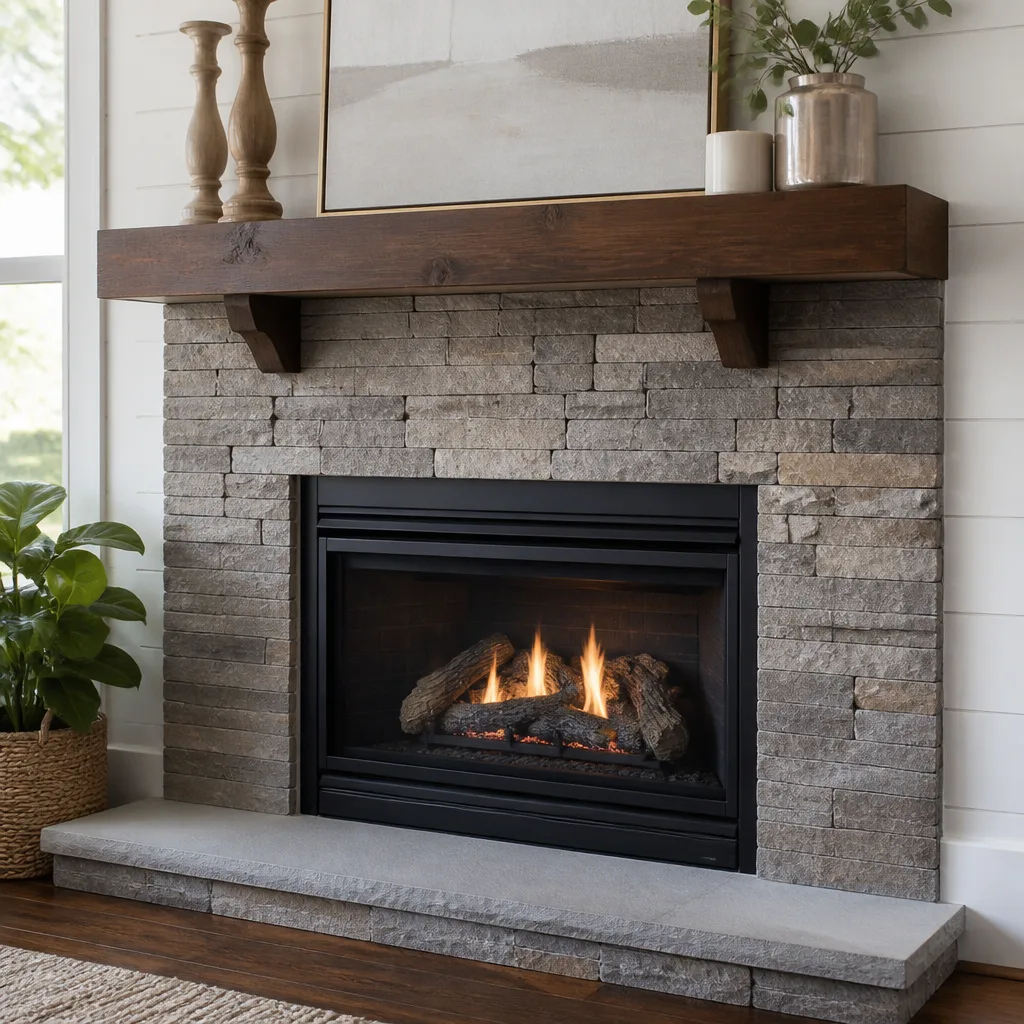
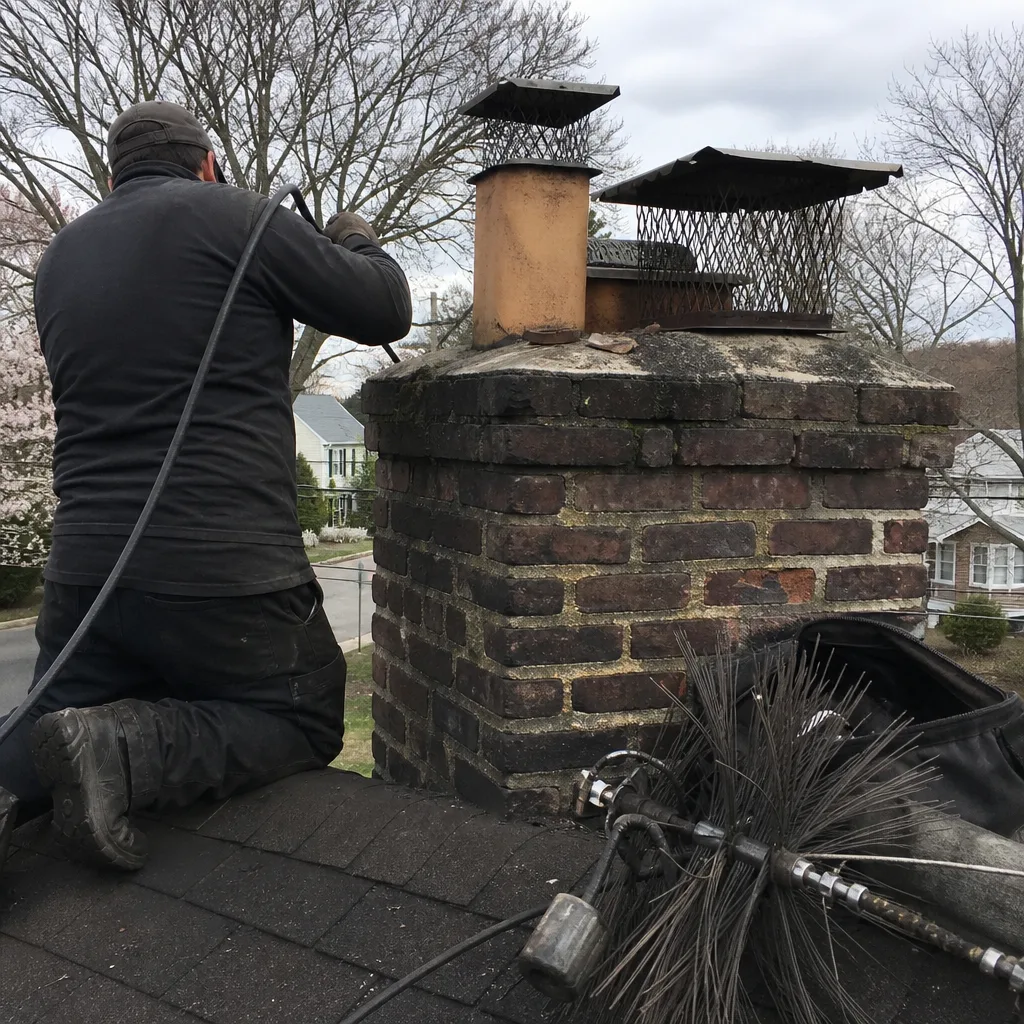 Before
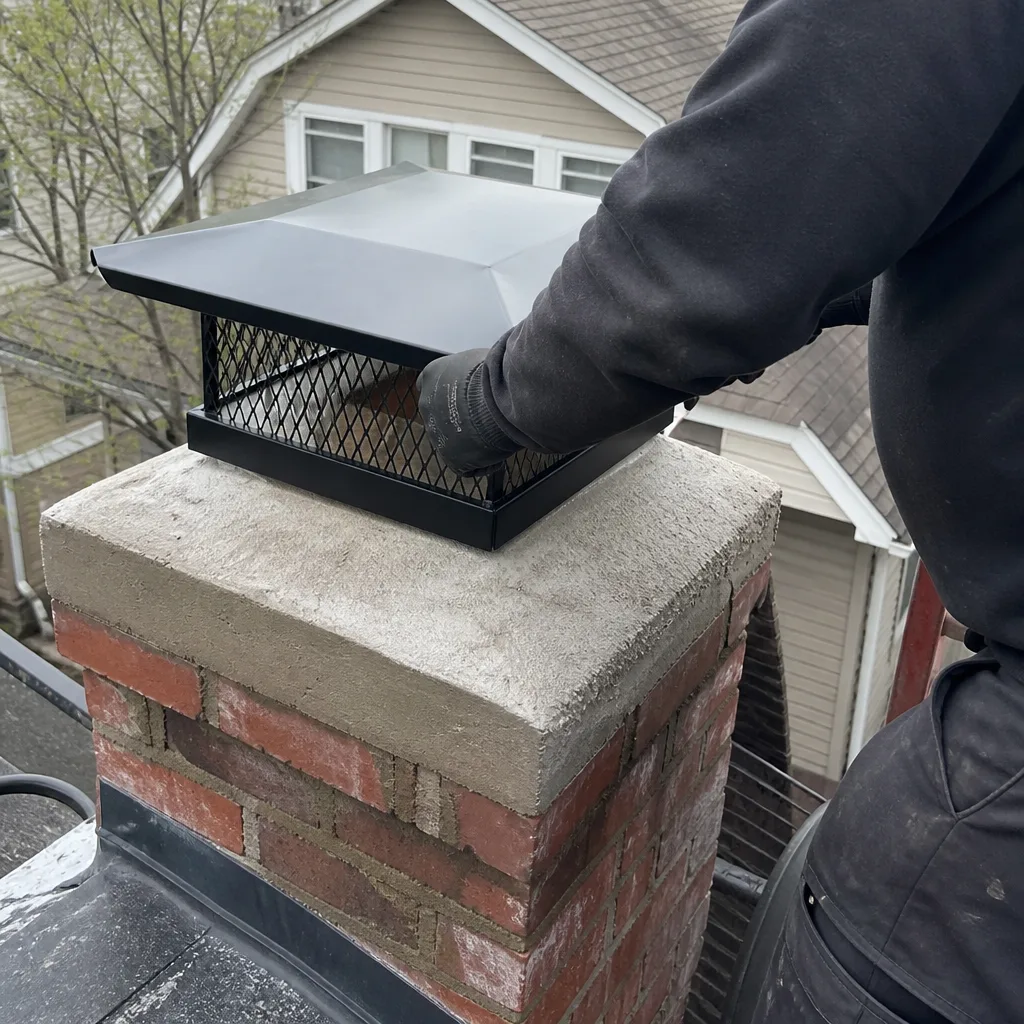 After
After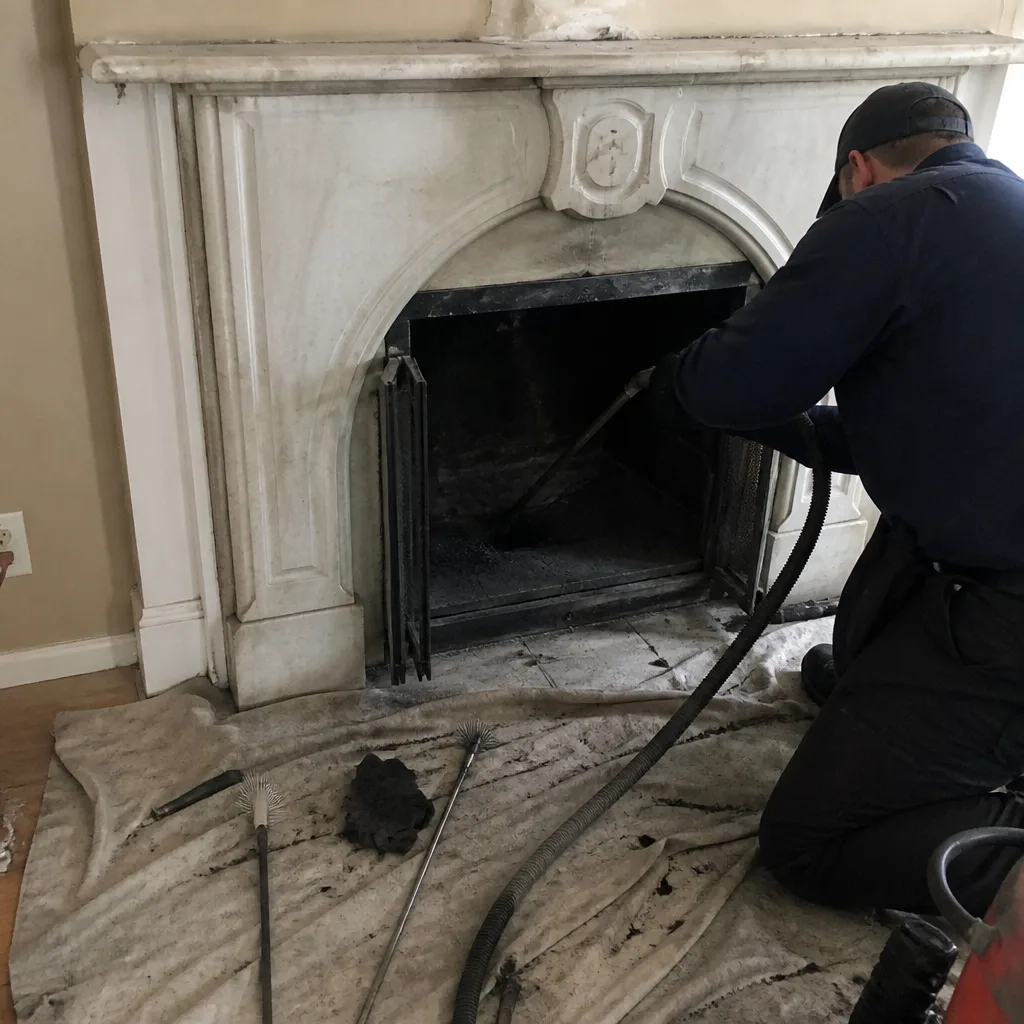 Before
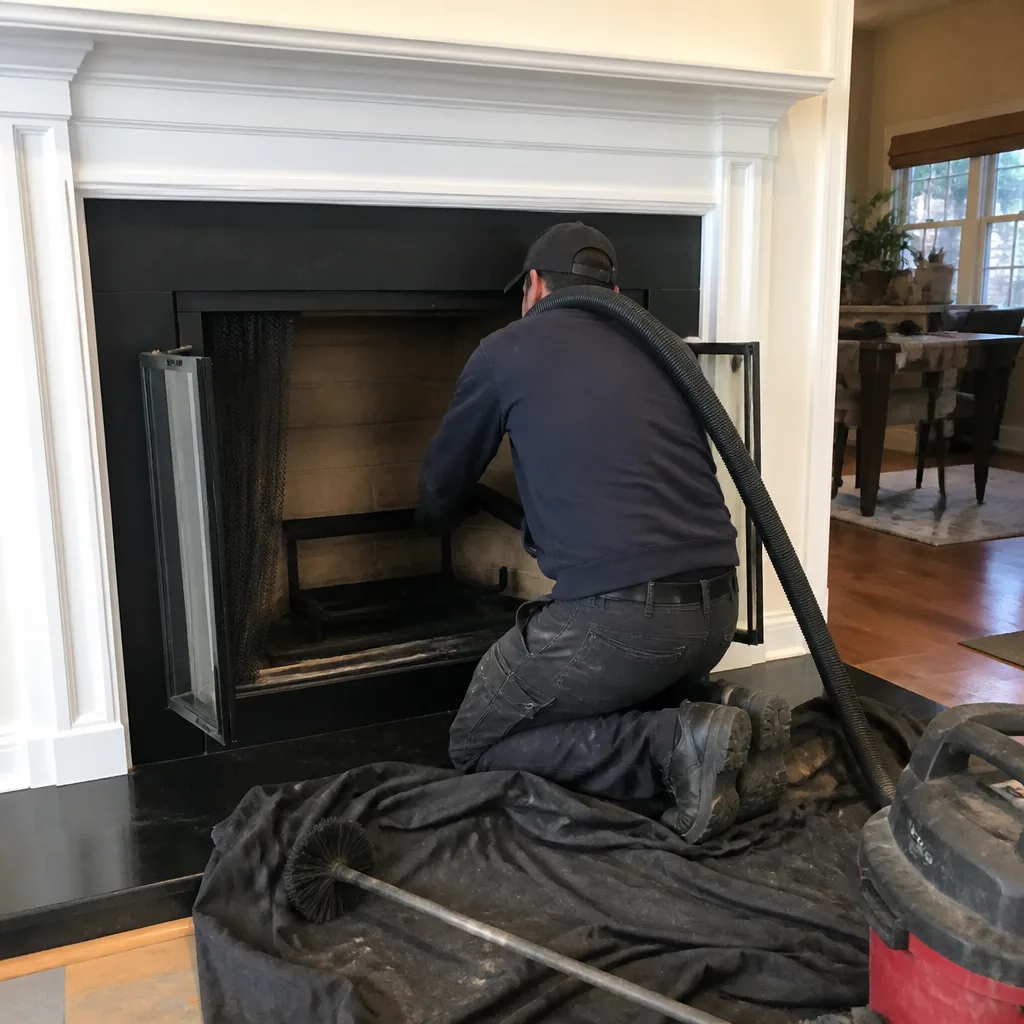 After
After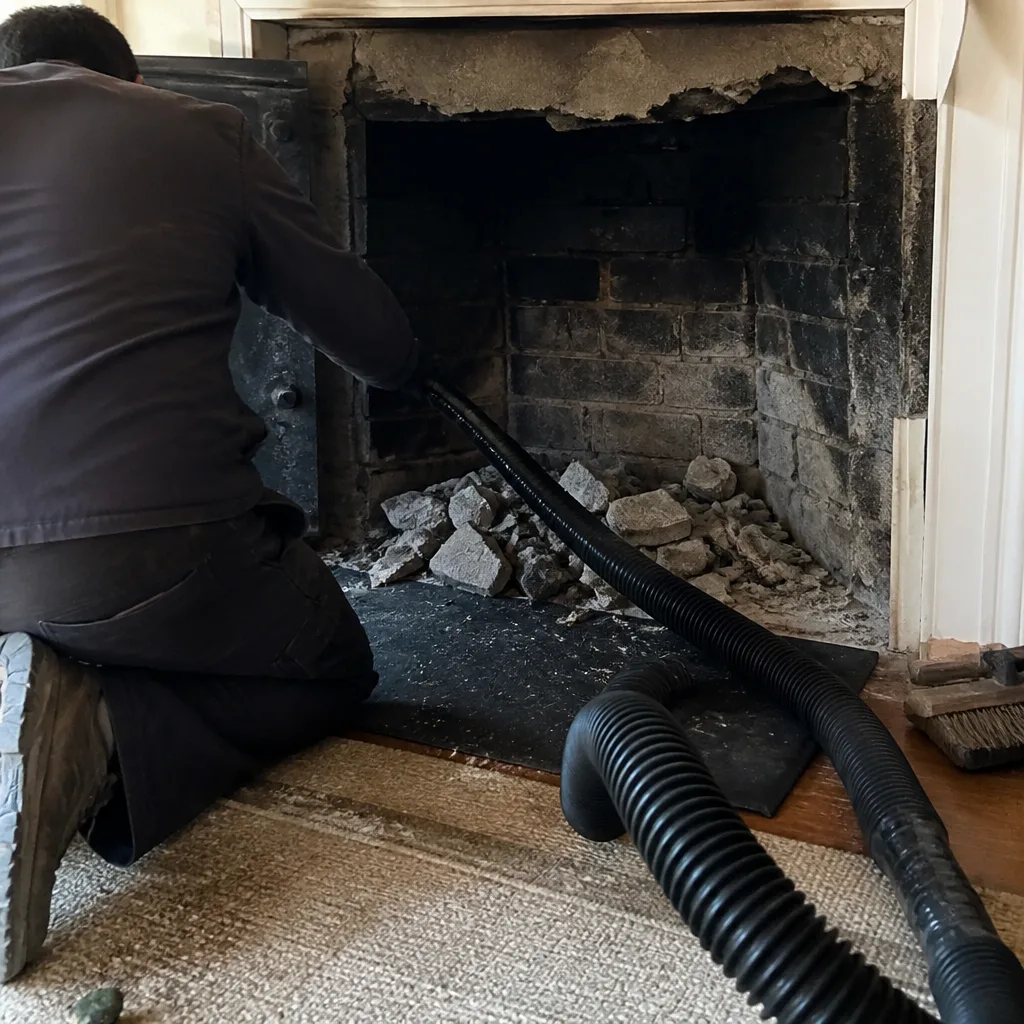 Before
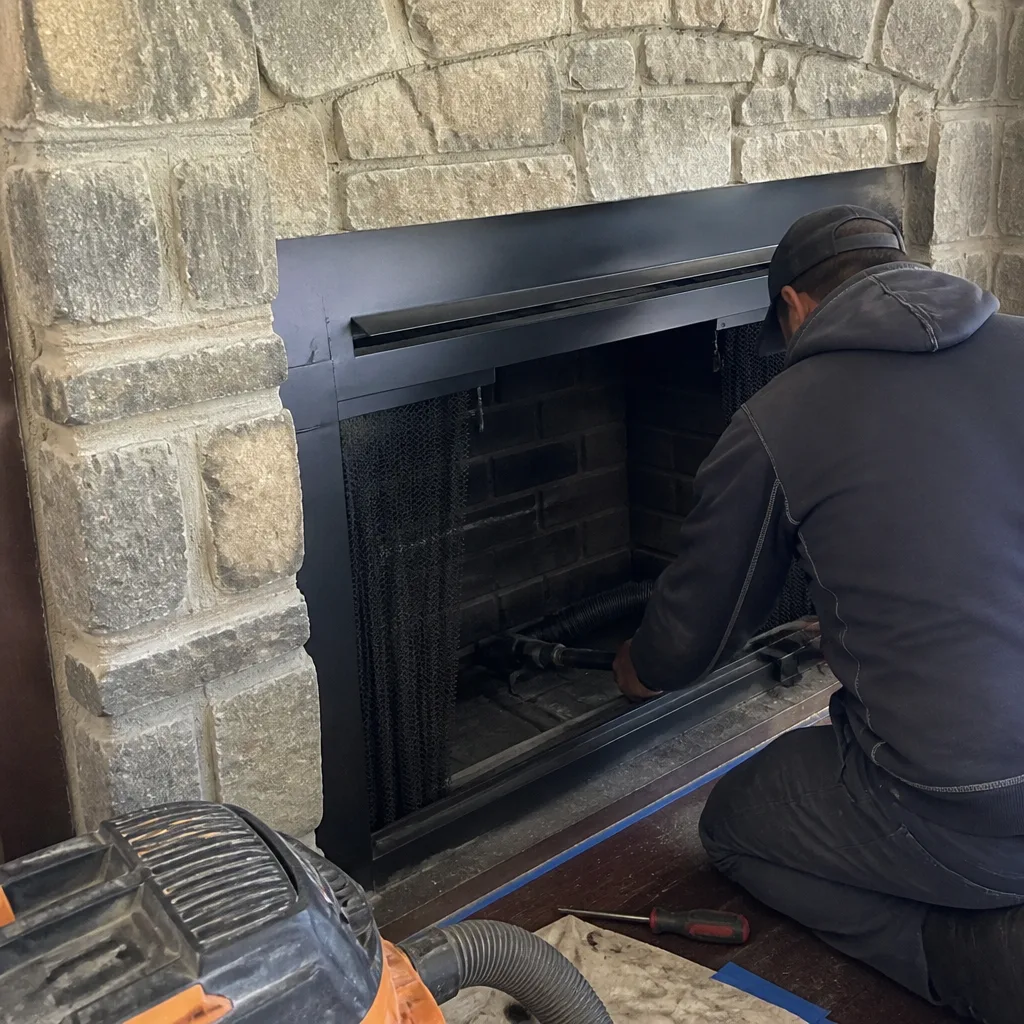 After
AfterMortar Repointing in Manhattan, NY
Mortar repointing in Manhattan typically costs between $400 and $1,800, depending on how much of the chimney stack needs attention and how deteriorated the existing joints are. Most jobs are completed in a single visit, and every one starts with a written price before any work begins. If your chimney’s mortar joints are cracking, crumbling, or receding noticeably from the brick face, repointing is our Chimney Repair services that stops water from getting into the masonry and turning a moderate problem into a costly rebuild.
Manhattan chimneys take a beating that most masonry in other climates doesn’t. The freeze-thaw cycle here – temperatures swinging from the low teens in January to the high 90s in July – pulls mortar apart over time. Add in the soot, acid rain residue, and the sheer age of the building stock across neighborhoods like the Upper West Side, Harlem, and the Village, and it’s not surprising that we find deteriorating mortar joints on the majority of chimneys we inspect in older pre-war buildings. This is core work in our Chimney Repair in Manhattan service – and it’s the repair we perform more often than almost any other.
At Level Two Chimney Manhattan, every repointing job is scoped in writing before anyone touches your chimney. You get the price, the scope, and the warranty in one document – Haven Standard Clause 1, no exceptions. Our background-checked, uniformed technicians are assigned by name, and you’ll get a text when they’re on the way. Reach us directly at (862) 319-8047 – a live person answers around the clock.
When You Need Mortar Repointing
Mortar doesn’t fail overnight. It usually degrades slowly, which means homeowners often don’t notice until a wet wall, a water stain on the ceiling near the fireplace, or a NFPA 211 Level 2 camera inspection brings it to light. Here’s what to look for:
- Receding or missing mortar joints. If the mortar between your brick courses has pulled back more than a quarter-inch from the face of the brick, water has a direct path into the chimney structure. In Manhattan’s brownstone buildings, we often find joints that have receded a full inch or more on exposed south- and west-facing chimney stacks.
- Crumbling or powdery mortar. When you can scrape mortar out with a key or a finger, it’s no longer doing its job. This is spalling mortar – a term for mortar that has lost its cohesion and begun to deteriorate at a granular level.
- Horizontal cracks along the mortar bed joints. These are a common sign of freeze-thaw cycling and show up frequently on chimneys above the roofline where there’s no thermal protection from the building mass below.
- Water stains or efflorescence on the exterior brick. Efflorescence – the white mineral crust that forms on masonry surfaces – tells you water is moving through the joints and carrying dissolved salts to the face of the brick. It’s a symptom, not the disease, but it points directly at mortar failure.
- Damp smell from the fireplace or water in the firebox. Once joint gaps open enough, rain and condensation move laterally through the chimney stack and find their way into the firebox or the smoke chamber above. Repointing the exterior joints is usually the first repair to make before anything else gets worse.
- A recent Level 2 inspection that flagged exterior masonry deterioration. Since 2009, we’ve documented photo records on every chimney we touch. When our camera and our field technician’s exterior assessment both flag open joints, that’s the right time to schedule repointing – before the next hard freeze cycle does more damage.
Our Mortar Repointing Process
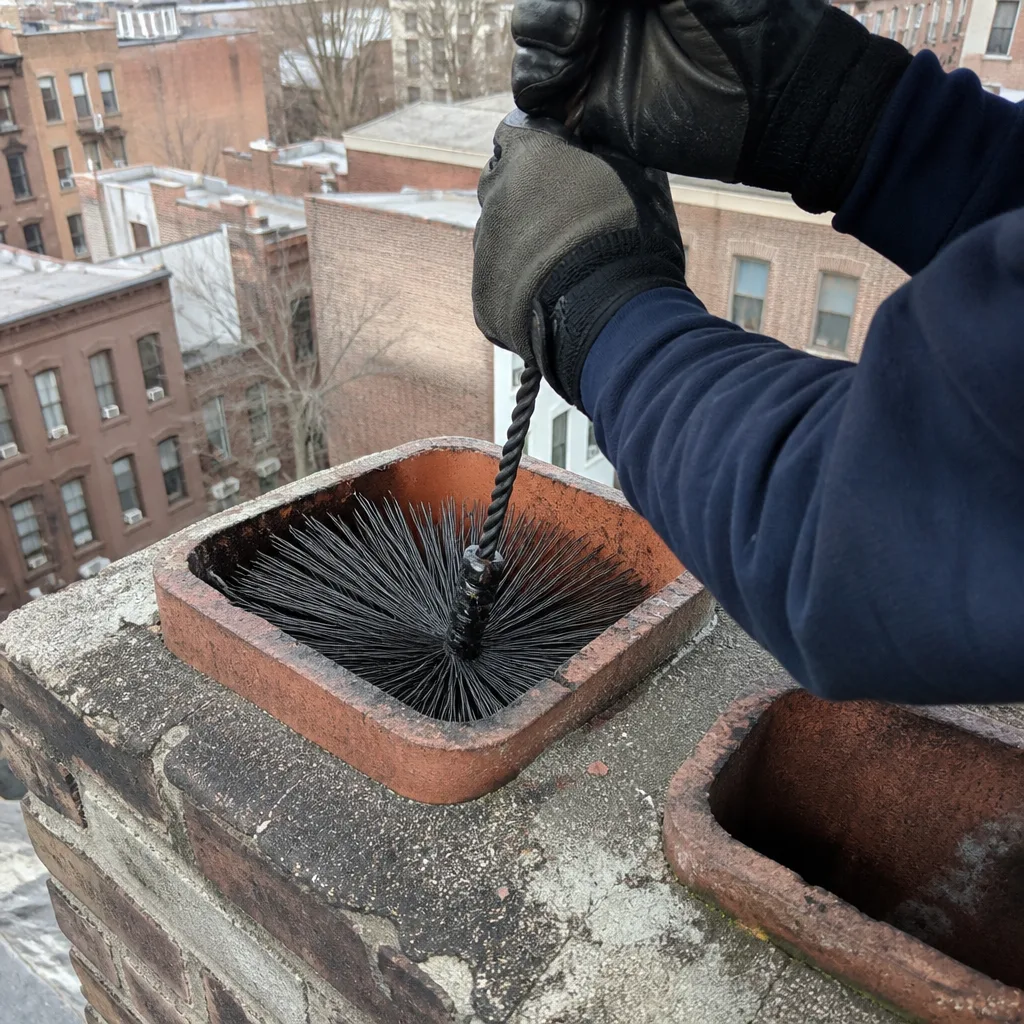
Repointing done right takes longer than most homeowners expect – and that’s a good thing. Rushing the joint preparation or the mix ratio is exactly what produces new mortar that fails in two or three seasons instead of fifteen or twenty. Here is how we do it:
- Written scope and photo documentation before work starts. Our technician performs a visual and camera-assisted exterior assessment of the chimney stack, identifies which courses and faces need repointing, and photographs the existing condition. You receive a written price, written scope, and written warranty – Haven Standard Clause 1 – before any tools come out. This isn’t a formality. It’s the entire basis for the 365-Day Done Right Promise that backs every job.
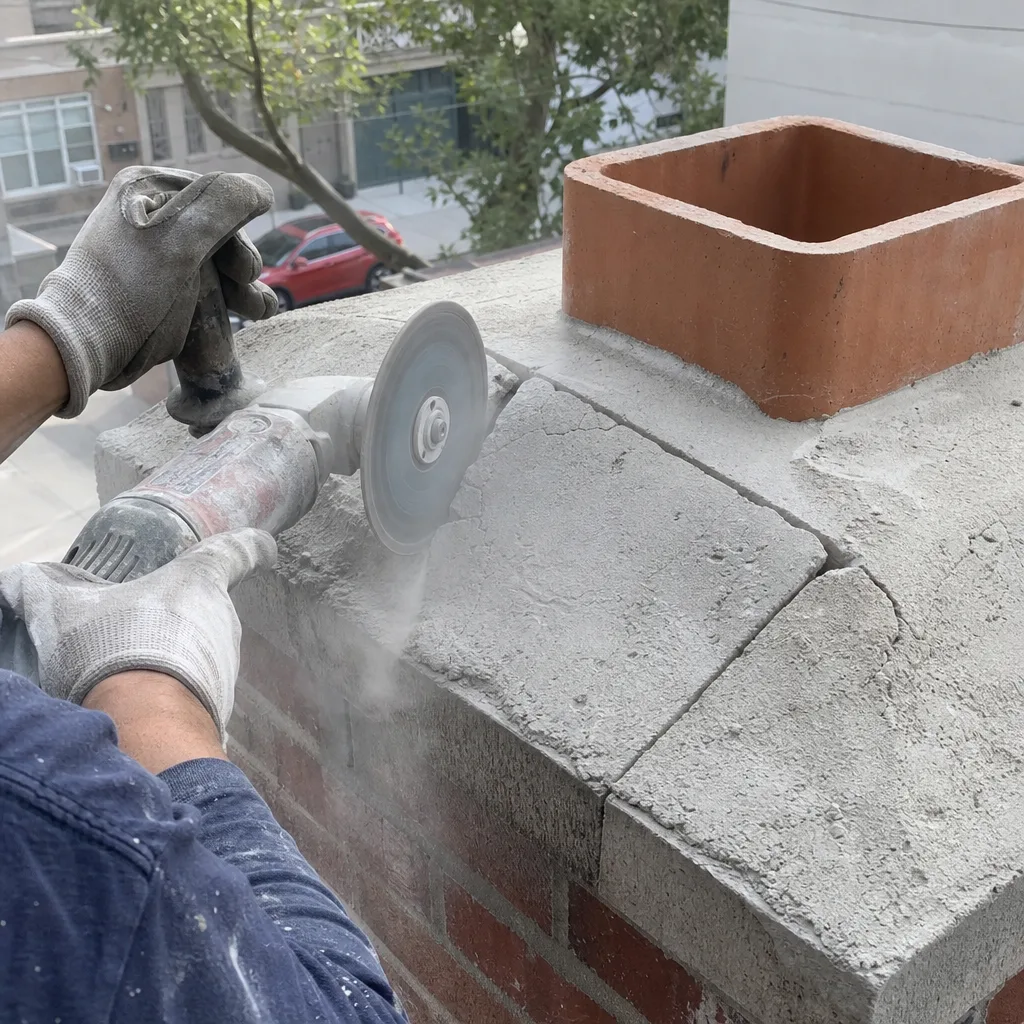
- Joint preparation – cutting and raking out degraded mortar. We cut back deteriorated mortar to a minimum depth of three-quarters of an inch, typically using an angle grinder with a tuck-pointing blade or a cold chisel and hammer on more delicate historic brick that can’t tolerate vibration. Getting the depth right matters: shallow repointing – sometimes called “skim pointing” – bonds to the old mortar face rather than the brick sides, and it fails quickly. We cut to clean masonry on both sides of the joint.
- Dust and debris removal. All loose material is vacuumed and brushed from the open joints. Any residual dust left in the cavity reduces mortar adhesion. This step is unglamorous but skipping it is why some repointing jobs fail early.
- Mortar mix selection matched to the existing masonry. This is where experience matters most. New mortar must not be stronger than the surrounding brick. On Manhattan’s older pre-war structures – particularly the limestone-trimmed brick stacks common in the West Village and Carnegie Hill – a high-Portland mix will cause the brick faces to spall as the harder mortar transfers stress into the softer masonry unit. We match the mortar type (Type N, Type S, or a lime-based blend for historic work) to what’s already there, and we source materials from suppliers like Gelco and Olympia Chimney specifically to keep the spec consistent and the price controlled.
- Packing and tooling the new mortar joints. New mortar is packed in layers for deeper voids, then struck and tooled to match the original joint profile – usually a concave or V-profile on Manhattan stacks. Tooling isn’t cosmetic. A compressed, properly profiled joint sheds water. A flat, untooled joint holds it.
- Final photo record and written documentation. Once the mortar has cured enough for a clean photograph, we document every repaired face. Under Haven Standard Clause 4, a photo record is included on every job as standard – not an optional add-on. You receive the completed record when the job closes, and it stays in your file.
BeforeAfterMortar Repointing Pricing in Manhattan
Mortar repointing in Manhattan runs higher than the national average. Labor costs in the city, the logistics of rooftop access on taller residential buildings, and the age of the existing masonry all push prices up relative to suburban markets. Here are honest ranges based on what we actually quote on Manhattan jobs:
| Scope | Typical Range |
|---|---|
| Spot repointing – isolated joint failure on one or two faces | $400 – $650 |
| Partial repointing – one full face of the chimney stack | $650 – $1,100 |
| Full chimney stack repointing – all exposed faces above roofline | $1,100 – $1,800 |
| Historic or soft-brick repointing requiring lime-based mix and hand tools only | $1,400 – $2,200+ |
What moves the number: the height of the chimney above the roofline, whether a scaffold or ladder is sufficient or if a lift is needed for a taller building, the total linear footage of joints in poor condition, and whether the existing brick is historic and requires hand tooling rather than power equipment. On pre-war brownstones in neighborhoods like Morningside Heights or Gramercy, we frequently find that the brick itself is softer than modern brick and needs a gentler mortar spec – that adds time and cost but it’s the right call for the masonry.
Every price above is what you’d see in a written quote from us – a firm number, not an estimate that grows after the tech is on your roof. If you have a written estimate from another contractor, bring it to us. We offer a free second opinion on any written quote, no strings attached.
Call (862) 319-8047 to schedule an assessment. We’ll give you a written price before any work begins.
Why Manhattan Chimneys Deteriorate Faster Than You Expect
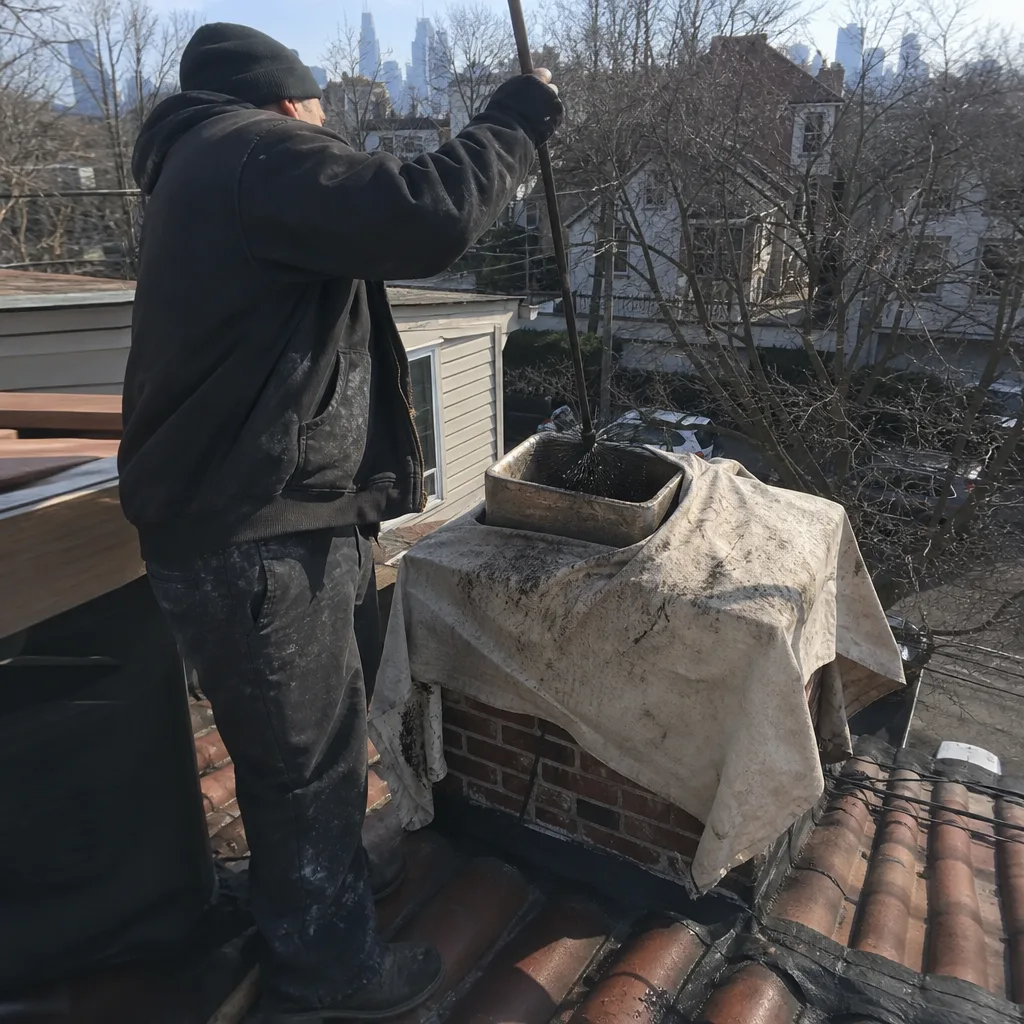
The city’s climate does more damage to mortar joints than most homeowners realize. Manhattan averages around 25 freeze-thaw cycles per winter season – days where temperatures cross the 32-degree threshold in both directions. Each cycle causes water that has seeped into a small crack to expand as it freezes and contract as it thaws, slowly wedging the joint apart. Over a decade, that process turns a hairline crack into a gap wide enough to let significant water in.
On top of the freeze-thaw problem, Manhattan’s air quality history has left acid deposits on older masonry that accelerate the breakdown of traditional lime-based mortars. We regularly see chimneys on buildings constructed in the 1890s through 1930s – common across the Upper East Side, Inwood, and Tribeca – where the original mortar has fully carbonated and is essentially dust held in place by habit. That’s not an exaggeration. When the original mortar is gone, the brick above the roofline is essentially stacked without adhesive, and any lateral wind load or seismic event is a stability concern.
Repointing at the right time – when joints are receding but before brick faces start to spall or loosen – is what keeps a manageable repair from becoming a partial rebuild. The difference in cost between repointing and rebuilding a section of chimney stack is typically $3,000 to $8,000 or more on a Manhattan job. Catching it early pays.
What the Haven Standard Means for Your Repointing Job
We operate under the Haven Standard because it removes the ambiguity that tends to produce bad outcomes for homeowners. On a repointing job, that means three specific things:
- Written price before work starts (Clause 1). You won’t see a number change after our technician is on your roof. The written scope locks the price.
- Photo documentation on every visit (Clause 4). You receive before-and-after photographs of every joint area addressed. This matters for insurance records and for future inspections – if your building’s co-op board or a future buyer asks about chimney maintenance history, you have a documented record.
- 365-Day Done Right Promise. If the repointing fails or was done incorrectly within a year of the job, we make it right. That’s in writing, stamped on every job under the Haven Standard.
Since 2009, Level Two Chimney Manhattan has completed more than 38,000 chimney inspections and cleanings under these terms. The written-price-before-work standard was the practice we built on from day one – not a policy we adopted when customers started asking for it.
FAQs – Mortar Repointing
How long does mortar repointing last on a Manhattan chimney?
A properly done repointing job, with mortar matched correctly to the existing masonry, typically lasts 20 to 30 years on a Manhattan chimney. The biggest factor in longevity is the mortar specification: mortar that’s too hard for the surrounding brick will cause the brick faces to spall before the mortar fails, which turns a repointing job into a more costly repair. We match the mix to what’s already there, which is why we assess the existing masonry before quoting rather than applying a one-size formula. Call (862) 319-8047 if you want us to assess what your chimney actually needs – estimates are written and free.
Is repointing the same as tuckpointing?
Repointing and tuckpointing are related but not identical. Repointing is the general term for removing deteriorated mortar and replacing it with fresh mortar. Tuckpointing is a specific finish technique, most common on older decorative masonry, where a thin contrasting line of putty is applied over the new mortar joint to create the visual impression of a very fine, precise joint. On functional chimney work in Manhattan, we repoint – tuckpointing in the decorative sense is more common on historic facade restoration. If your chimney stack was originally finished with a decorative joint profile, we document it in the written scope and match it.
Can I skip repointing if the chimney looks okay from the ground?
Ground-level inspection misses most mortar deterioration. Joints that look intact from a sidewalk often show significant recession when you’re at rooftop level with a flashlight – and the condition of joints above the roofline, where the chimney is fully exposed to weather, is almost never visible from below. A NFPA 211 Level 2 inspection, which includes a camera scan and a close exterior assessment, is the only reliable way to know what the mortar joints actually look like. We’ve found chimneys on Park Avenue and in Hell’s Kitchen that looked clean from street level and needed full stack repointing when we got up close. Call (862) 319-8047 to schedule an inspection – the written report tells you exactly what you have.
Do I need a permit for mortar repointing in Manhattan?
In most cases, mortar repointing on a residential chimney in Manhattan does not require a Department of Buildings permit – it’s considered ordinary repair and maintenance of existing masonry. Where permits are required is when the work involves structural repair to the chimney above a certain scope, or when the building is a landmarked property that triggers Landmarks Preservation Commission review. If your building is in a historic district – common in the West Village, Brooklyn Heights, or Carnegie Hill – the mortar color and mix specification may need to match the original for LPC compliance. We flag this in the written scope when it applies so there are no surprises.
Key Takeaways
- Mortar repointing in Manhattan typically runs $400 to $1,800 for residential chimney stacks, depending on scope and access.
- Manhattan’s freeze-thaw cycle and older building stock mean mortar deteriorates faster here than in most markets – catching it early is the cost-effective move.
- Mortar spec must match the existing masonry. Wrong-mix repointing causes brick spalling and fails early.
- Every Level Two job comes with a written price before work starts, a photo record when it’s done, and the 365-Day Done Right Promise.
- Ground-level inspection doesn’t tell you what your mortar joints actually look like. A Level 2 camera inspection does.
- Repointing is part of a full Chimney Repair in Manhattan program – it’s rarely the only thing worth checking when we’re on your roof.
Schedule Mortar Repointing in Manhattan
If your chimney’s mortar joints are showing any of the signs described above – or if you simply haven’t had a close inspection in the last few years – call us at (862) 319-8047. A live person answers every call, any hour. We’ll schedule an assessment, give you a written price before any work begins, and document the full condition of your chimney in writing and photographs. No surprises. That’s how every job works at Level Two Chimney Manhattan, and it has been since 2009.
Written by Corrine Halstead, Owner at Level Two Chimney Manhattan, serving Manhattan.