
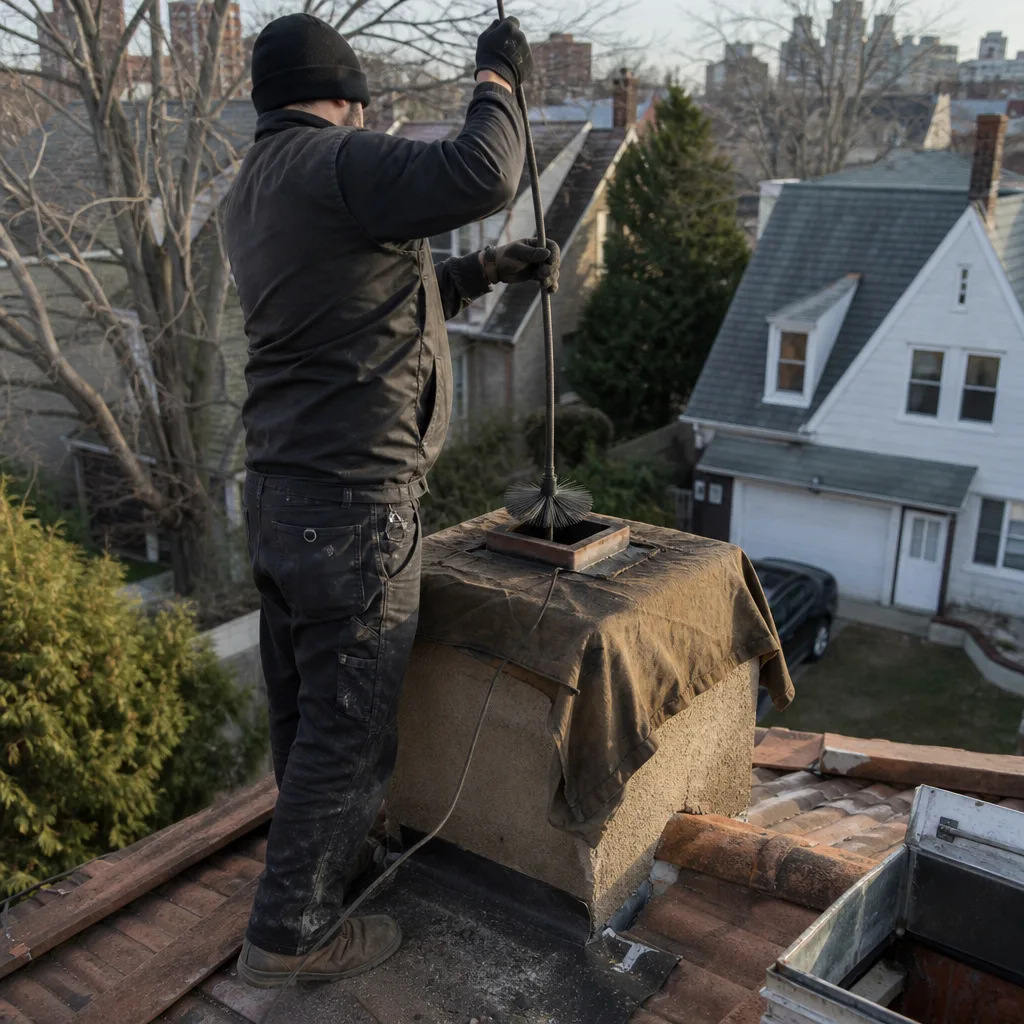
Level 1 sweep and inspection to the NFPA 211 annual standard - flue, crown, cap, and flashing checked and photographed
Chimney sweep logs do not sweep chimneys. They loosen some creosote - which then falls where a brush and vacuum still have to collect it.
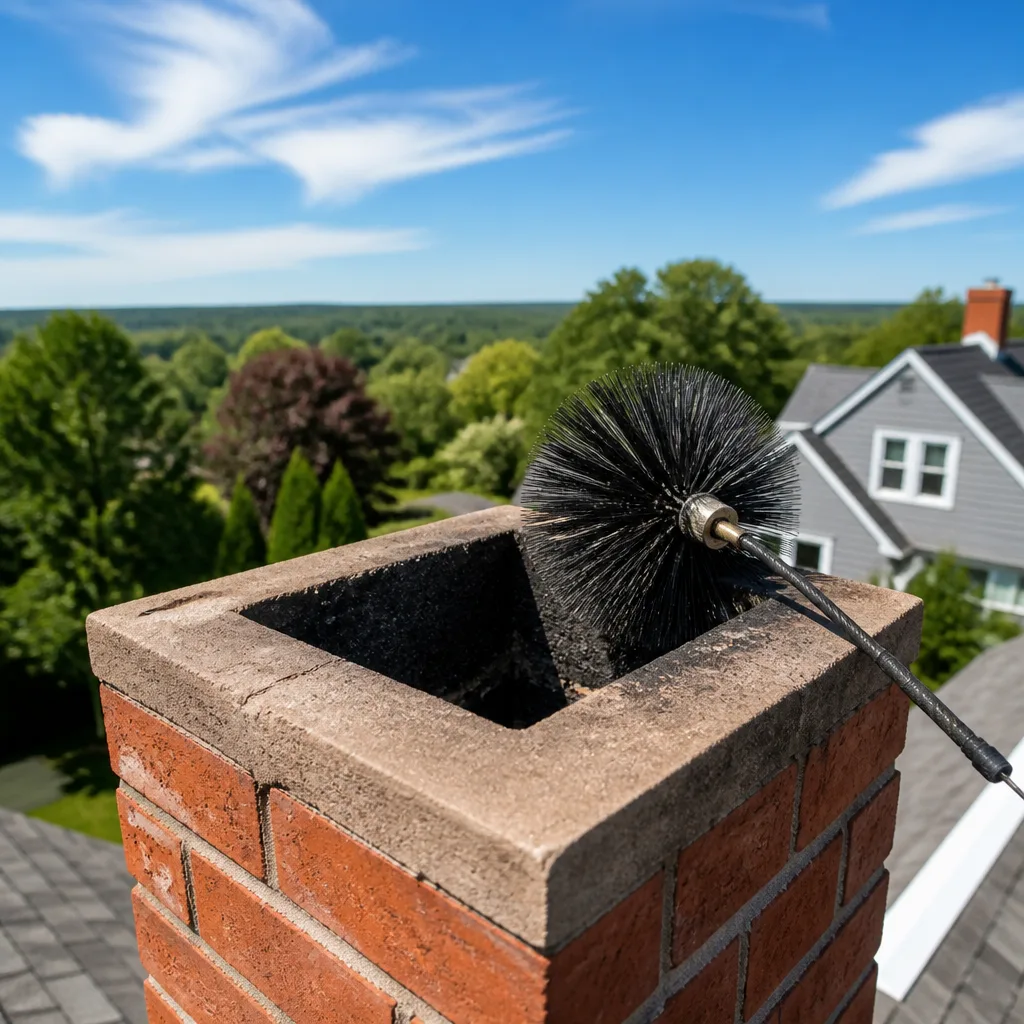
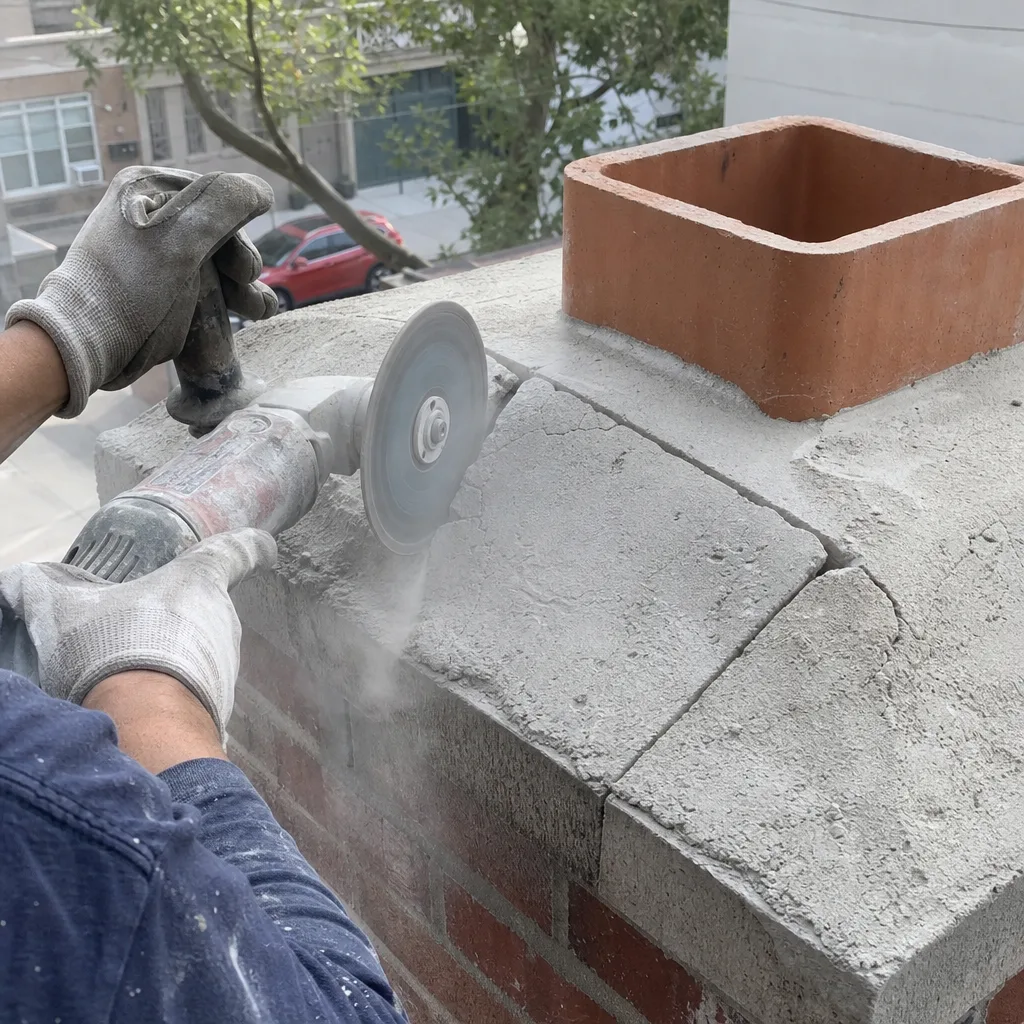
Caps & crowns
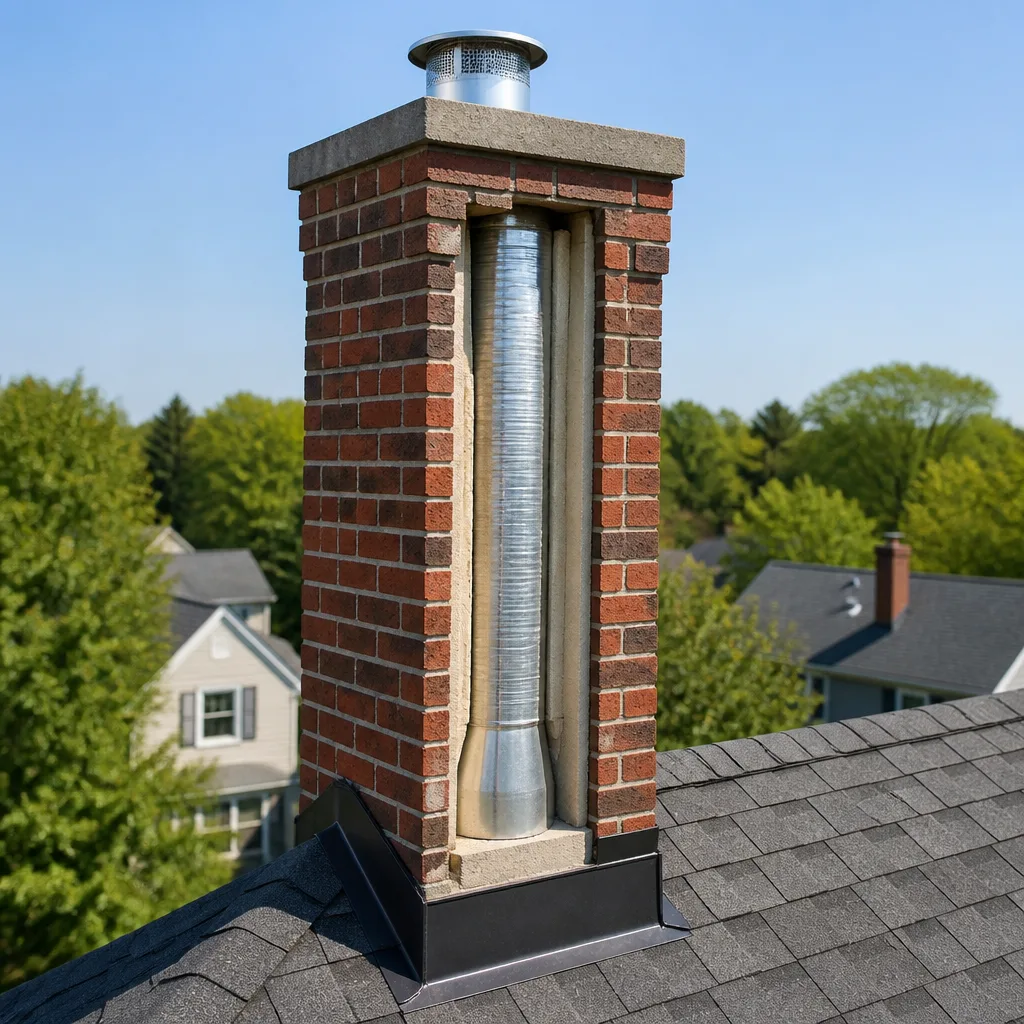
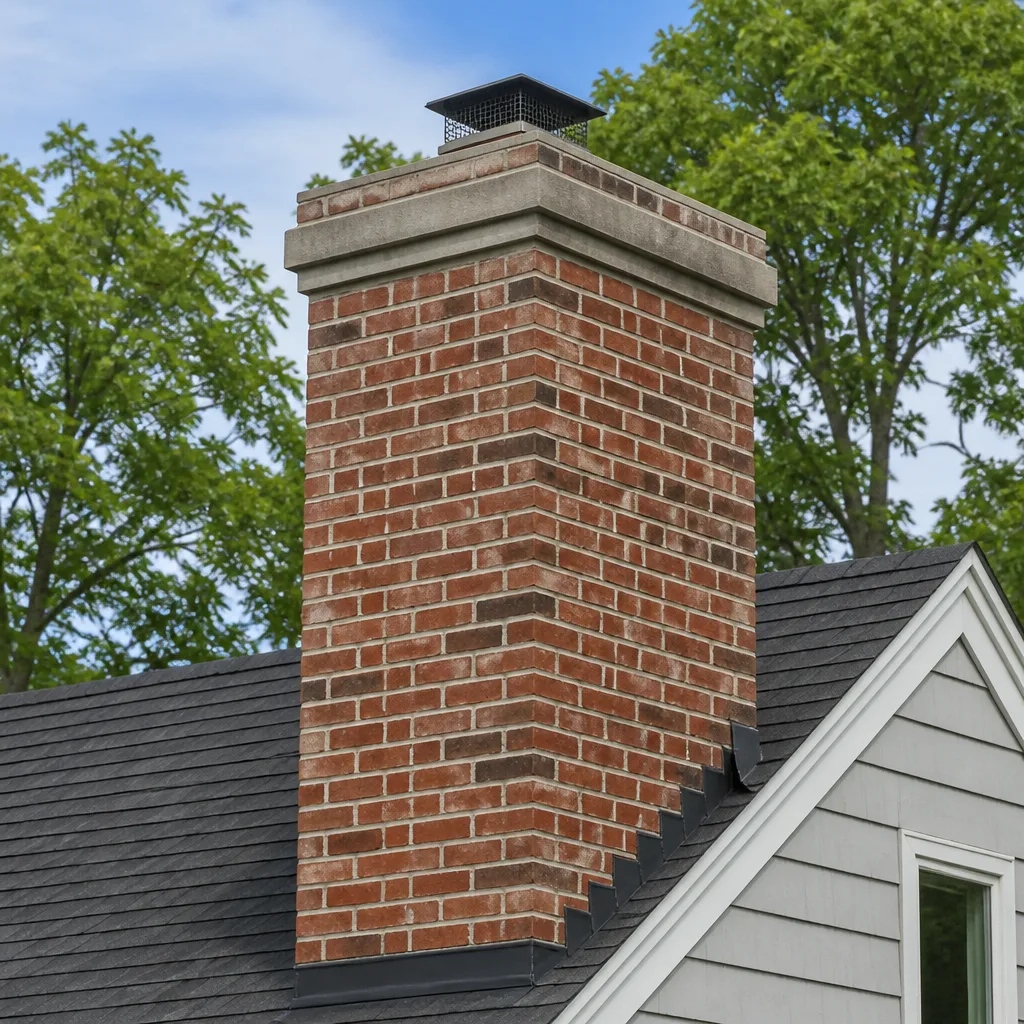
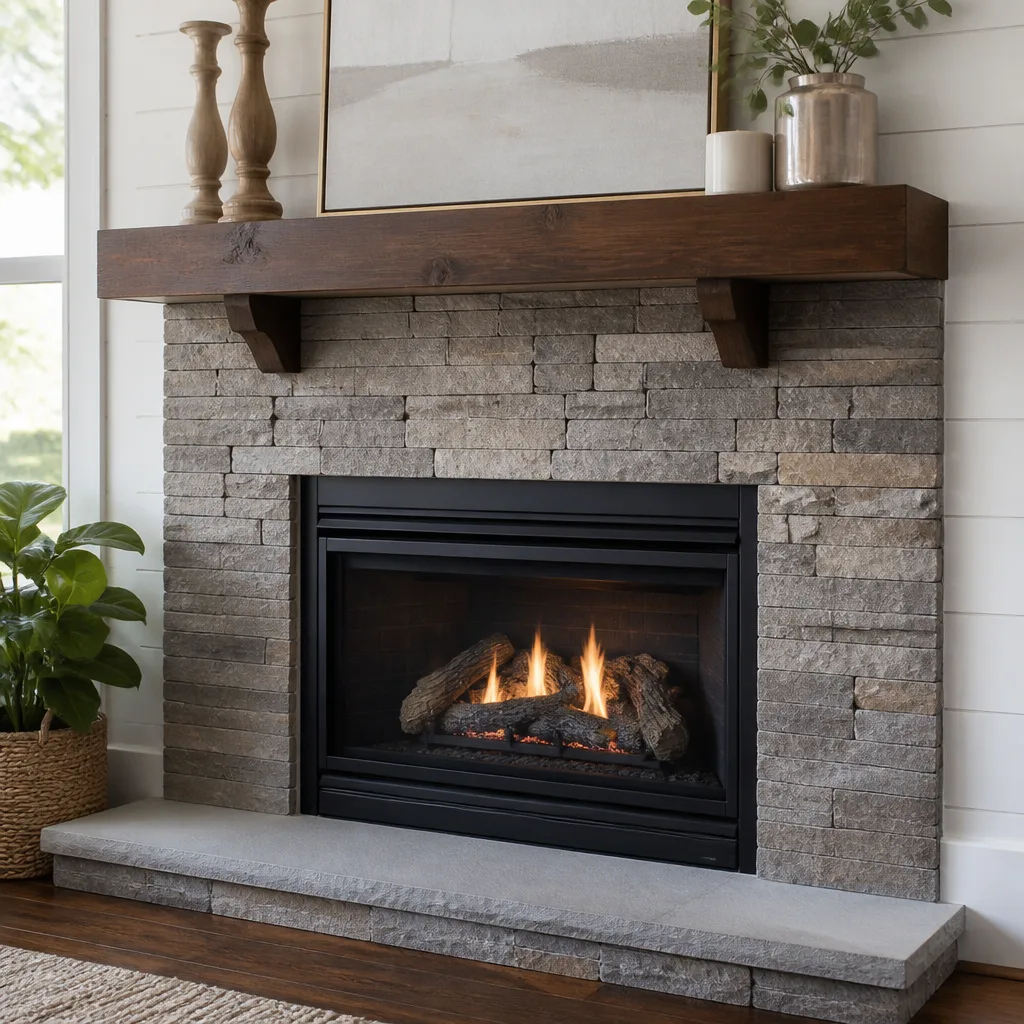
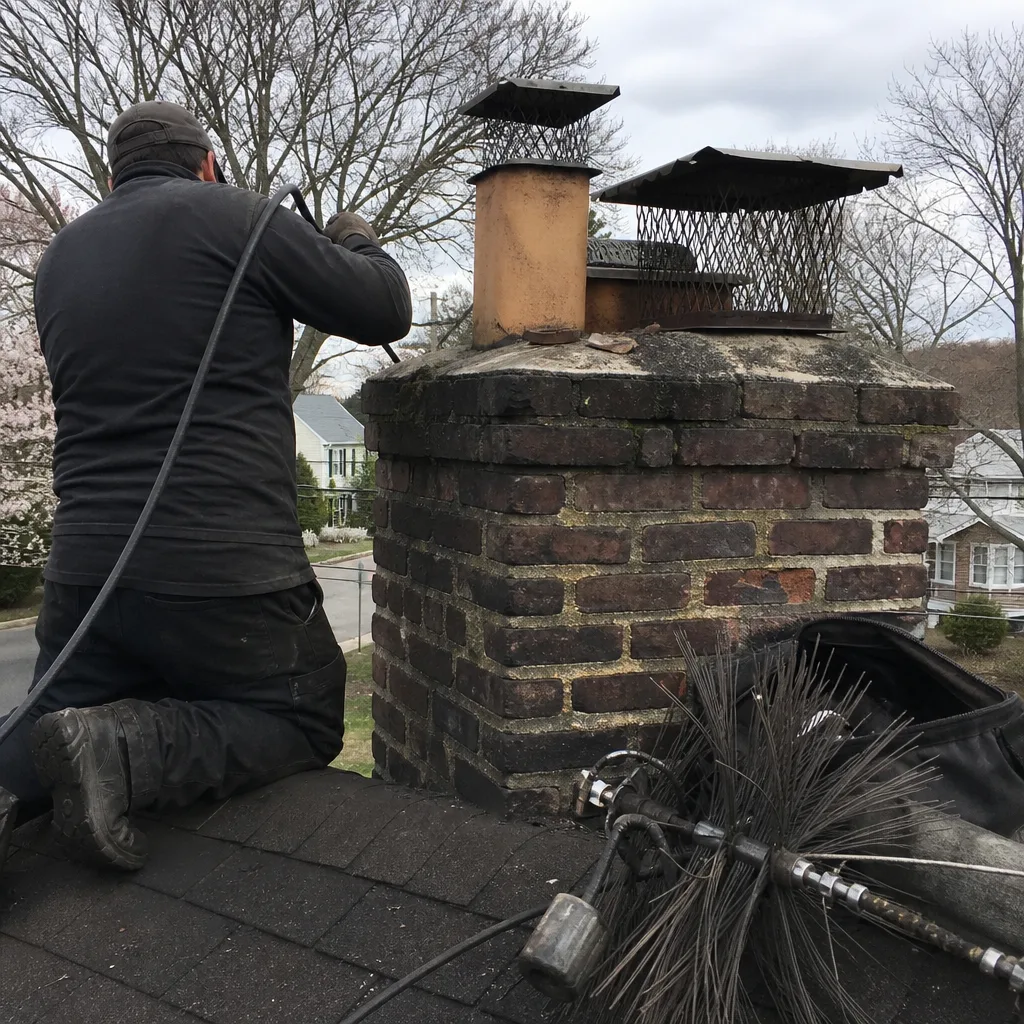 Before
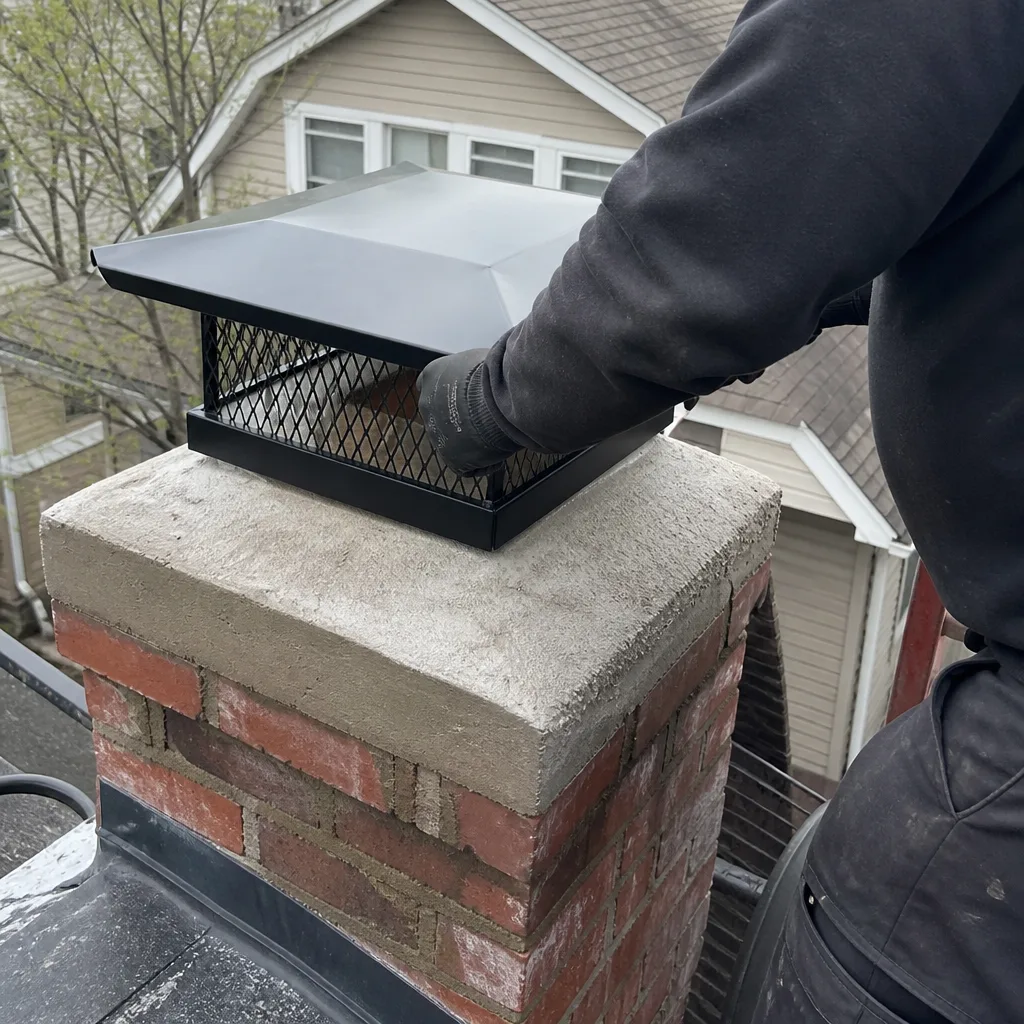 After
After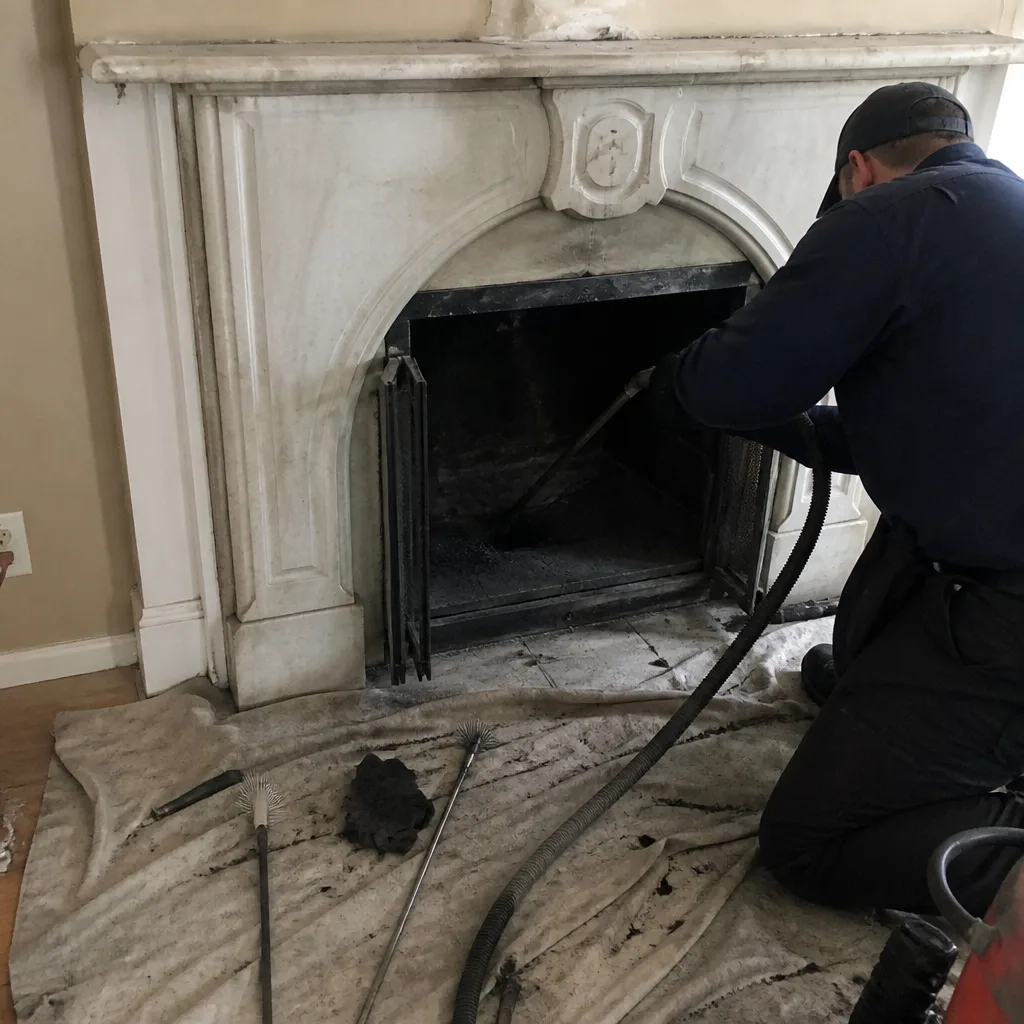 Before
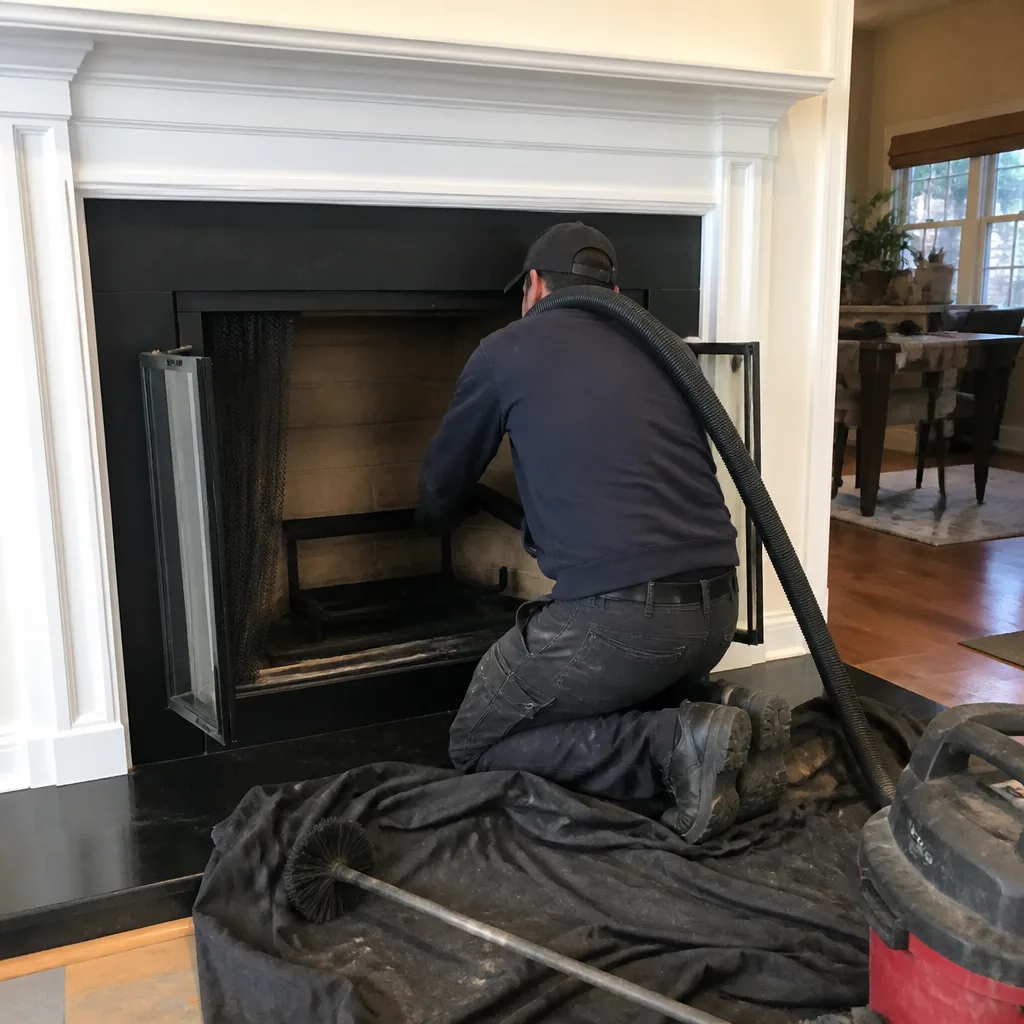 After
After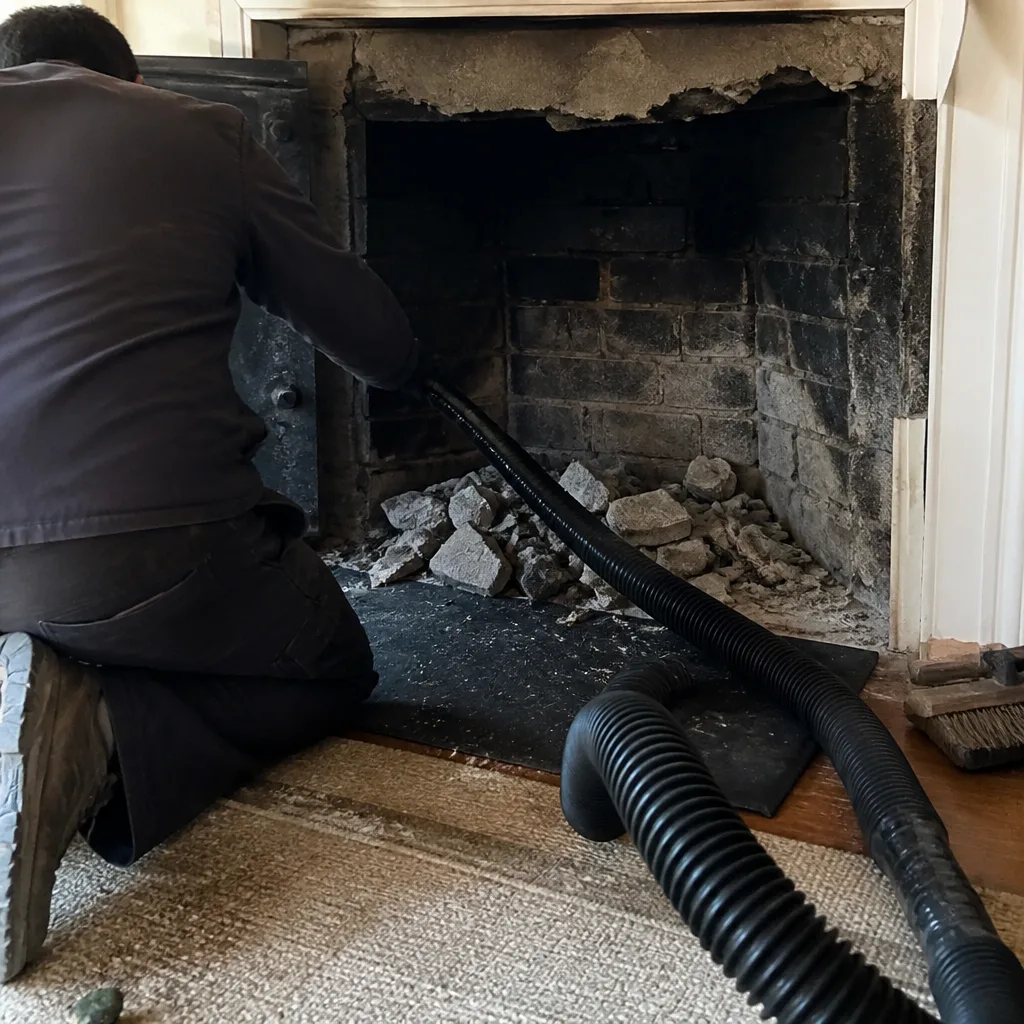 Before
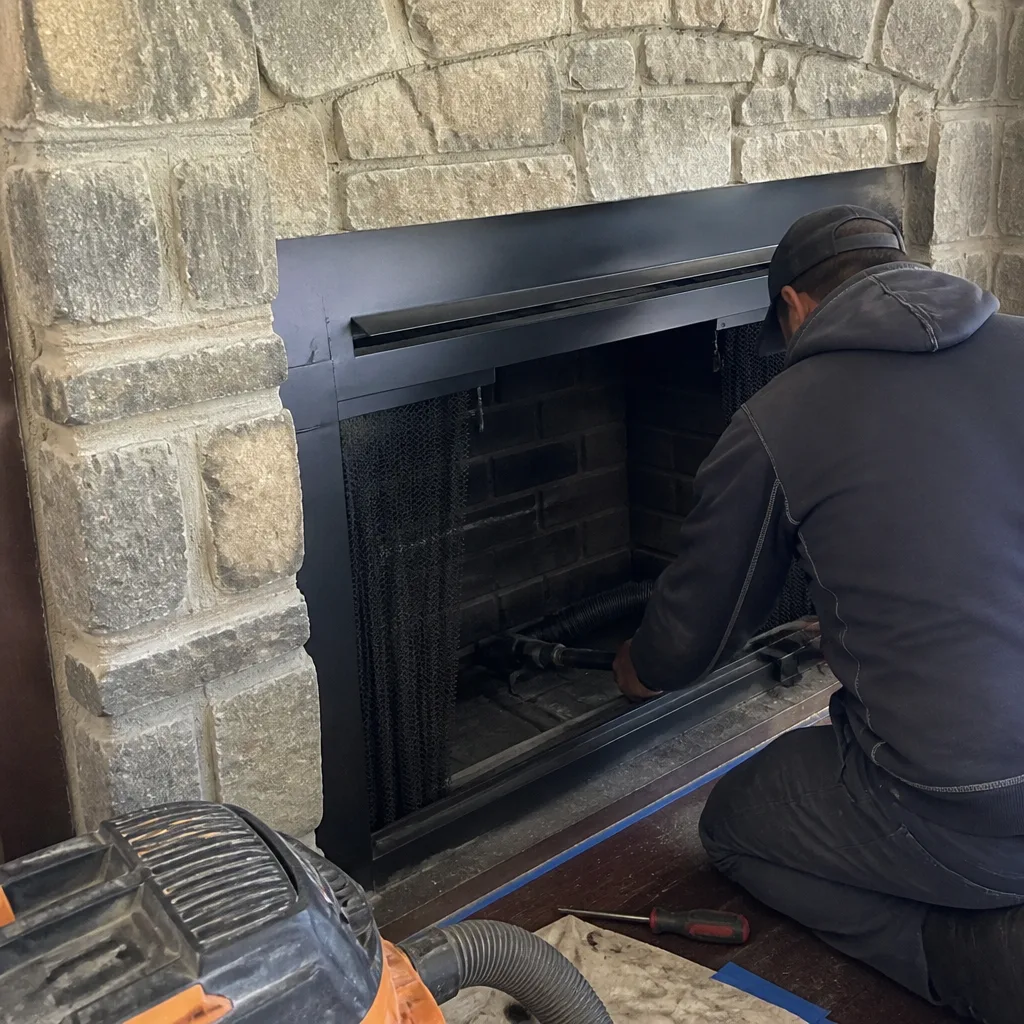 After
AfterLevel 2 Inspection in Manhattan, NY
A Level 2 chimney inspection is a camera-scan examination of your entire flue system – liner, smoke chamber, firebox, and accessible exterior surfaces – conducted to the NFPA 211 standard. In Manhattan, it’s required any time a home changes hands, after a chimney fire or significant weather event, or when you’re switching fuel types. At Level Two Chimney Manhattan, this isn’t an optional upgrade: it’s how we’ve worked since 2009, and the camera-scan documentation we produce became Clause 4 of the Haven Standard before most competitors had even considered it.
If you have questions before booking, call us at (862) 319-8047 – a live person picks up, 24 hours a day, every day. A written price lands in your hands before anyone touches your chimney. If you’re also due for a cleaning, our Chimney Cleaning & Sweep in Manhattan page covers how the two services work together and what the combined visit costs.
We’ve completed more than 38,000 chimney inspections and chimney cleaning & sweep services since 2009. Every one came with a written price before work started and a documented photo record when it was done. In Manhattan’s older pre-war and post-war building stock – where multi-flue systems, clay tile liners from the 1940s, and smoke chambers that haven’t seen a brush in decades are ordinary findings – that documentation isn’t optional, it’s the whole point.
When You Need a Level 2 Inspection
- Buying or selling a Manhattan apartment or townhouse. Co-op boards and mortgage underwriters increasingly require a documented Level 2 report before a sale closes. A flashlight look at the firebox opening doesn’t satisfy them; a camera-scan with a written findings report does.
- After any chimney fire, even a small one. If you heard a low rumble or noticed unusual heat coming from the chase, there may be liner damage that’s invisible from the hearth. In the pre-war buildings common in the Upper West Side and Washington Heights, a cracked clay tile liner can go unnoticed for years before it becomes a genuine fire hazard.
- Following a significant storm or structural event. Manhattan’s freeze-thaw cycle between November and March is harder on masonry mortar than most residents expect. A single winter with wide temperature swings can open hairline cracks in the flue liner or compromise the crown – the concrete cap that sheds water away from the liner opening.
- When you’re switching from oil heat to gas, or adding a wood-burning insert. Each fuel type has a different flue temperature and exhaust chemistry. A liner rated for one fuel may not meet code for another. We identify that before the work starts, not after the new appliance is installed.
- If it’s been more than three years since the last documented inspection. The NFPA recommends annual inspections, but many Manhattan residents inherit a chimney with no inspection history at all. If you don’t have a written report with a date on it, treat it as overdue.
- After a neighboring unit’s fire or a building-wide structural repair. In attached Manhattan brownstones and multi-family buildings, a fire or major renovation in an adjacent unit can transmit vibration and heat stress to shared masonry. A Level 2 inspection is how you confirm your flue wasn’t affected.
Our Level 2 Inspection Process
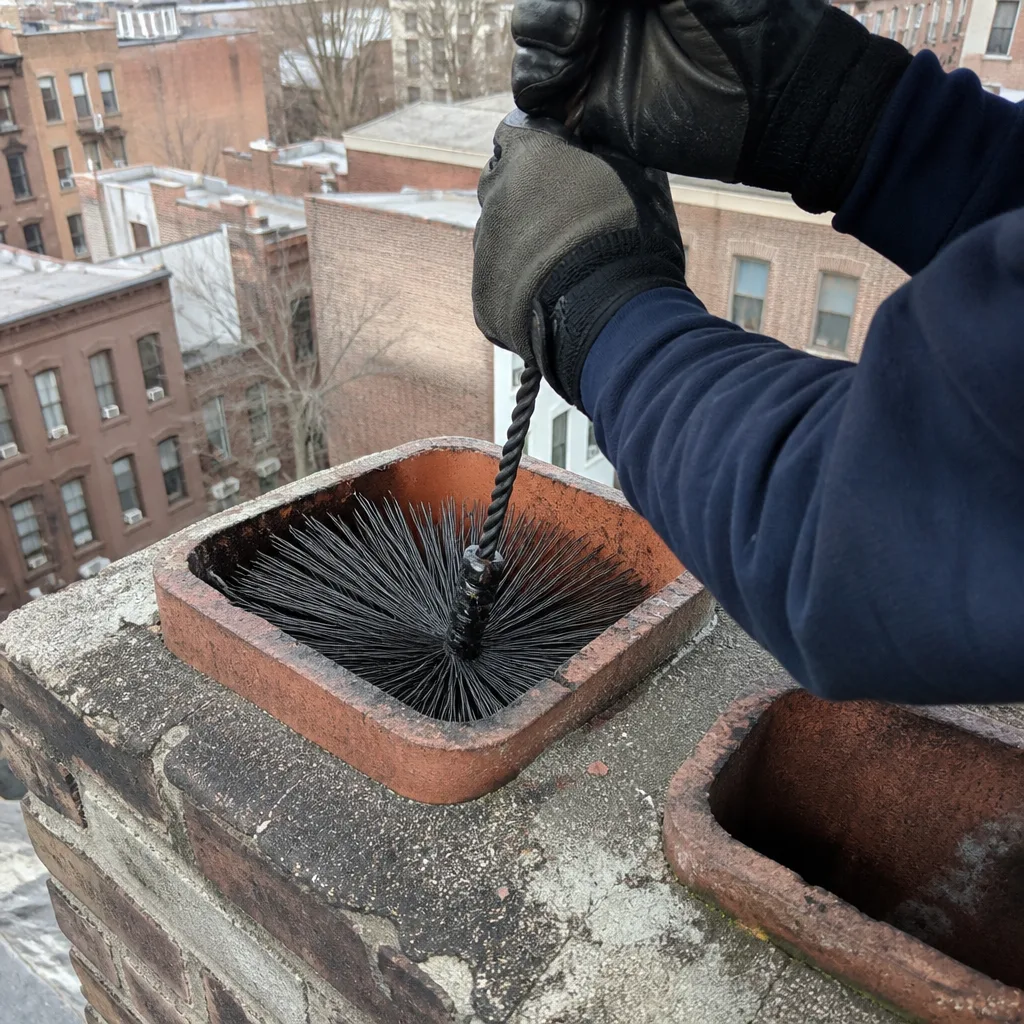
- Written price and scope before we arrive. Clause 1 of the Haven Standard – H.A.V.E.N. “Have it in writing” – means you receive a written price, written scope, and written warranty before a technician steps through your door. No estimates that grow once we’re in the room, no “we’ll know more when we look.” You know the number first.
- Technician arrival with ID and notification. A background-checked, uniformed technician is assigned to your job by name. You get a text when they’re on the way. In a Manhattan building with a doorman or a restricted service entrance, that predictability matters – we’ve run jobs in Tribeca co-ops and Harlem brownstones long enough to know how to work within building access rules without making your super’s morning worse.
- Exterior inspection from the roofline. We check the chimney cap, crown integrity, flashing, mortar joints, and any visible spalling – the flaking or pitting of brick faces caused by water infiltration. On Manhattan rooftops, we also check for cricket installation on wider chimney bases, since a missing cricket is one of the more common causes of chronic interior water damage in buildings from the 1920s through the 1960s.
- Camera scan of the full flue system. This is the part that earns the “Level 2” designation under NFPA 211. A high-resolution camera goes down the flue and captures the liner from top to firebox. We’re looking at liner joints, offset bends, corbeling in the smoke chamber, and any breach or obstruction. Clay tile liners show cracking, offset, or spalling. Stainless steel liners show corrosion, joint separation, or improper fit. We document what we find with still photos and footage – not a verbal summary of what we thought we saw.
- Firebox and smoke chamber assessment. The smoke chamber – the sloped section above your firebox opening that funnels combustion gases into the flue – is where we see a lot of uneven parging, open joints, and corbeled brick that doesn’t meet current code. In Manhattan buildings with multiple renovation histories, it’s common to find a smoke chamber that was rebuilt once in the 1970s with materials that weren’t appropriate for flue temperatures. We document the condition in plain terms: what we found, what it means, what fixing it involves.
- Written findings report and photo record delivered on completion. You walk away with a documented photo record per Haven Standard Clause 4, a written findings report describing liner condition, crown integrity, and creosote class, and a clear statement of what – if anything – needs to happen next and what it costs. If we find nothing that needs repair, that’s in writing too.
BeforeAfterLevel 2 Inspection Pricing in Manhattan
A Level 2 chimney inspection in Manhattan typically runs $249 to $449 for a single-flue system. Multi-flue systems – common in pre-war Manhattan buildings where a single structure may serve several fireplaces on different floors – are priced per flue, generally in the $179 to $299 range for each additional flue after the first. If a cleaning is needed at the same visit, that’s quoted separately in writing before the work starts.
| Service | Typical Range (Manhattan) |
|---|---|
| Level 2 Inspection, single flue | $249 – $449 |
| Additional flue (same visit) | $179 – $299 per flue |
| Level 2 Inspection + chimney sweep (single flue) | $349 – $599 |
| Smoke chamber parge repair (if found and approved) | $350 – $650 |
| Crown repair or replacement (if found and approved) | $275 – $750 |
What affects the final number: flue height and configuration, liner material, access conditions (Manhattan rooftop access varies considerably between a Midtown high-rise with a mechanical floor and a five-story walk-up in the East Village), and the extent of any additional documentation required for insurance or real estate purposes. None of those variables change your price after we’ve given it to you in writing – that’s what the Haven Standard commitment means in practice.
If you’ve received a written estimate from another company, bring it to us. We offer a Free Second Opinion on any written estimate, no fee, no pressure.
What Corrine Halstead Looks for in a Manhattan Chimney
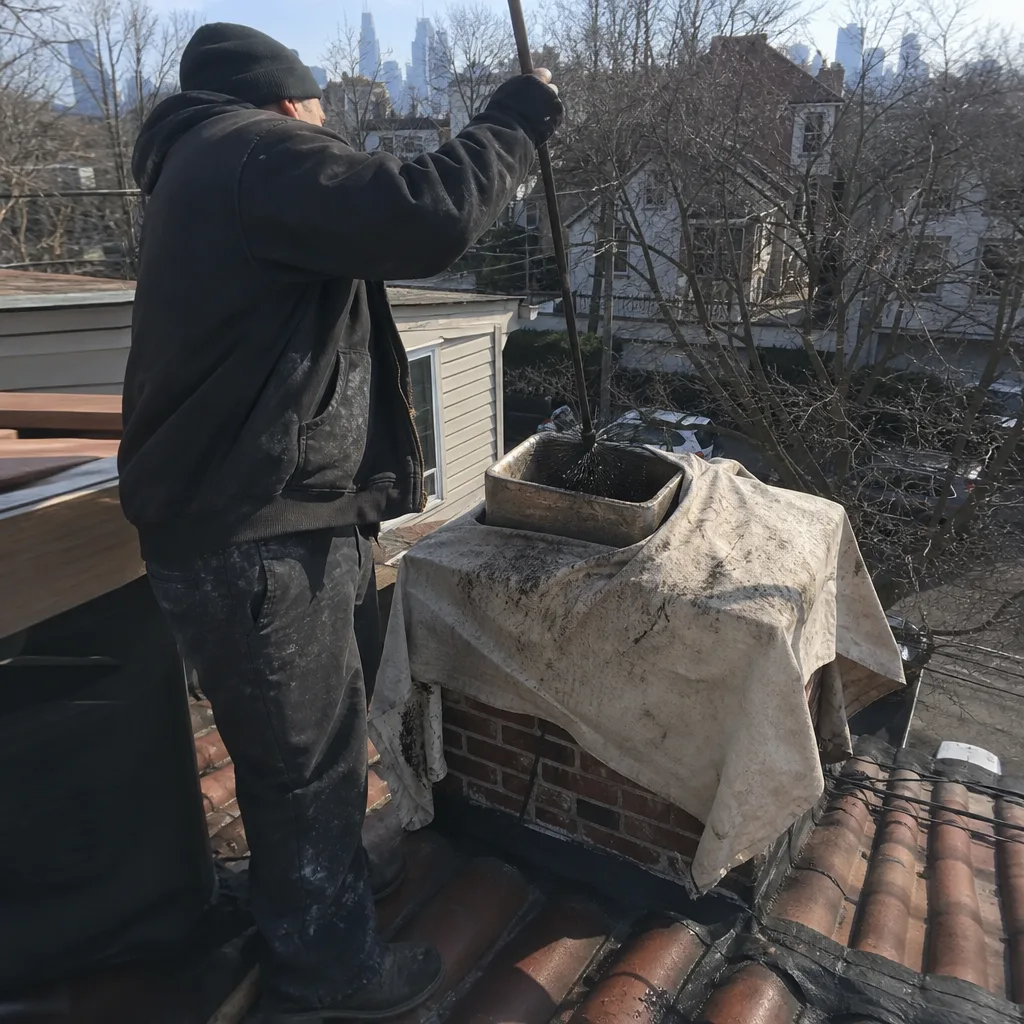
Corrine Halstead has overseen Level Two Chimney Manhattan’s inspection and cleaning work since the company’s founding, and the way she describes what the camera actually shows is worth understanding before your appointment.
Manhattan chimneys tend to share a few recurring problems. Clay tile liners installed before 1980 are often fractured at the joints – not dramatically, but enough to let combustion gases migrate into adjacent flue channels or building cavities. That’s not a cosmetic issue; it’s the condition that makes a wood-burning fireplace hazardous in a building where another tenant is on the other side of a shared wythe of brick. The camera catches it. A visual inspection from below does not.
Creosote accumulation is the other finding that reads differently in Manhattan than in suburban settings. In houses with lower usage, you typically see Class I creosote: a dry, flaky deposit that brushes away easily. In Manhattan apartments where residents burn wood frequently through a short October-to-March season and often use green or softwood because it was delivered that way, we regularly find Class II creosote – a tar-like coating that requires rotary or chemical treatment – and occasionally Class III, a glazed, hardened deposit that requires soot removal before the flue is safe to use. The inspection report names the class. The cleaning quote addresses it specifically. The two documents are separate so you always know what you’re being asked to approve.
We source materials for liner repairs and relining work from Gelco and Copperfield, procured through Haven’s buying network specifically to hold customer prices honest. When we find a liner that needs relining rather than repair, that recommendation comes with a written scope and price before we schedule the follow-up.
Why the Documentation Matters in Manhattan
Manhattan has specific circumstances that make documentation more valuable than it is in most markets. Real estate transactions in the borough regularly involve co-op board approval, mortgage underwriting, and title insurance – all of which may require a Level 2 report with named findings rather than a generic “passed inspection” letter. Insurance carriers who cover older masonry buildings increasingly request documented inspection records as a condition of coverage renewal or claims processing.
The photo record we deliver under Haven Standard Clause 4 is time-stamped and keyed to your address. It isn’t a summary of what we found – it’s the actual camera footage and exterior photos, organized and legible. If your co-op board asks for documentation in two years, or your insurer has a question after a water intrusion event, you have it.
We’ve run inspections in buildings across Manhattan – in Clinton Hill-adjacent brownstones on the west side of Harlem, in pre-war co-ops on the Upper East Side where the chimney stack serves four apartments, in cast-iron-fronted buildings in Tribeca that were converted from commercial use and have flue configurations that don’t match any standard schematic. The variety is part of why the camera matters: you cannot guess what’s inside a Manhattan chimney based on the exterior, the building age, or the current owner’s memory of the last annual sweep.
This is part of the broader home maintenance picture that Level Two Chimney Manhattan works within – documenting what’s there, naming what needs attention, and pricing it honestly before asking for approval.
FAQs – Level 2 Inspection in Manhattan
How much does a Level 2 chimney inspection cost in Manhattan?
A Level 2 inspection in Manhattan runs $249 to $449 for a single flue, with additional flues on the same visit priced at $179 to $299 each. The written price is delivered before any work begins – there are no adjustments after the technician is in your building. Call (862) 319-8047 for an exact quote; the estimate is free and comes in writing.
What’s the difference between a Level 1 and a Level 2 chimney inspection?
A Level 1 inspection covers accessible portions of the exterior and interior – the firebox, visible liner sections, and the exterior you can see from grade or a standard ladder position. A Level 2 inspection goes further: a camera scan of the full flue from top to firebox, inspection of accessible attic and crawl space areas where the chimney passes through, and a documented photo record. NFPA 211 requires a Level 2 any time a chimney is involved in a home sale, after a fire or seismic event, or when the appliance connected to the flue is being changed. In Manhattan, where pre-war construction means flue conditions are genuinely unpredictable, we consider the Level 2 the minimum useful standard.
How long does a Level 2 inspection take in a Manhattan apartment or brownstone?
Most single-flue Level 2 inspections in Manhattan take 60 to 90 minutes, including the exterior rooftop examination, camera scan, firebox assessment, and report preparation. Multi-flue systems add 30 to 45 minutes per additional flue. Access conditions in Manhattan buildings – shared rooftops, freight elevator requirements, doorman protocols – can add time, and we account for those in the scheduling estimate we give you upfront.
Do I need a Level 2 inspection if I’m buying a Manhattan co-op or condo?
Yes, in almost every case where the unit has a working fireplace. Co-op boards, mortgage lenders, and title insurers increasingly require a documented Level 2 report – not a verbal clearance or a Level 1 summary – before a transaction closes. If your purchase attorney or board has asked for an inspection letter and you’re not sure what standard it needs to meet, call us at (862) 319-8047. We can tell you exactly what format the report takes and whether it will satisfy the request before you book.
Key Takeaways
- A Level 2 inspection in Manhattan runs $249-$449 for a single flue; the written price is delivered before work starts, with no adjustments after.
- NFPA 211 requires Level 2 at any home sale, after a chimney fire, or when switching fuel types – and Manhattan co-op boards and insurers often require the full documented report.
- The camera scan captures liner joints, smoke chamber condition, creosote class, and any breach or obstruction that a visual inspection from below cannot see.
- Every inspection delivers a time-stamped photo record under Haven Standard Clause 4 – useful for real estate transactions, insurance documentation, and future repair reference.
- The 365-Day Done Right Promise covers every job: if it’s not right, we make it right, in writing.
- Call (862) 319-8047 to schedule – live answer, 24 hours a day.
Schedule Your Level 2 Inspection in Manhattan
If your Manhattan chimney hasn’t had a documented Level 2 inspection, or if you’re buying, selling, or just working from an old verbal clearance that has no paper behind it, call Level Two Chimney Manhattan at (862) 319-8047. A live person answers every call. You’ll get a written price before we schedule anything, a named technician assigned to your job, and a documented photo record when we’re done. The 365-Day Done Right Promise covers the work. If something isn’t right, we make it right – that’s not a marketing line, it’s in your written warranty.
Written by Corrine Halstead, Owner at Level Two Chimney Manhattan, serving Manhattan.