
Last updated September 20, 2026
Level 1 sweep and inspection to the NFPA 211 annual standard - flue, crown, cap, and flashing checked and photographed
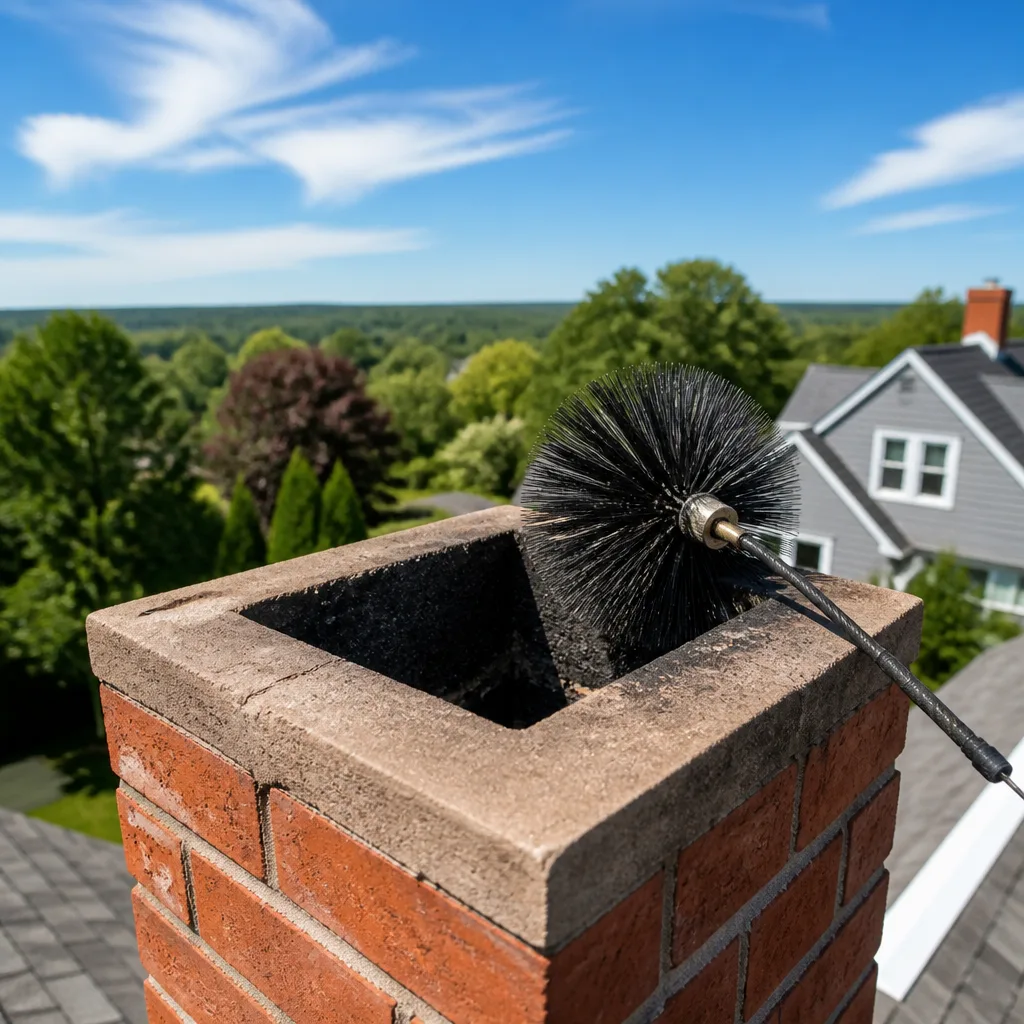
Chimney sweep logs do not sweep chimneys. They loosen some creosote - which then falls where a brush and vacuum still have to collect it.
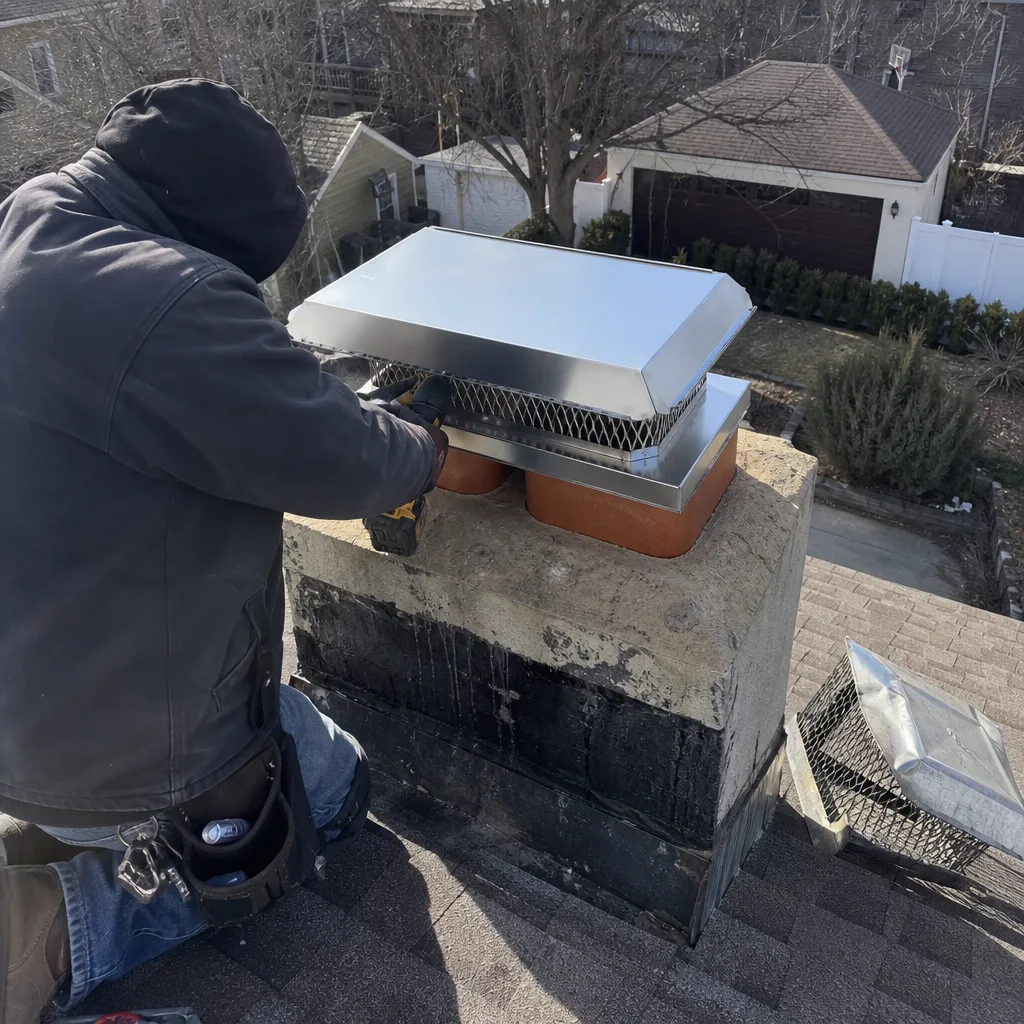
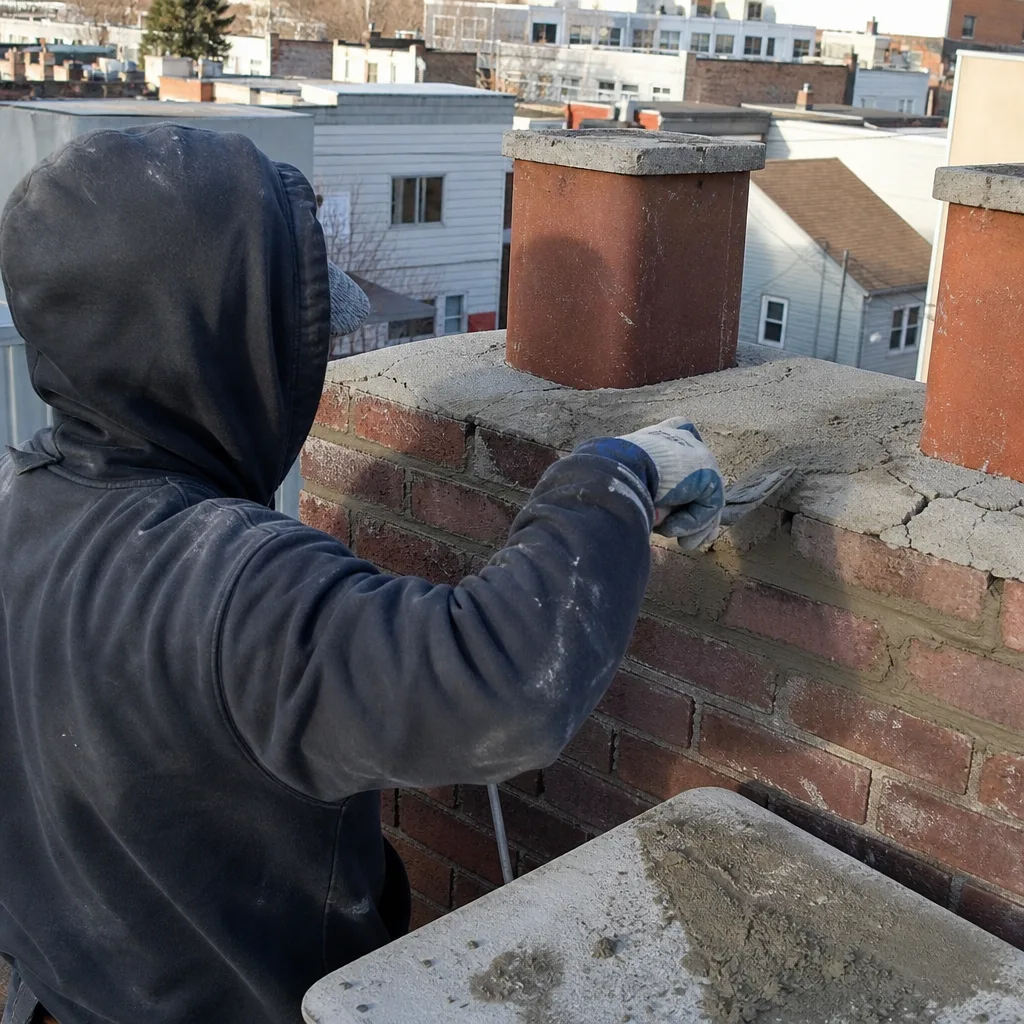
Caps & crowns
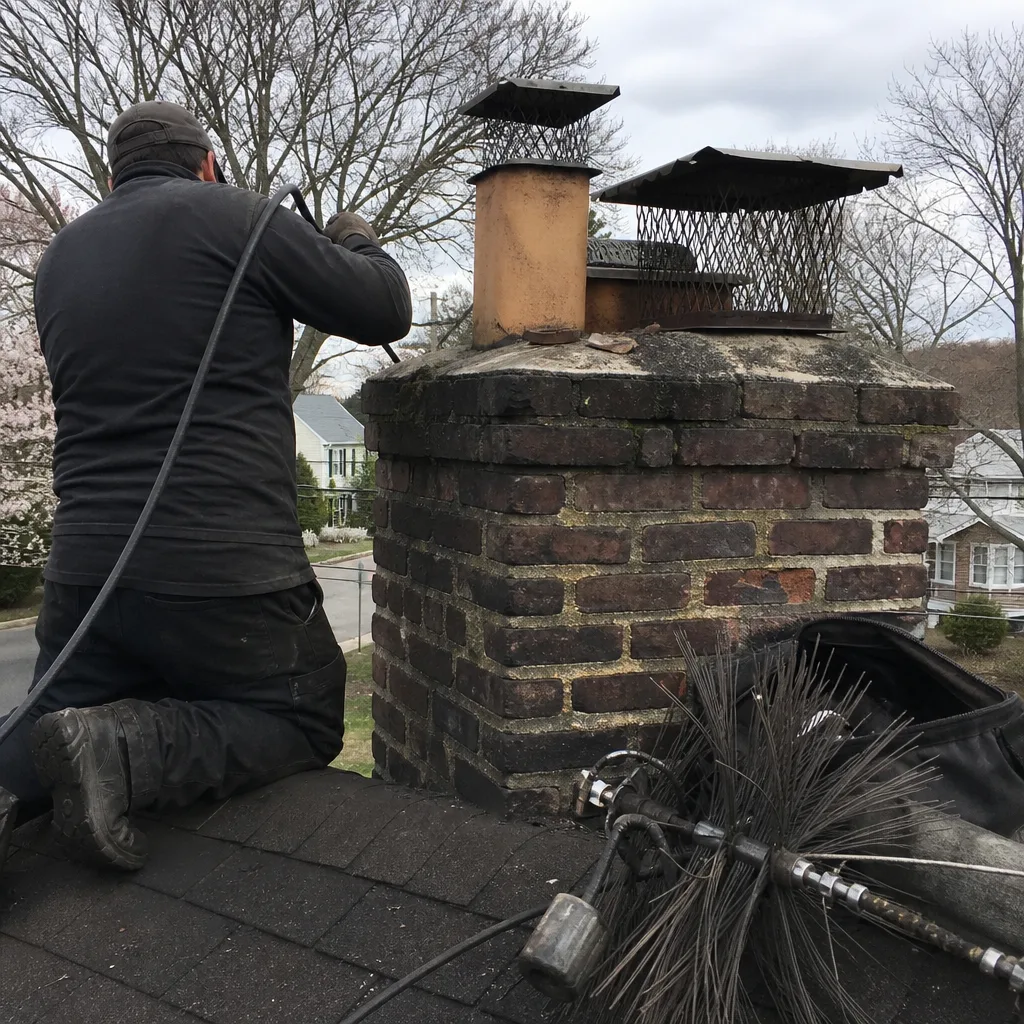 Before
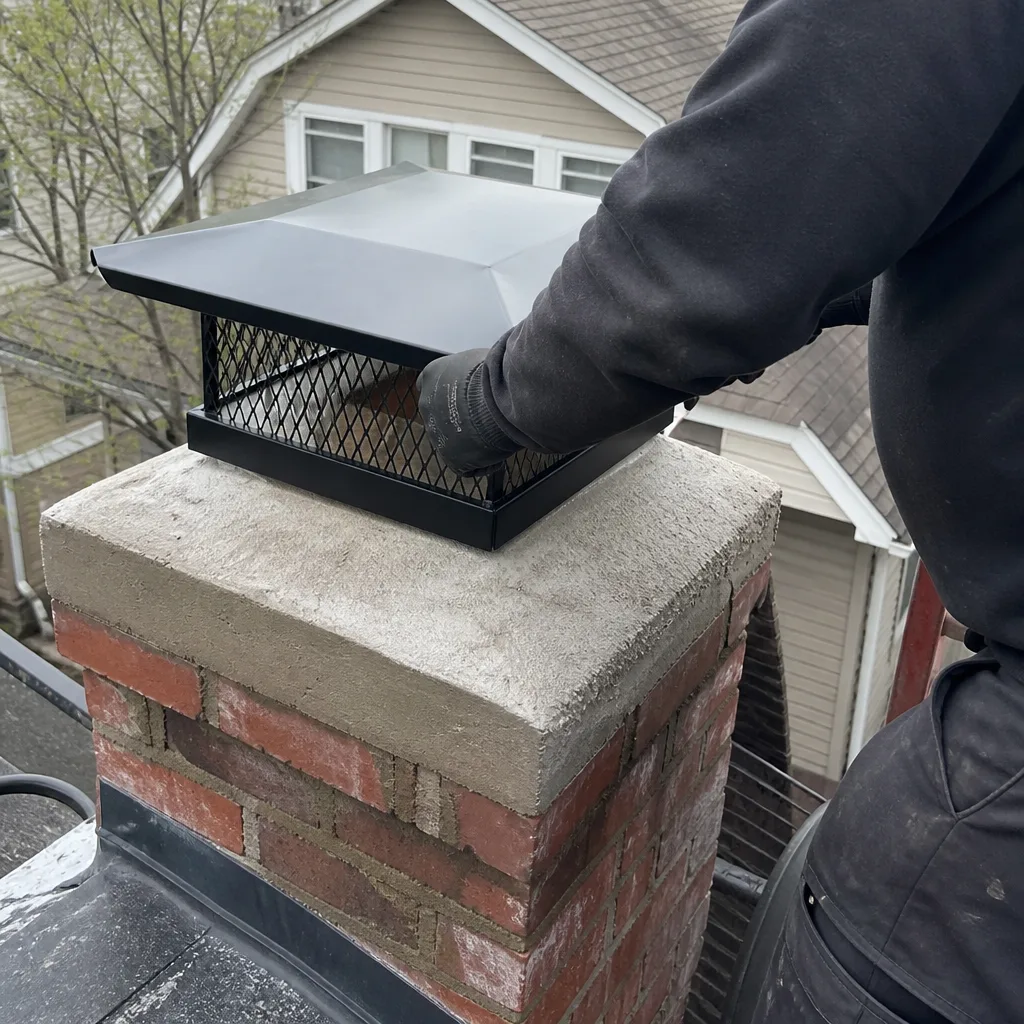 After
After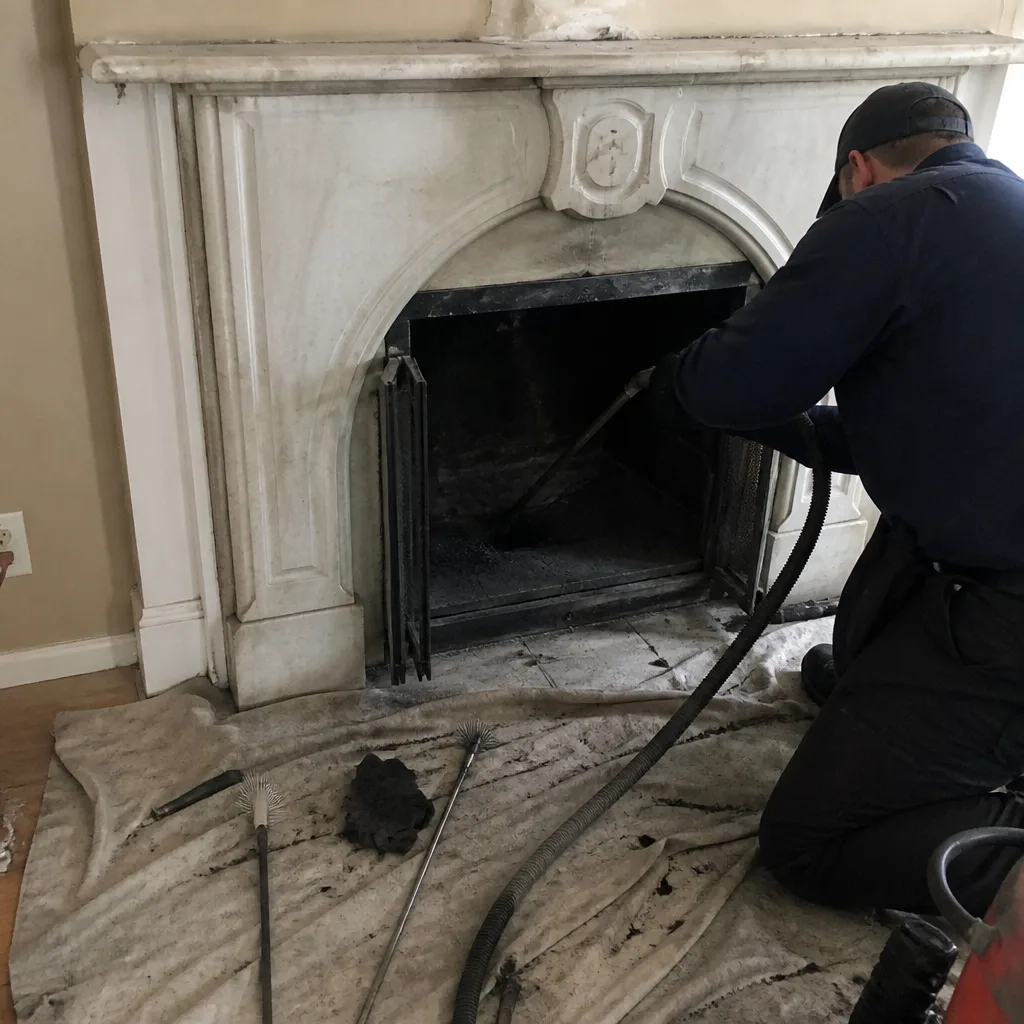 Before
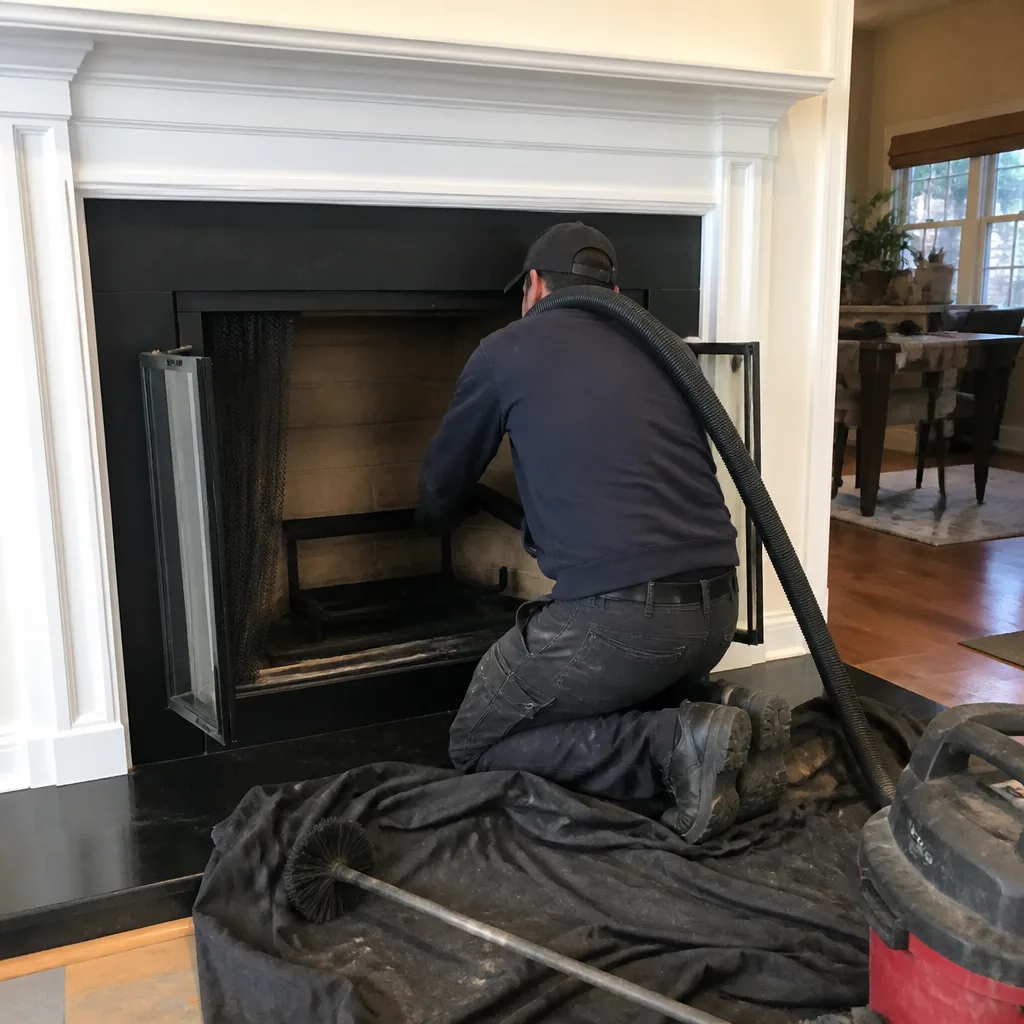 After
After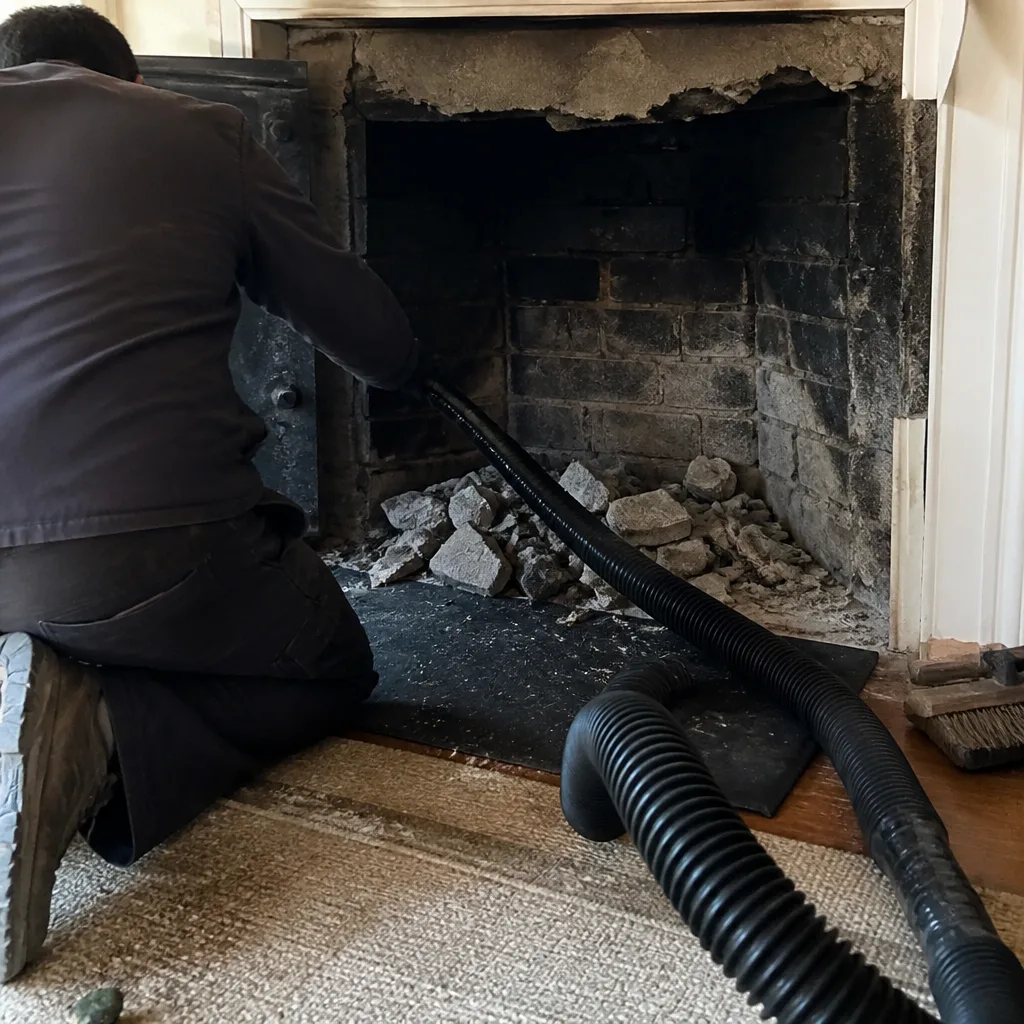 Before
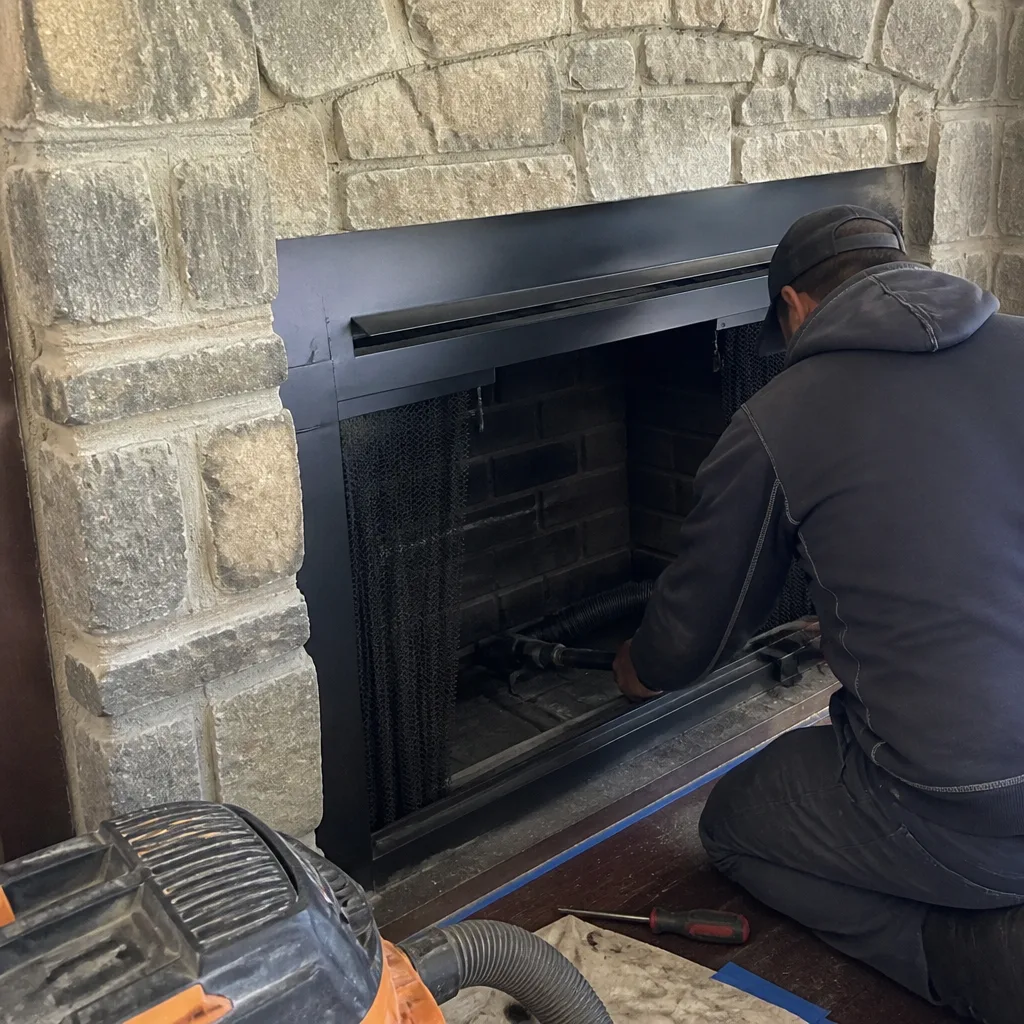 After
AfterChimney Cleaning Permits, Codes & Inspections in NY: What You Need to Know
Here’s the detail most New York City homeowners only discover after a contractor has already opened up the flue: the chimney cleaning itself carries no permit. It’s the liner, the crown, the smoke chamber repair, or the insert installation that the cleaning uncovers which triggers a Department of Buildings filing, and that filing has to happen before the first brick is removed, not after. In Manhattan, we regularly inspect chimneys in prewar co-ops and landmarked brownstones where the permit history is a patchwork of filings from three different owners, and the current owner is holding an insurance letter asking for documentation that doesn’t exist. This guide walks through which chimney scopes of work actually require a DOB permit in New York City, how NFPA 211 and NYC Building Code Chapter 28 interact, and how to know what your building’s permit history should look like before you hire. For a deeper dive, see our Complete Guide to Chimney Cleaning in Manhattan anyone.
Quick Answer
A routine chimney sweeping in New York State does not require a permit under the NYC Building Code, but almost every repair revealed by that cleaning, including liner replacement, masonry rebuilding, or insert installation, does require a Department of Buildings permit filed before work begins. Your contractor must also follow NFPA 211 inspection standards, which trigger a Level 2 camera inspection when a home changes hands, after a chimney fire, or when the flue system is altered.
Table of Contents
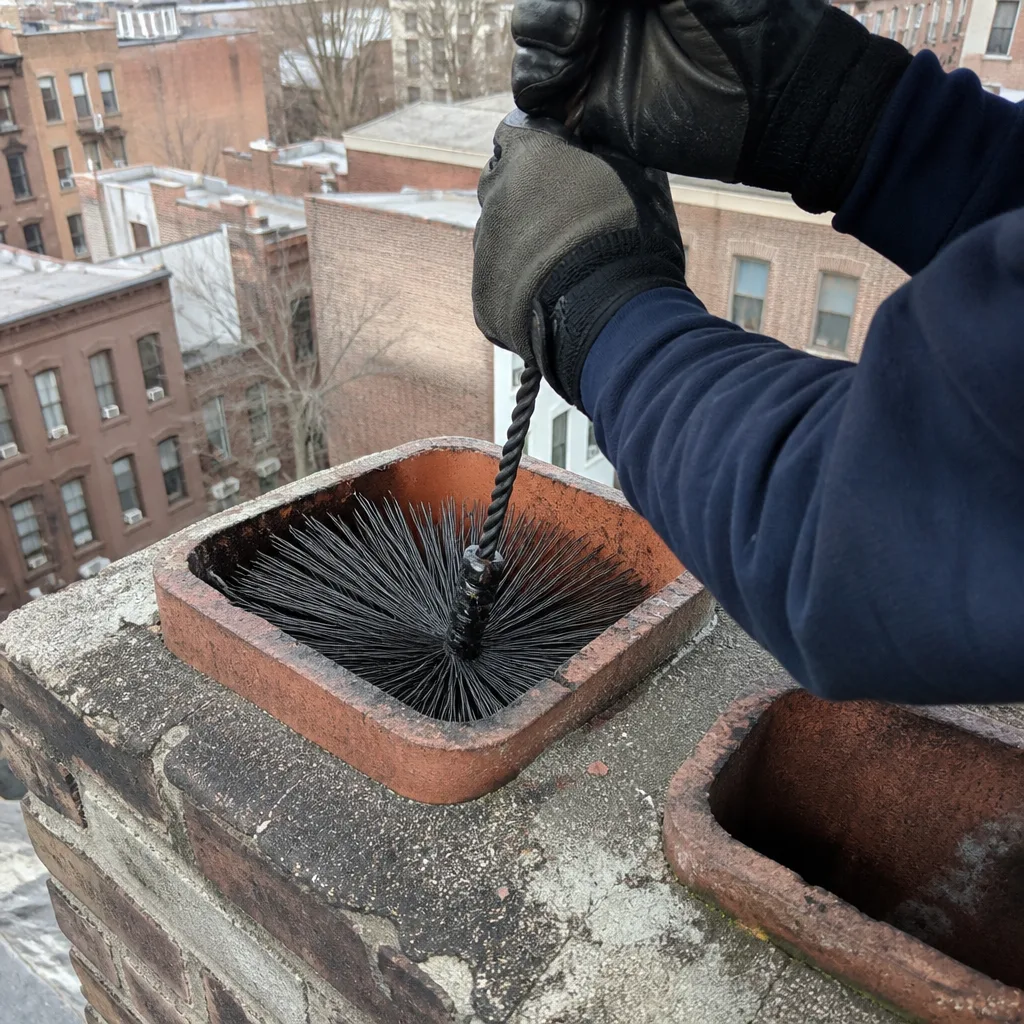
- When a NY Chimney Permit Is Required vs. When It Isn’t
- What NYC Building Code Chapter 28 Actually Says About Chimneys
- NFPA 211 vs. NYC Building Code: Where They Align, Where NYC Is Stricter
- The Inspection Trigger Rule: When a Cleaning Must Be Documented as a Level 2
- What ‘Code-Compliant’ Means on an Invoice vs. a Filed DOB Application
- How to Pull Your Chimney’s DOB History Before Hiring Anyone
- What Chimney Permits and Code Work Cost in NYC
- Common Mistakes to Avoid
- When to Call a Professional
- Frequently Asked Questions
- The Bottom Line
BeforeAfterWhen a NY Chimney Permit Is Required vs. When It Isn’t
The cleanest way to think about this: maintenance is unpermitted. Modification is permitted. A routine sweeping, a visual inspection, or a chimney cap that clamps onto an existing flue tile does not require a DOB filing. The moment you alter the flue system, rebuild masonry, or change the venting configuration, you’re in permit territory.
Here’s the scope-by-scope breakdown based on what we file regularly for Manhattan buildings:
- Chimney cleaning or sweeping: No permit required. This is maintenance. NC Building Code Chapter 28 doesn’t regulate the cleaning itself; it regulates the condition the cleaning reveals.
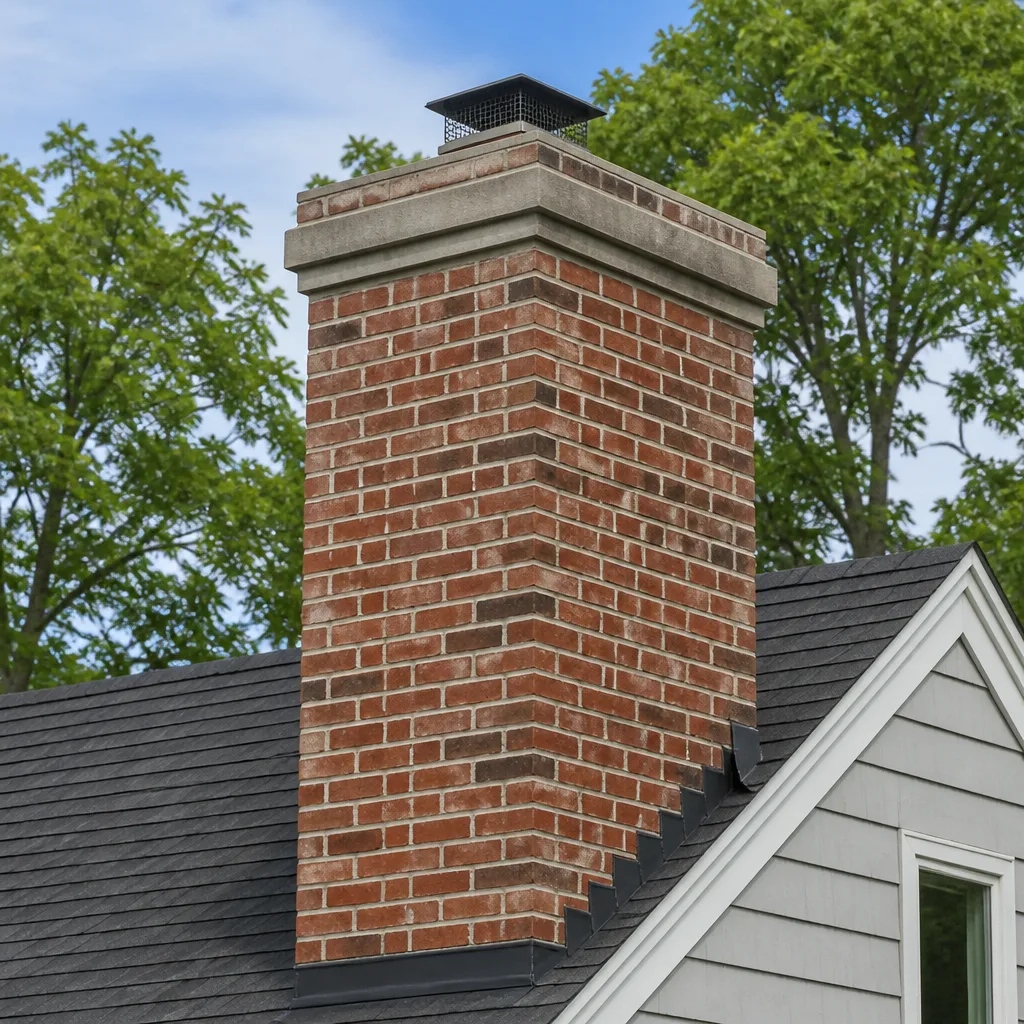
- Chimney cap installation (clamp-on, no structural change): No permit. But if the crown under that cap is spalling, the repair changes the scope.
- Flue liner repair or replacement: Permit required. This includes stainless liners (we use Olympia Chimney and Copperfield materials most often in Manhattan) and cast-in-place systems like HeatShield. Any change to the flue liner is an alteration under NYC Administrative Code §28-105.
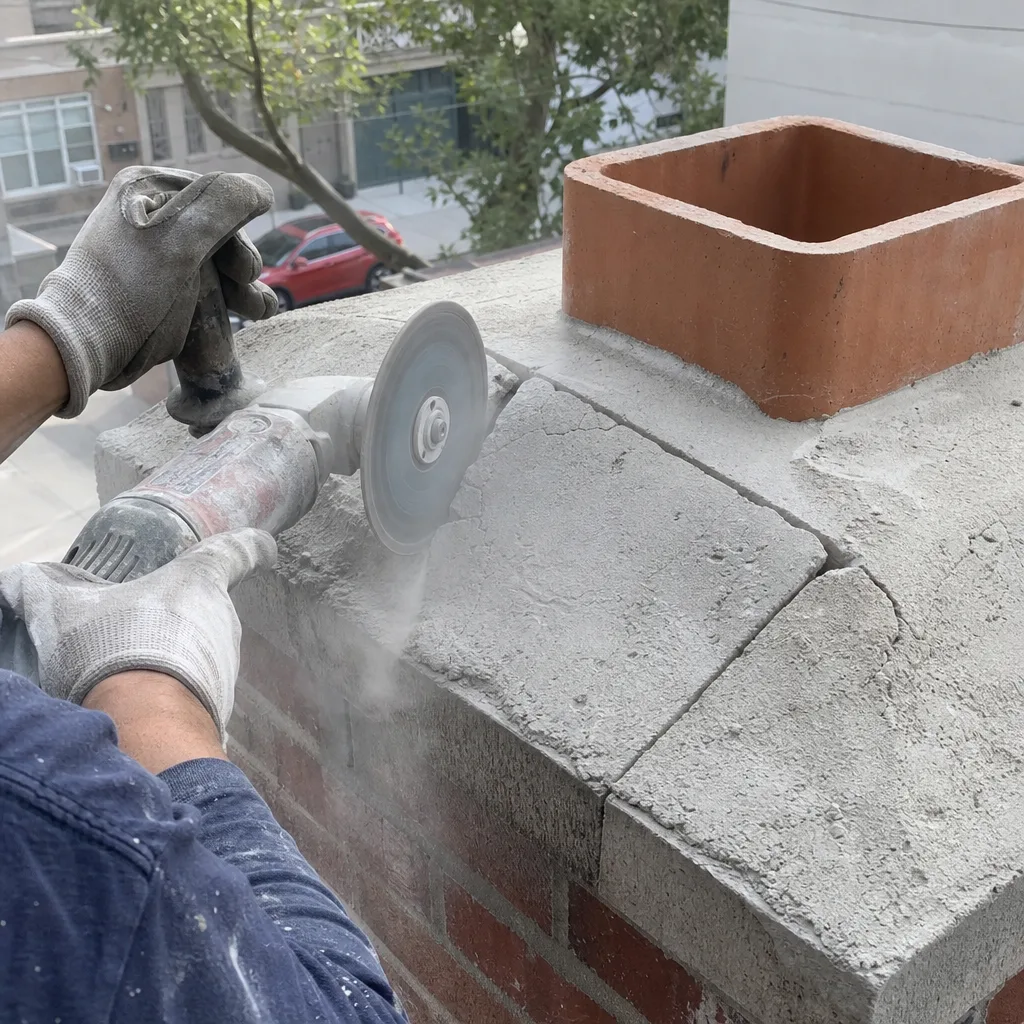
- Crown rebuild or repair: Permit required if the repair involves removing and replacing masonry. A simple sealant application does not require one.
- Smoke chamber parging or rebuilding: Permit required. The smoke chamber is part of the flue system, and any work that changes its dimensions or surface is an alteration.
- Fireplace insert installation: Permit required. This is a change of appliance and venting configuration, filed as an alteration. The insert listing, clearances, and liner connection all have to be on the application.
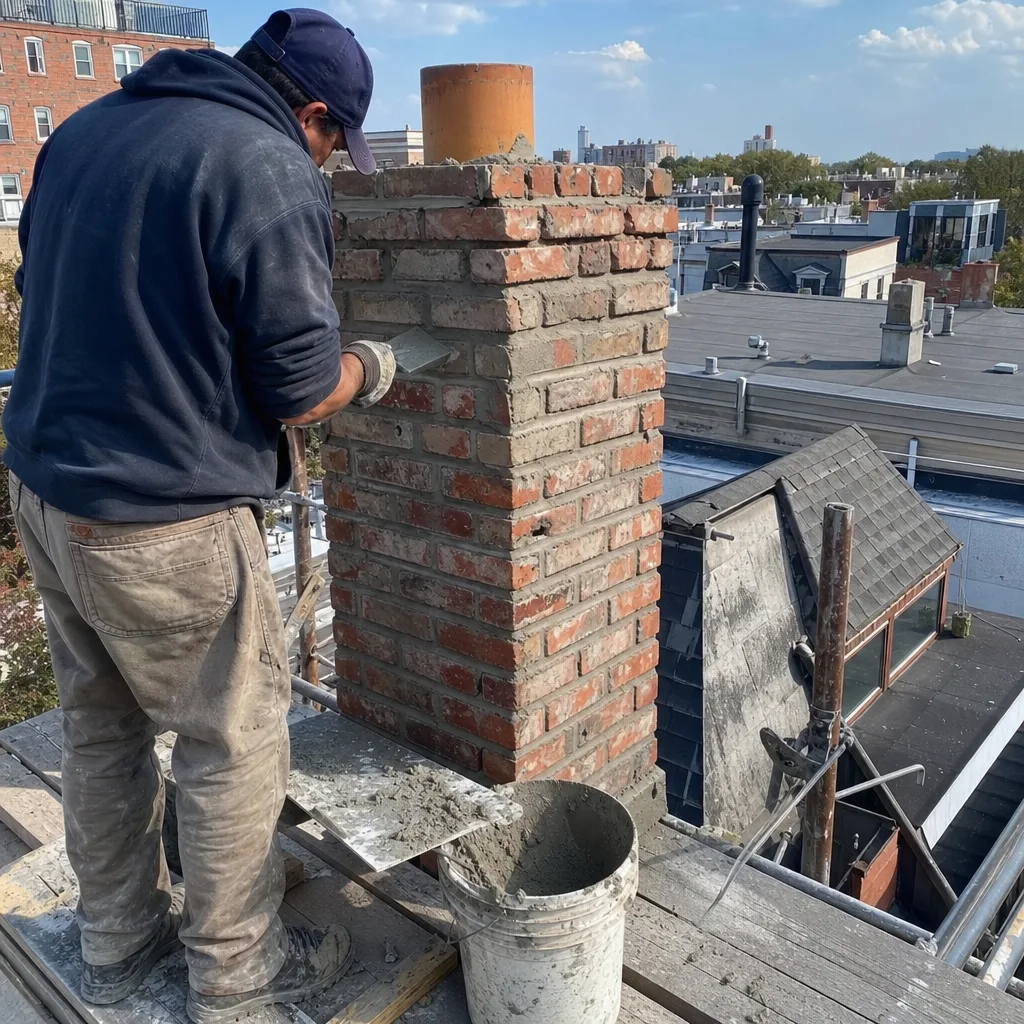
- Full chimney rebuild from the roofline up: Permit required. This is structural work, and in Manhattan it usually also requires a sidewalk shed or roof protection plan.
- Repointing small areas (under 10% of the chimney face): Generally no permit, but DOB takes a dim view of contractors who stretch this definition. We’ve seen stop-work orders on “repointing” jobs that turned into rebuilds.
The key distinction most homeowners miss is that the permit requirement attaches to the scope, not to the reason you called. You might have booked a simple cleaning, but if the camera inspection shows a cracked clay liner that needs a stainless reline, the permit clock starts before that reline begins.
What NYC Building Code Chapter 28 Actually Says About Chimneys
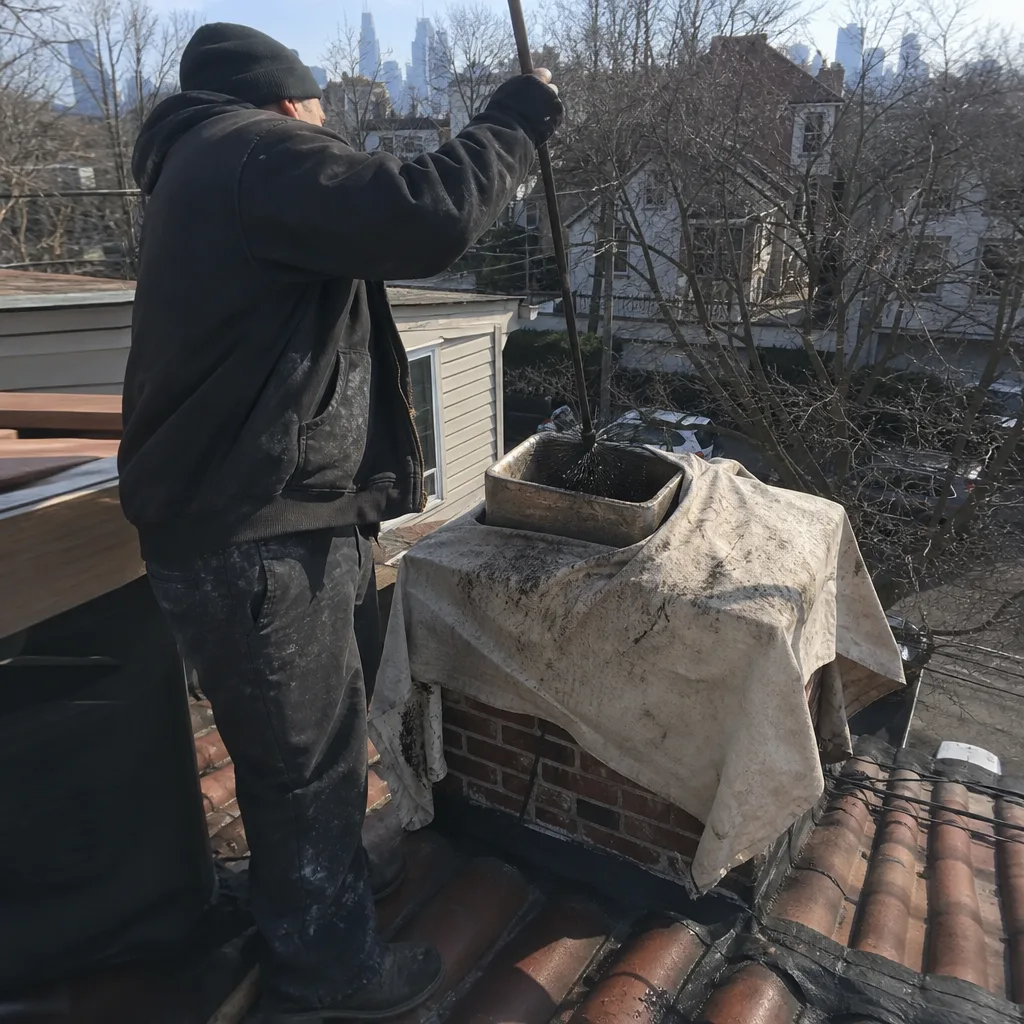
New York City operates under its own building code, not the state residential code that applies in most of New York State. That’s an important distinction. A contractor who works in Westchester or Long Island may tell you “New York doesn’t require that,” but Manhattan plays by different rules.
The chimney-specific provisions live in NYC Building Code Chapter 28, which adopts and modifies the International Mechanical Code. Here are the sections that matter for residential work:
- Section 2801 – General: Chimneys, vents, and flues must be constructed, sized, and installed in accordance with the manufacturer’s installation instructions and Chapter 28. This is the catch-all that lets DOB cite a contractor for a liner that wasn’t sized to the appliance.
- Section 2803 – Chimney and Vent Construction: Specifies required clearances from combustible materials, masonry thickness, and flue lining requirements.
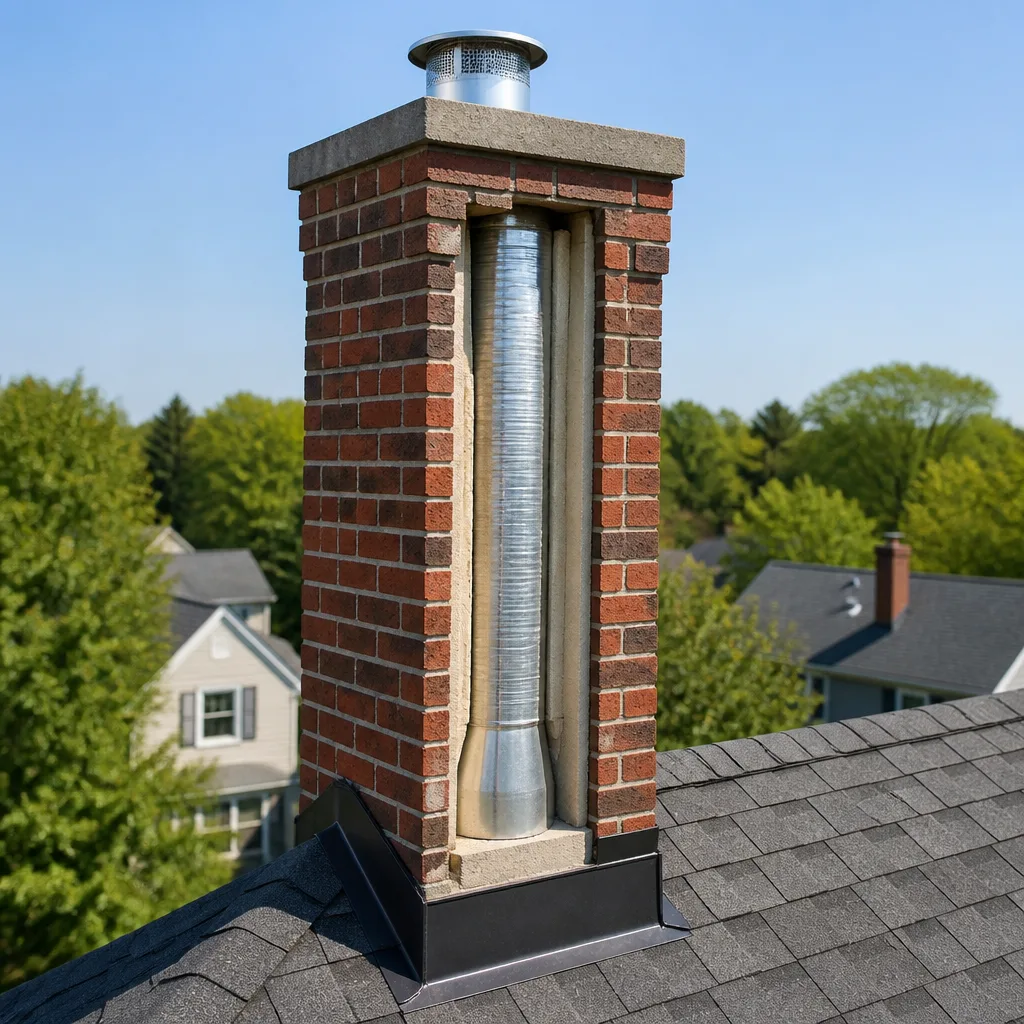
- Section 2805 – Chimney Liners: Requires that chimneys serving fireplaces or solid-fuel appliances have a listed liner. The code doesn’t accept an unlined masonry chimney in active service.
- Section 2806 – Existing Chimneys: Requires that any existing chimney being connected to a new or replacement appliance be brought into compliance with Chapter 28. This is the section that turns a “simple” boiler replacement into a liner project.
The enforcement reality we see across Manhattan, from the Upper East Side through Harlem and down into the Village, is that DOB has gotten significantly more aggressive about chimney filings since roughly 2019. Insurance carriers have followed. We now get calls routinely from homeowners who were told by their insurance company that they need a Level 2 chimney inspection with photo documentation before a policy renewal, and the insurer specifically asks whether the flue has a listed liner.
NFPA 211 vs. NYC Building Code: Where They Align, Where NYC Is Stricter
NFPA 211 is the national standard for chimneys, fireplaces, vents, and solid fuel burning appliances. It’s not a law by itself, but New York City has adopted it by reference in certain sections, and DOB inspectors use it as the benchmark for “acceptable engineering practice.” Think of NFPA 211 as the how and NYC Building Code as the what.
Where they align:
- Flue liner requirements: Both require a listed liner for active chimneys. NFPA 211 Section 4.2 and NYC BC Section 2805 agree on this point.
- Clearances to combustibles: Both require specific air space between the chimney exterior and any wood framing. The numbers match in most cases.
- Inspection levels: NFPA 211 defines Level 1, Level 2, and Level 3 inspections. NYC doesn’t have its own inspection-level standard; it defers to NFPA 211 for what an inspection should include.
Where NYC is stricter:
- Permitting: NFPA 211 doesn’t deal with permits at all. That’s purely a local code function. NYC requires DOB filings for scopes that NFPA 211 treats as ordinary repair work.
- Documentation: DOB requires filed applications, approved plans, and sign-offs for permitted work. NFPA 211 asks for an inspection report. A Manhattan homeowner needs both: the contractor’s inspection report for the insurance company, and the DOB filing for the building’s official record.
- Landmark considerations: In Manhattan historic districts, the Landmarks Preservation Commission adds another layer that exists nowhere in NFPA 211. A chimney rebuild visible from the street in Greenwich Village or the Upper West Side may need LPC approval before DOB will even review the permit.
What most homeowners actually want to know: which standard is my contractor held to? The honest answer is both. The work has to meet NYC Building Code to pass a DOB inspection, and it has to meet NFPA 211 for the sweep or inspector to call it safe. A contractor who says “we follow code” without being able to name the code section is a contractor who hasn’t filed a permit recently.
The Inspection Trigger Rule: When a Cleaning Must Be Documented as a Level 2
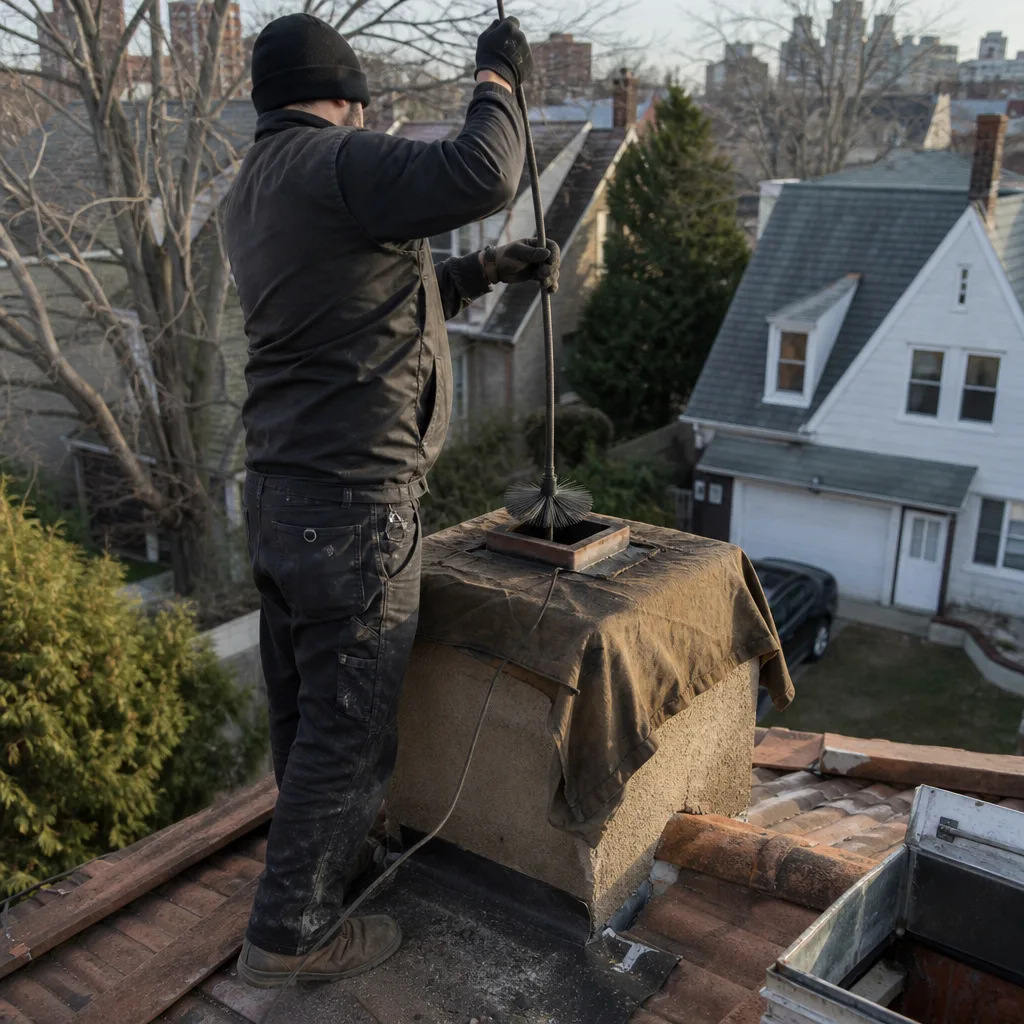
NFPA 211 defines three inspection levels. A Level 1 is the basic check that accompanies a routine cleaning: accessible portions of the flue, the damper, the firebox. A Level 2 adds camera scanning of the entire flue interior and all accessible exterior portions, and it’s triggered by specific events. A Level 3 is destructive inspection: opening walls or removing masonry to access concealed sections of the flue.
Here are the triggers that make a Level 2 inspection mandatory under NFPA 211, not optional:
- Change of ownership: When a property is sold, the new owner is supposed to get a Level 2 inspection. This is the single most common trigger we see in Manhattan, usually because the buyer’s inspector flagged the chimney and the lender or insurer wants documentation.
- System alteration: If the flue system is being changed in any way, including a liner replacement or hookup to a new appliance, a Level 2 is required before and after the work.
- After any fire event: This includes a chimney fire, a boiler malfunction, or any fire in the building regardless of where it started. The heat and pressure from a fire can crack a liner even if the chimney wasn’t directly involved.
- Building addition or significant renovation: If the roofline changes, if an addition affects the chimney’s height, or if major construction occurs nearby, a Level 2 assesses whether the flue still meets clearance and draft requirements.
- Earthquake, lightning strike, or similar external event: Rare in Manhattan, but not unheard of. A lightning strike to a chimney often shatters the top flue tile.
Level 2 inspection is the standard we’ve built our Manhattan chimney cleaning practice around since 2009. The camera scan is not an add-on; it’s how we see what’s actually in the flue before we recommend anything. Clause 4 of the Haven Standard requires a documented photo record on every job, and that’s the direct response to a common Manhattan problem: a contractor tells a homeowner they need $8,000 of work, and the homeowner has no way to verify it. With camera footage and stills, you can see the crack or the spalling yourself.
What ‘Code-Compliant’ Means on an Invoice vs. a Filed DOB Application
This distinction is where we see the most confusion, and the most frustration. A contractor can write “all work completed to code” on an invoice, and that statement means essentially nothing in New York City. Code compliance in NYC is established by a filed DOB application, an approved permit, and a signed-off inspection. The invoice is the contractor’s statement. The DOB filing is the city’s statement.
Here’s the practical difference:
- Invoice language: “Chimney liner replaced to code.” This is a contractor’s description of work. No city official has reviewed the scope, approved the method, inspected the result, or recorded the work.
- DOB filing: The work appears in the building’s official history. A plans examiner reviewed the application, checked the materials and clearances, issued the permit, and an inspector signed off after looking at the actual work. The filing becomes part of the property’s permanent record.
Why does this matter to a Manhattan homeowner? Three reasons. First, when you sell, the buyer’s attorney will pull the DOB history and ask about any unpermitted work. Second, your insurance company can deny a claim if a chimney fire traces back to unpermitted liner work. Third, a signed-off DOB filing is strong evidence that the work was actually performed to the standard claimed, not just described by the contractor.
We see this pattern in every Manhattan neighborhood, from Battery Park City condos to Inwood townhouses: the previous owner did liner work in 2015, the invoice says “code compliant,” but there’s no DOB filing anywhere in the property’s history. The current owner now has to either file a retroactive permit (which requires opening things up for inspection) or disclose the unpermitted work at sale. The retroactive option is usually more expensive than the original permit would have been.
How to Pull Your Chimney’s DOB History Before Hiring Anyone
You can check your building’s DOB history in about 20 minutes, free, from the DOB’s Building Information System. Do this before you sign a contract. Here’s the step-by-step:
- Go to the DOB Building Information System (BIS) online: Search “NYC DOB BIS” and follow the public access link. You’ll need your building’s address and borough.
- Pull the full job history for your building: Look for the property’s job filings list. This shows every permit application filed for the building, going back decades in many cases.
- Look for chimney-specific filings: These will usually be described as “CH,” “chimney,” “flue,” “liner,” or appear under plumbing or mechanical alteration filings. Note the filing dates and whether they show a signed-off status.
- Check for a Certificate of Occupancy or amendments: The C of O lists the building’s approved use and sometimes references the heating system and venting type. If your chimney serves a fireplace that isn’t on the C of O, that’s a filing gap.
- Look for open violations or stop-work orders: An open ECB violation related to the chimney or boiler flue is a signal that a prior contractor may have left work incomplete.
What should be there, specifically? If your building is prewar and has a working fireplace, there should be at least one filing related to the chimney or flue system at some point in the past 50 years. If the boiler was replaced in the last 20 years, there should be a filing for that replacement, and it should include the flue connection. If there’s no chimney or boiler flue filing on a building with a working fireplace, that’s a signal that the chimney may never have been brought into compliance, or that prior work was done without permits.
The absence of filings doesn’t automatically mean the chimney is unsafe. But it does mean that when you sell, or when your insurance asks for documentation, you’ll have nothing to show. We regularly help Manhattan homeowners work through this: we perform the Chimney Cleaning & Sweep in Manhattan, document what’s found with the camera scan, and then advise on what needs to be filed retroactively versus what can wait.
What Chimney Permits and Code Work Cost in NYC
Permit costs in New York City are driven by the scope of work and the filing type, and they come in two parts: the DOB filing fee and the cost of the professional who prepares the application, usually a registered architect or professional engineer. Here’s what we typically see for Manhattan chimney work:
| Scope of Work | DOB Filing Fee | Professional Fee (RA/PE) | Typical Total Permit Cost |
|---|---|---|---|
| Liner replacement (stainless or cast-in-place) | $100-$165 | $800-$1,800 | $900-$1,965 |
| Crown rebuild | $100-$165 | $700-$1,400 | $800-$1,565 |
| Fireplace insert installation | $100-$165 | $900-$2,200 | $1,000-$2,365 |
| Full chimney rebuild (roofline up) | $165-$350 | $1,800-$4,500 | $1,965-$4,850 |
| Retroactive filing (for unpermitted prior work) | $200-$500 | $2,000-$5,000+ | $2,200-$5,500+ |
The construction work is separate from the permit. A standard stainless liner replacement in a Manhattan brownstone typically runs $4,500 to $9,000 depending on flue height and access. A crown rebuild is $1,800 to $4,000. An insert installation with liner is $6,000 to $14,000 depending on the unit. These ranges reflect Manhattan access conditions: roofs in the Village and Chelsea often require rooftop access through hatches or scaffolding, which adds to the job cost.
A point worth understanding: the permit fee is not where contractors make money. It’s a pass-through. If a contractor tells you the permit will cost $5,000 as a line item, that’s the professional fee, not the DOB fee, and you should ask to see the architect’s or engineer’s invoice.
Common Mistakes to Avoid
- Believing the invoice phrase “code compliant” means the work is filed with DOB. It doesn’t. Only a DOB filing and sign-off establishes code compliance in New York City. Ask for the filing number before you pay the final installment.
- Skipping the camera inspection because the chimney “looks fine from the outside.” The crown can look intact while the flue liner is cracked mid-span. We’ve pulled camera footage from Manhattan chimneys that showed Class III creosote and a failed liner behind a perfectly sound exterior.
- Assuming your building’s prewar chimney is grandfathered and doesn’t need a liner. NYC BC Section 2806 requires existing chimneys to comply when connected to a new appliance. “Grandfathered” applies to configuration, not to safety.
- Accepting a repair scope without seeing the camera footage. A contractor who recommends $7,000 of liner work should be able to show you the crack on video. If they can’t, get a second opinion. Level Two Chimney Manhattan offers a Level Two Chimney Manhattan home inspection with full camera documentation as standard.
- Waiting until you’re in escrow to pull the DOB chimney history. The buyer’s attorney will find it, and you’ll negotiate from a weaker position. Pull the history before you list.
- Filing the permit after the work is done. DOB treats retroactive filings differently and can require opening finished work for inspection. The permit has to be filed before the work starts, not after the liner is in.
- Hiring a contractor who says “permits are the homeowner’s responsibility” without offering to manage the filing. In Manhattan, the filing is typically done by the contractor’s architect or engineer. A contractor who won’t touch the permit process is signaling that they don’t do enough permitted work to have a filing path.
When to Call a Professional
Call a professional when the camera inspection reveals anything beyond routine creosote buildup. That includes a cracked clay liner, spalling brick in the smoke chamber, a crown that’s lost its slope and is holding water, or any flue that hasn’t been inspected in more than five years. Call before you close on a property with a fireplace. Call after any chimney fire or boiler malfunction, even if the damage isn’t visible. Call if your insurance company asks for chimney documentation you don’t have. And call if you’re in Manhattan and your building’s DOB history shows no chimney filing but the fireplace is in regular use. Level Two Chimney Manhattan offers free estimates in Manhattan, including a Chimney Repair in Manhattan assessment, camera-scan inspection, and a written price before any work starts. Reach us at (862) 319-8047.
Frequently Asked Questions
A standard chimney cleaning in Manhattan typically runs $250 to $450 for a single-flue residential fireplace, with the price going up for multi-flue townhouses, rooftop access difficulty, or heavy creosote buildup. For a full maintenance breakdown, see our Chimney Cleaning & Sweep Maintenance Checklist for Manhattan Homeowners. The cleaning should include a camera inspection as part of the service, not as an add-on. Call (862) 319-8047 for an exact quote; estimates are free, and the price is written before work starts.
No. Routine chimney cleaning and sweeping do not require a permit under the NYC Building Code. The permit requirement attaches to any repair or alteration work revealed by the cleaning, including liner replacement, crown rebuild, smoke chamber parging, or insert installation.
A Level 2 inspection is a camera-scan inspection of the entire flue interior plus all accessible exterior portions, required under NFPA 211 when a property changes hands, after a chimney fire, after any system alteration, or after significant building renovation. In Manhattan, Level 2 inspections are most commonly triggered during real estate transactions when the buyer’s insurer or lender requests chimney documentation.
The National Fire Protection Association recommends an annual inspection and cleaning as needed for chimneys in active use. In Manhattan, where most fireplaces are used seasonally, an annual inspection before the first burn of the season catches issues that developed over the summer. Call (862) 319-8047 to schedule; the camera scan and written report are included.
The most serious risks are a chimney fire from accumulated creosote, or carbon monoxide leaking into living spaces through a cracked liner or blocked flue. Both are preventable with annual inspection and cleaning. A neglected chimney also becomes a sale issue: buyers’ inspectors flag it, insurers ask for documentation, and repair costs are higher after years of deferred maintenance. Call (862) 319-8047 for an assessment; the estimate is free.
Yes, if the chimney serves a working fireplace or the building’s heating system. Co-op and condo buildings in Manhattan are subject to the same DOB filing requirements as townhouses. The difference is that the building’s board or managing agent typically holds the permit responsibility for common elements like chimneys, so homeowners should coordinate with the building before any chimney work begins.
The Bottom Line
A chimney cleaning in New York doesn’t require a permit, but the liner, crown, or insert work that often follows does, and the filing must happen before the work starts. Your chimney’s DOB history tells you what’s been officially recorded, and its absence tells you what hasn’t. NFPA 211 sets the inspection standard; NYC Building Code Chapter 28 sets the legal standard; and a homeowner in Manhattan needs documentation that satisfies both. The cheapest way through this is a camera-scan inspection before you’re under a closing deadline or an insurance deadline, with a written price and a documented record when it’s done. Explore more guides & resources to stay ahead of chimney maintenance. That’s the standard we’ve worked to at Level Two Chimney Manhattan since 2009, and it’s how we’ve completed more than 38,000 inspections and cleanings across the city.
Written by Corrine Halstead, Owner at Level Two Chimney Manhattan, serving Manhattan since 2009.