
Last updated September 20, 2026
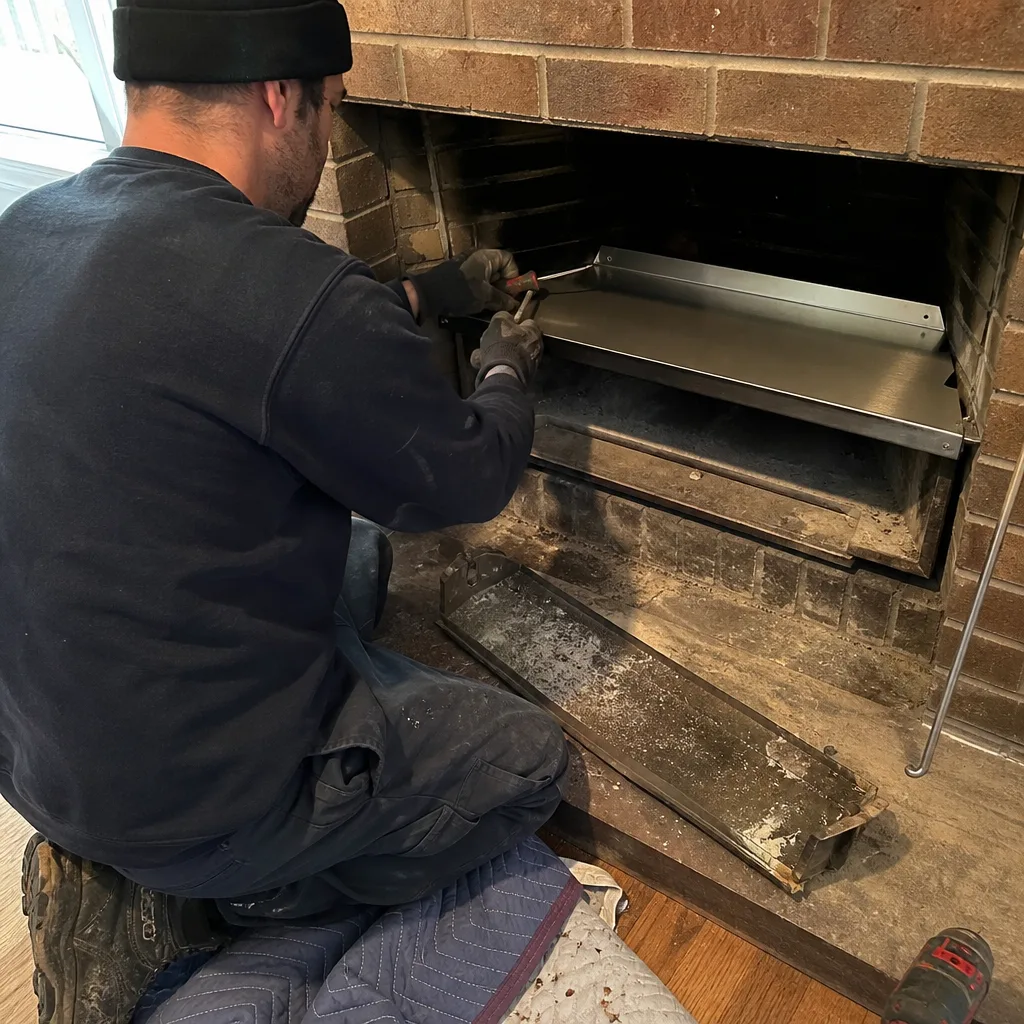
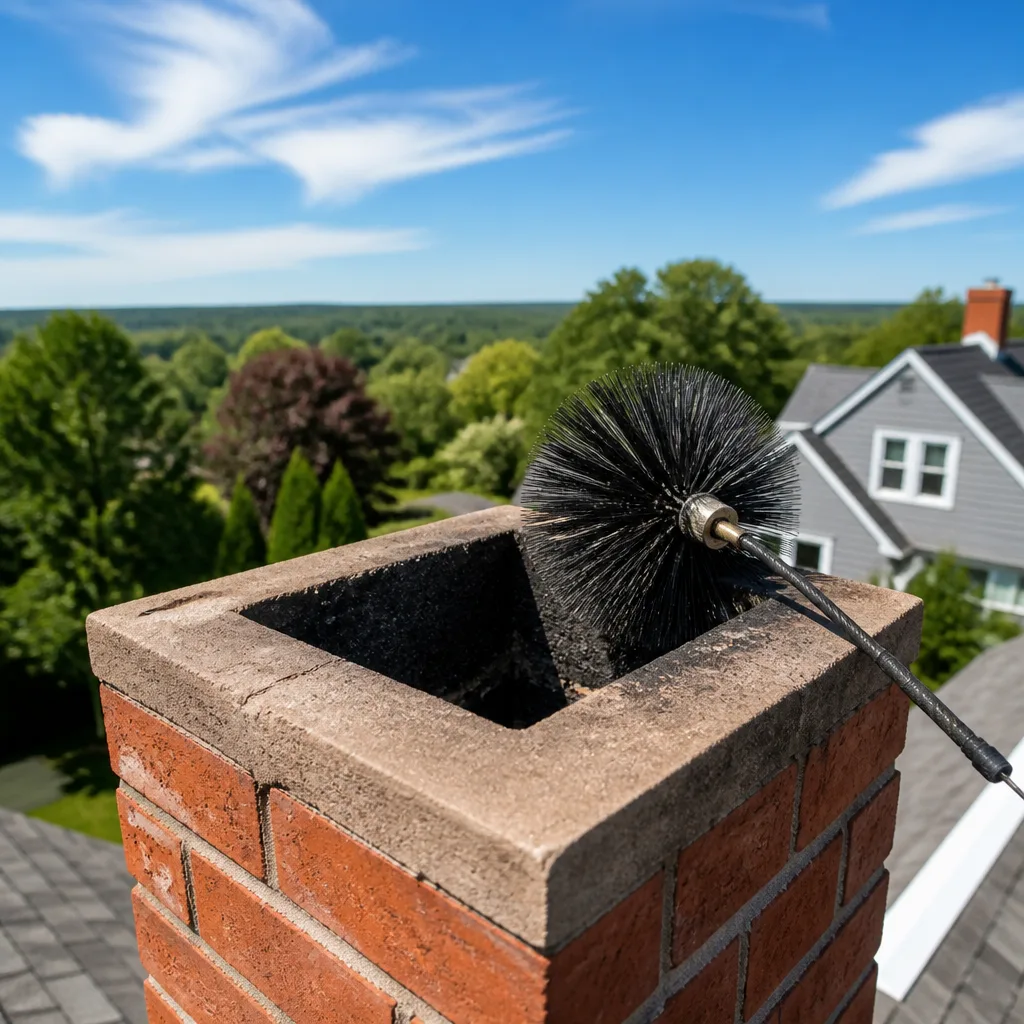
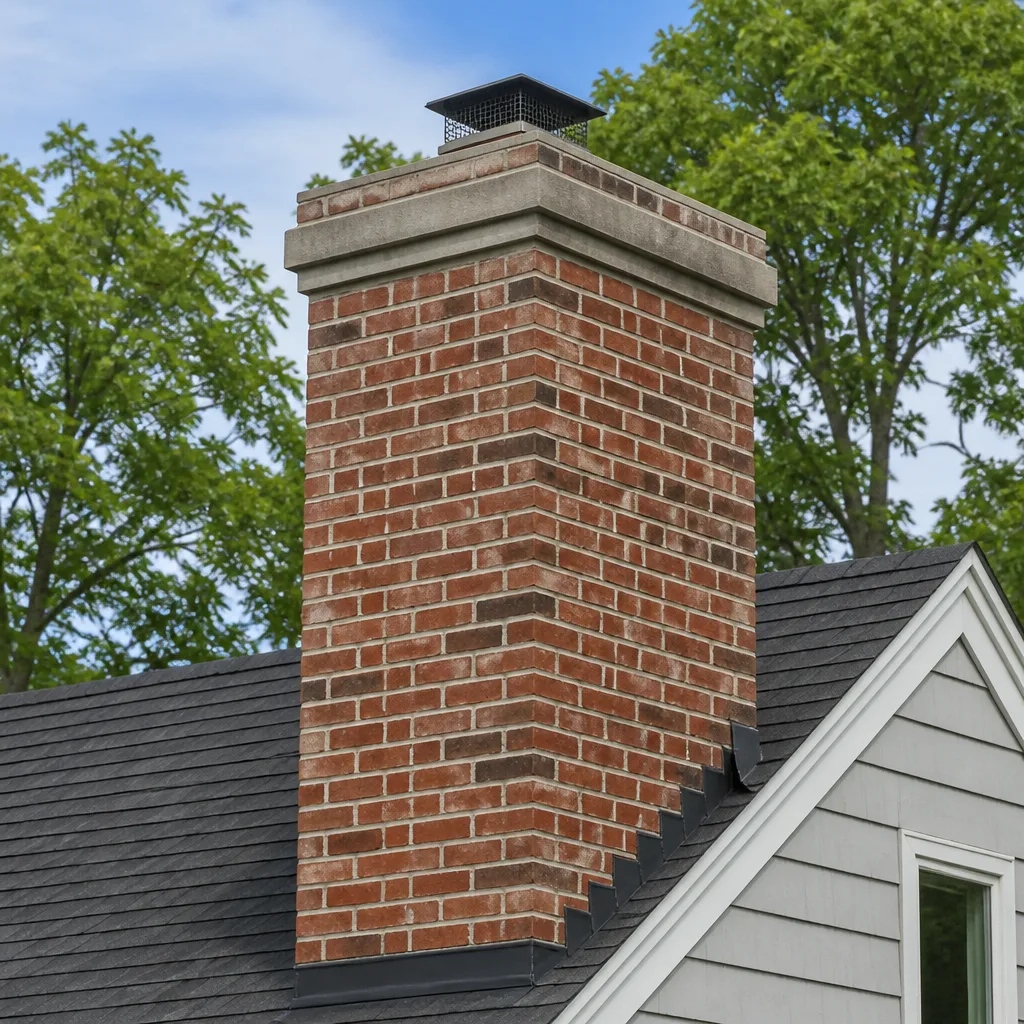
Level 1 sweep and inspection to the NFPA 211 annual standard - flue, crown, cap, and flashing checked and photographed
Chimney sweep logs do not sweep chimneys. They loosen some creosote - which then falls where a brush and vacuum still have to collect it.
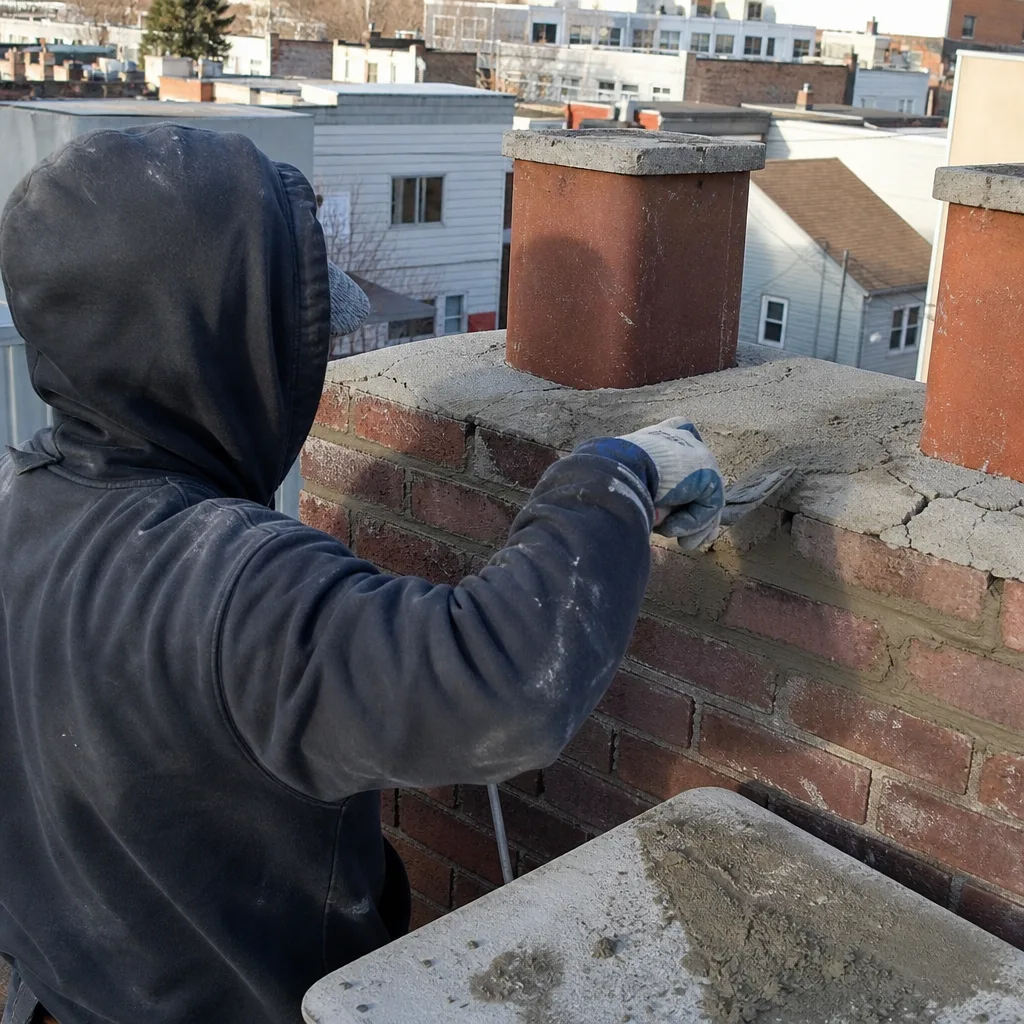
Caps & crowns
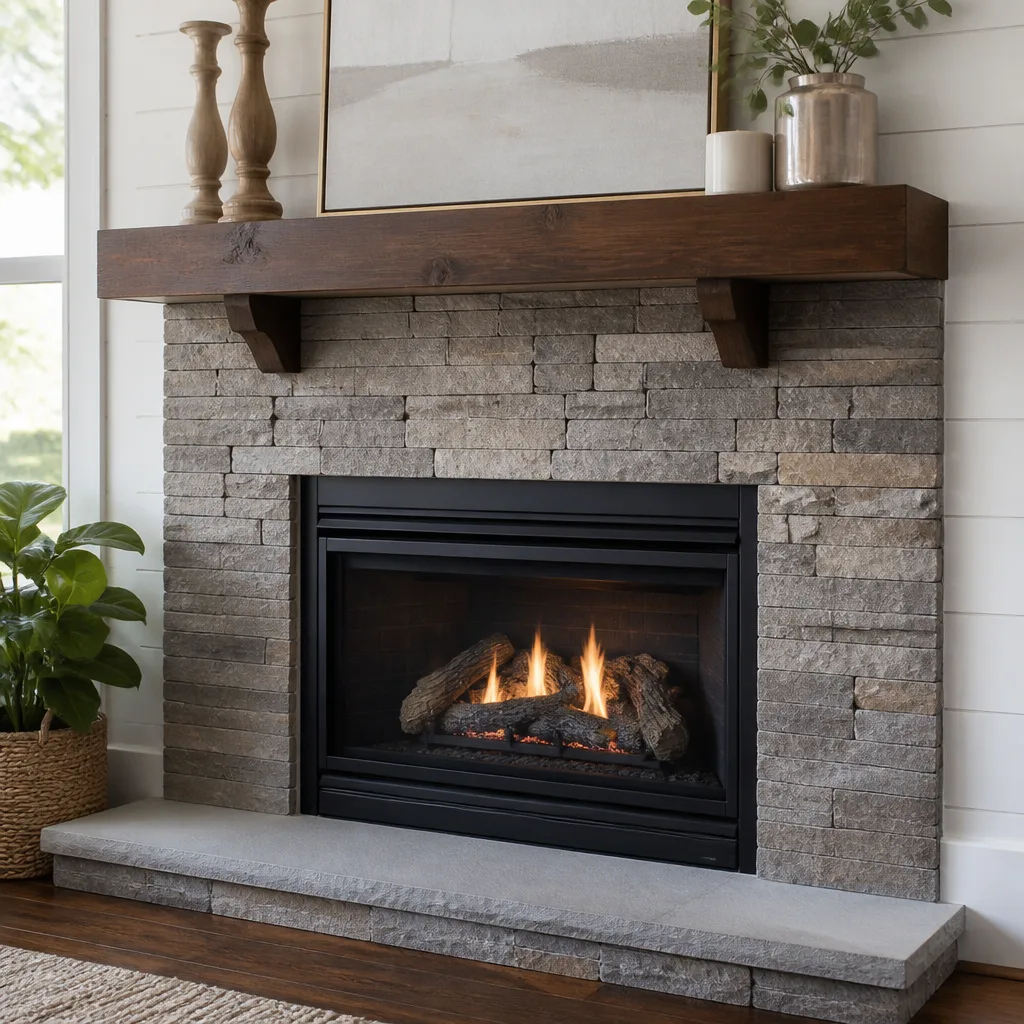
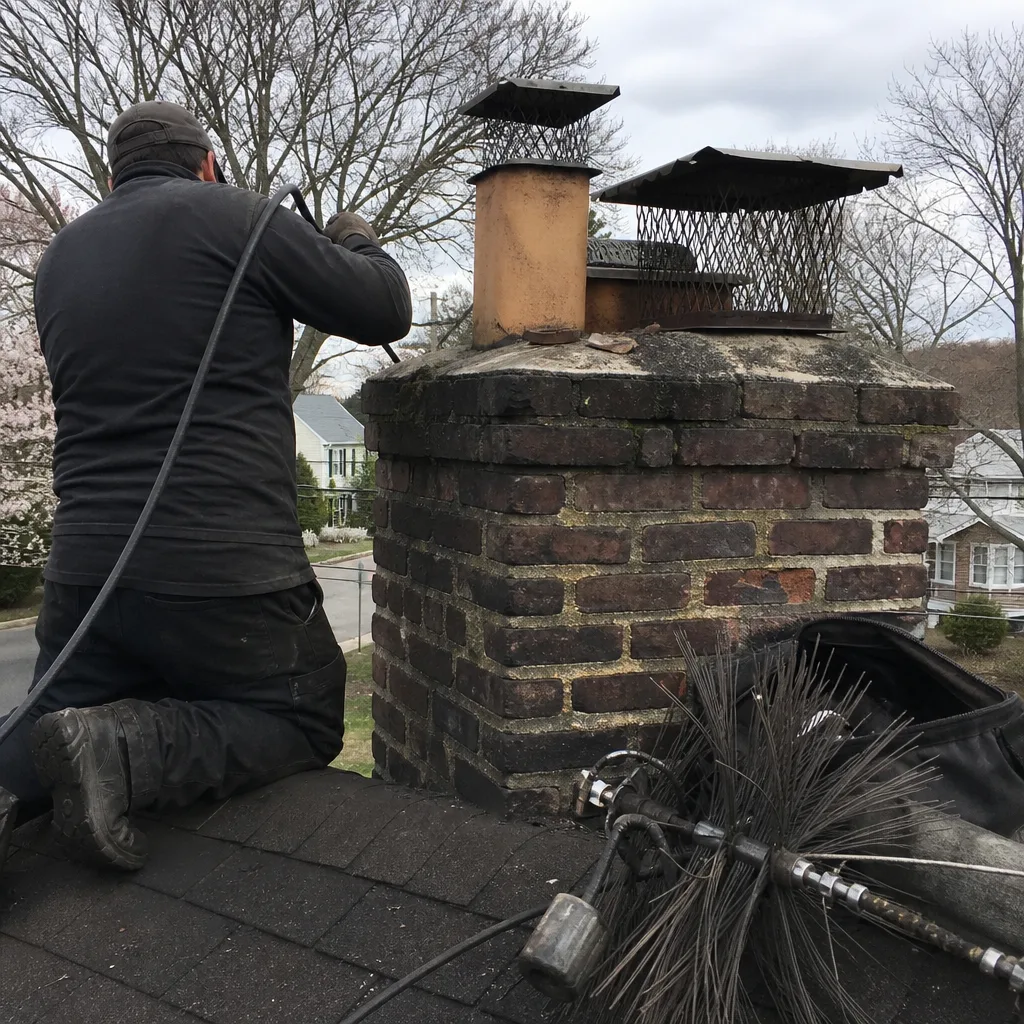 Before
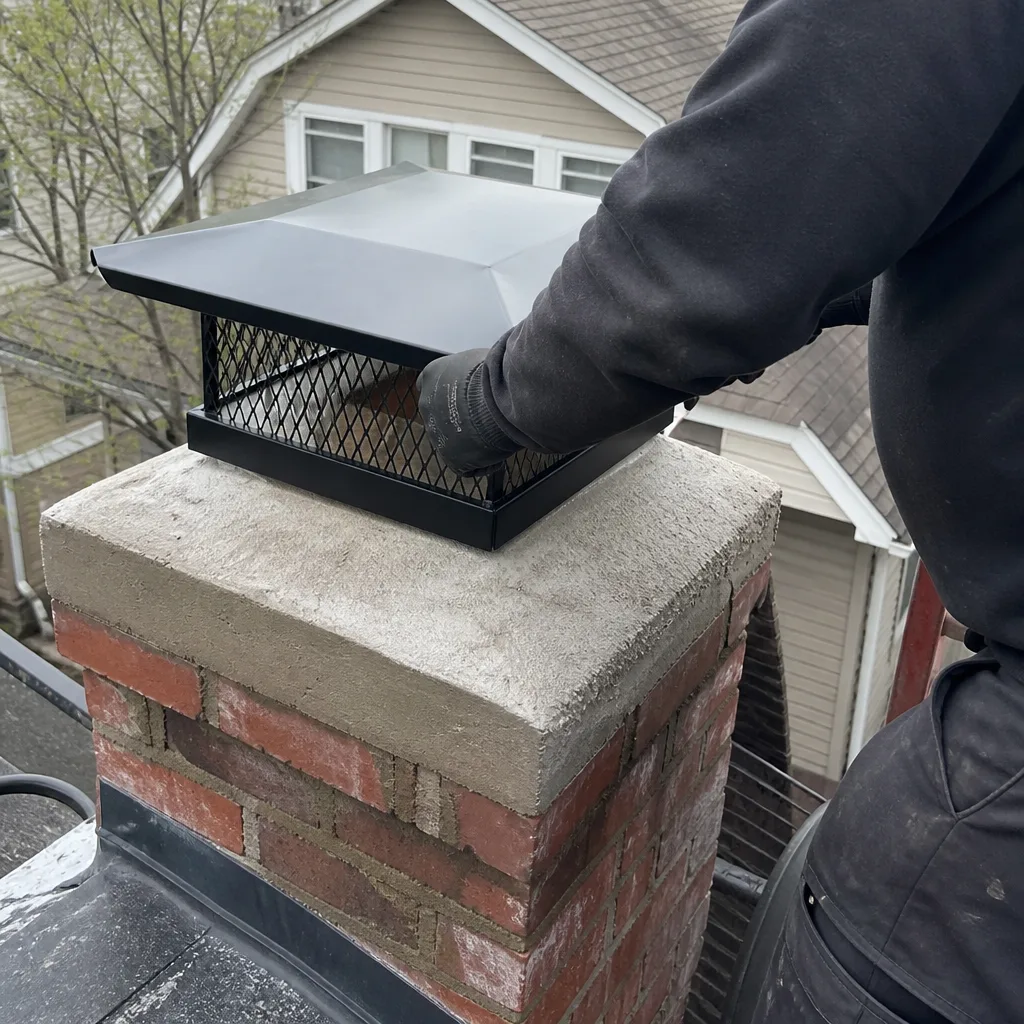 After
After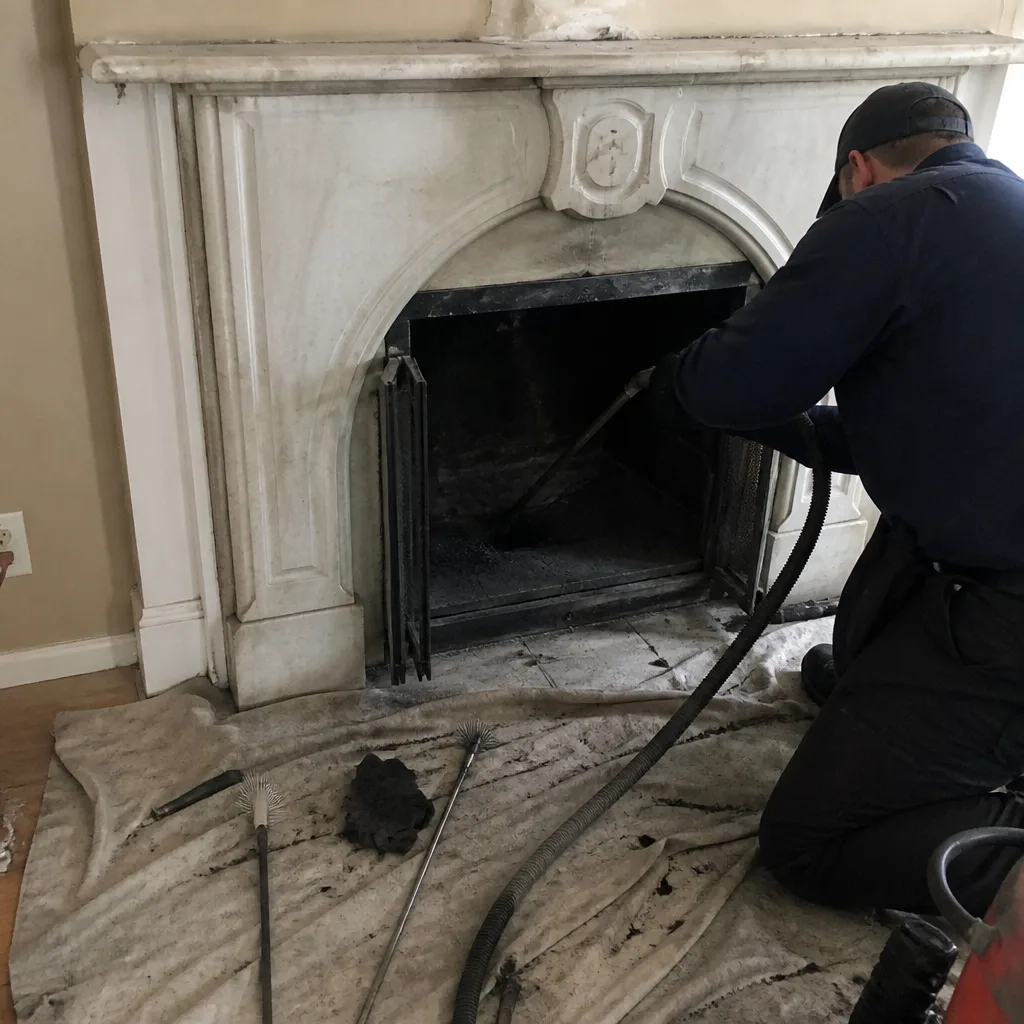 Before
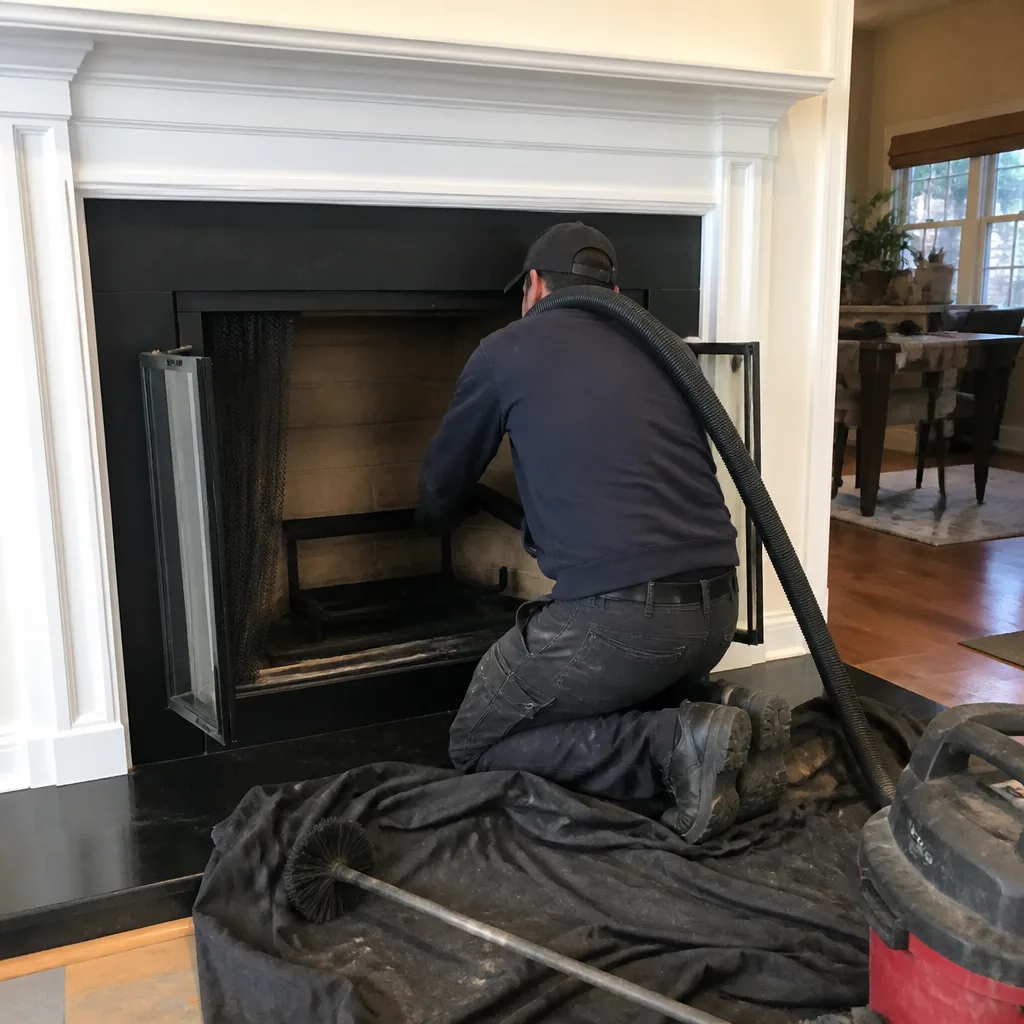 After
After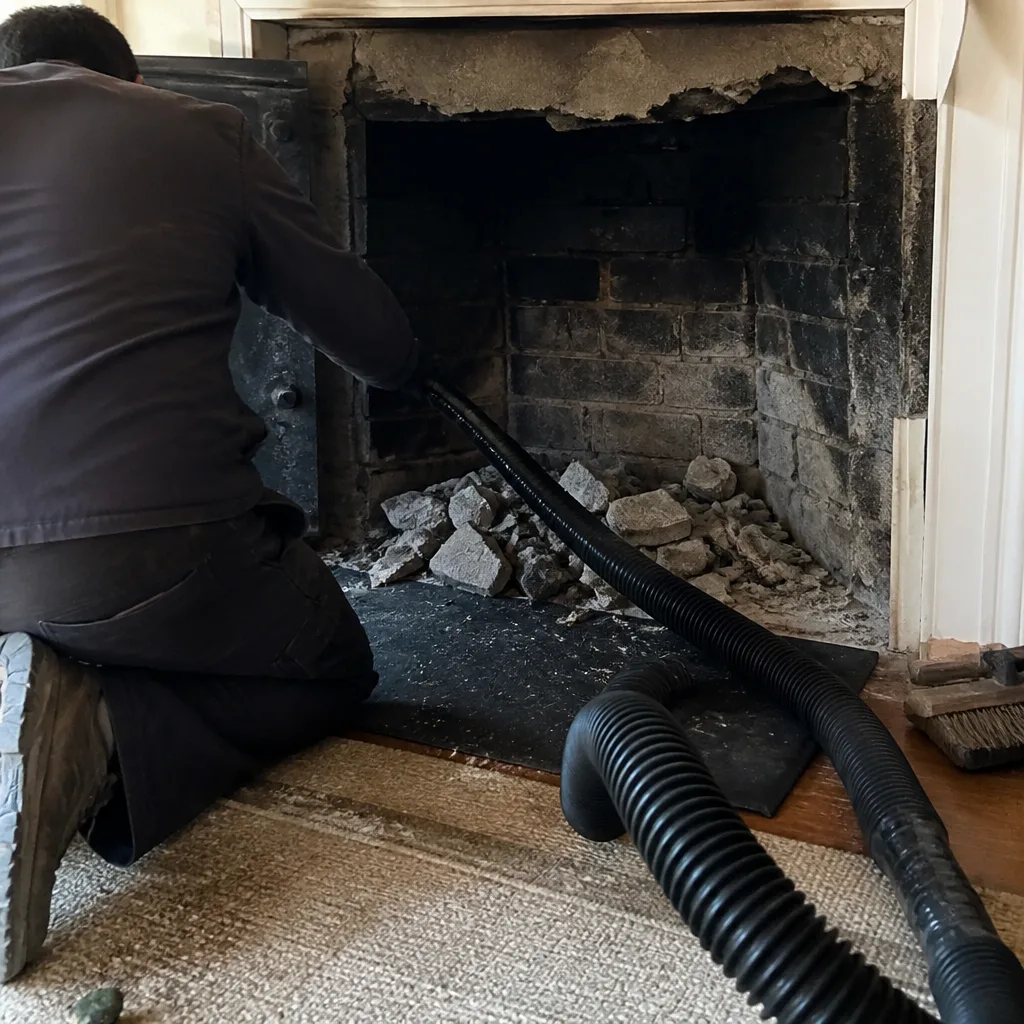 Before
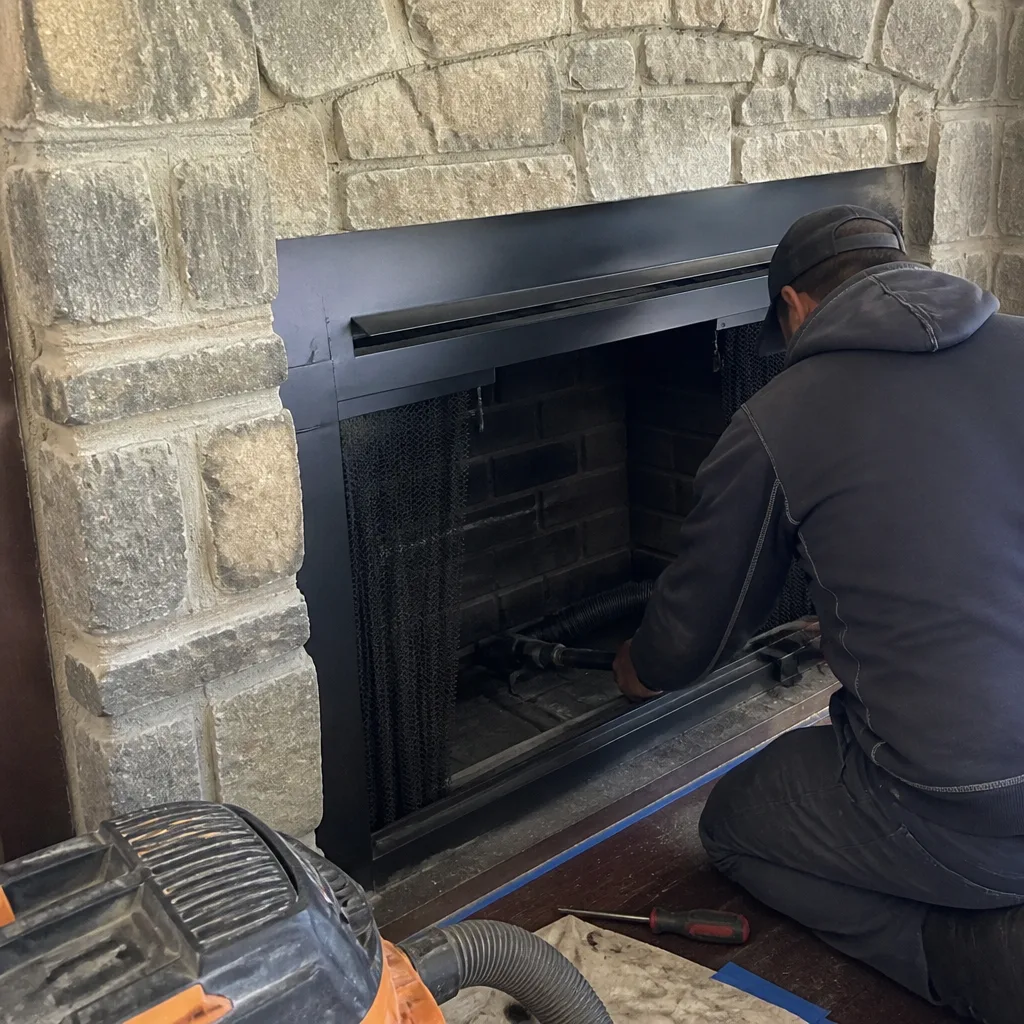 After
AfterChimney Cleaning & Sweep Maintenance Checklist for Manhattan Homeowners
Most chimney maintenance checklists were written for single-family homes burning seasoned cordwood. If your fireplace is in a 1910 Manhattan rowhouse that runs gas logs through a clay-tile liner, that checklist skips the three items that matter most. What actually accumulates inside your flue depends on what you burn, what your liner is made of, and who else shares the masonry. This guide is organized by those variables, not by calendar month. You’ll learn what to check, what evidence proves each item was done, and when a Manhattan chimney needs more than a standard Chimney Cleaning & Sweep.
Quick Answer
A Manhattan chimney maintenance checklist should be organized by fuel type and liner material, not by season. Wood-burning fireplaces need annual sweeping and creosote inspection, gas fireplaces need venting and moisture checks every 1-2 years, and any clay-tile liner over 40 years old needs camera inspection before you assume a cleaning is enough. Manhattan co-op and condo owners should add board documentation to every service visit.
Table of Contents
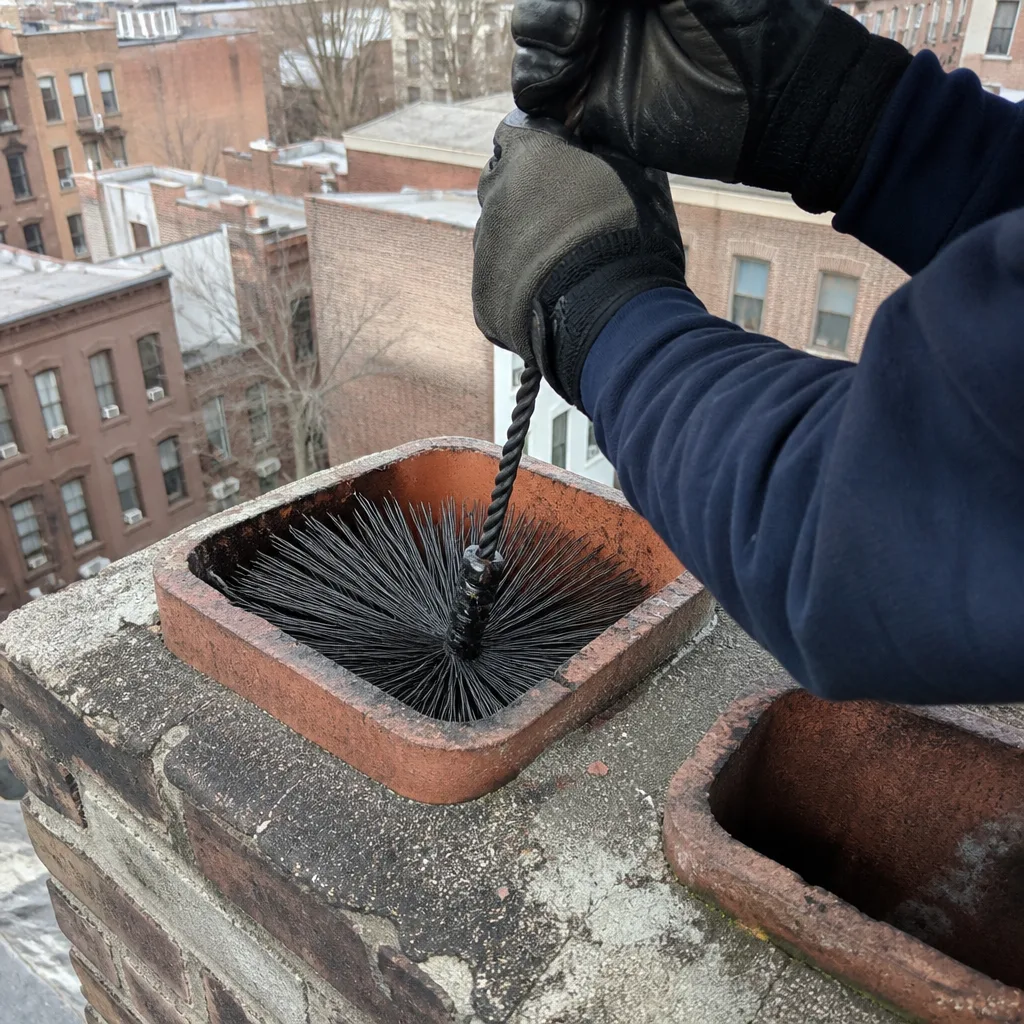
- How Fuel Type Changes Your Checklist
- Liner Material: Clay Tile, Stainless, or Poured
- Co-op and Condo Owners: The Documentation Checklist
- How to Verify Each Checklist Item Was Actually Done
- Five Conditions That Escalate a Cleaning to a Level 2 Inspection
- What Records to Keep, and Why They Matter
- When to Schedule in Manhattan
BeforeAfterHow Fuel Type Changes Your Checklist
The first question isn’t “when was the chimney last cleaned?” It’s “what is going through it?” A wood-burning fireplace in a Greenwich Village brownstone produces creosote, a tar-like residue that condenses on flue walls as smoke cools. A gas fireplace in a Murray Hill high-rise produces mostly water vapor and trace acids. The maintenance tasks are different, and so are the failure modes.
Wood-burning fireplaces need the most attention because creosote is combustible. Creosote is classified in three stages: Class I is a light, flaky soot that brushes off. Class II is a granular, crunchy deposit that requires rotary tools. Class III is a hard, glossy glaze that often requires chemical treatment or removal by specialized methods. A wood chimney in Manhattan should be swept after every cord of wood burned, or at minimum once per year.
- Check the damper operation before the first fire of the season. A damper that doesn’t fully open sends smoke into the room; one that doesn’t close wastes heated air all winter.
- Inspect the firebox for cracked brick or deteriorated mortar joints. Small cracks let heat reach combustible framing behind the firebox.
- Check for creosote accumulation at the smoke chamber, the area above the damper where smoke slows before entering the flue. This is where Class II and III creosote most often builds in Manhattan rowhouse chimneys.
- Verify the chimney cap is in place. Open flues admit rain, pigeons, and in Manhattan, the occasional squirrel.
Gas fireplaces don’t produce creosote, but they produce something else: acidic condensation. When gas burns, it releases water vapor and trace nitrogen and sulfur compounds. In a cold Manhattan flue, that vapor condenses into a mildly acidic liquid that attacks mortar and clay tile from the inside. We’ve seen gas chimneys that haven’t been touched in a decade with the flue liner crumbling from acid attack while the homeowner assumed no smoke meant no problem.
- Inspect the flue for condensation damage every 1-2 years, even if you never see smoke.
- Check the gas logs for proper flame color. A yellow, lazy flame often means incomplete combustion and higher carbon monoxide output.
- Verify the venting is unobstructed. Birds nest in Manhattan gas flues regularly, especially in buildings where the chimney is used seasonally.
- Test the CO detector in the room with the fireplace. This is a maintenance task, not an accessory.
Oil-burning systems are less common in Manhattan residential buildings but still exist in older co-ops and townhouses. Oil produces soot that is dense and clings to flue walls, plus sulfur compounds that accelerate liner corrosion. If your building burns oil, the chimney needs annual sweeping and the flue should be inspected for corrosion every two years minimum.
Liner Material: Clay Tile, Stainless, or Poured
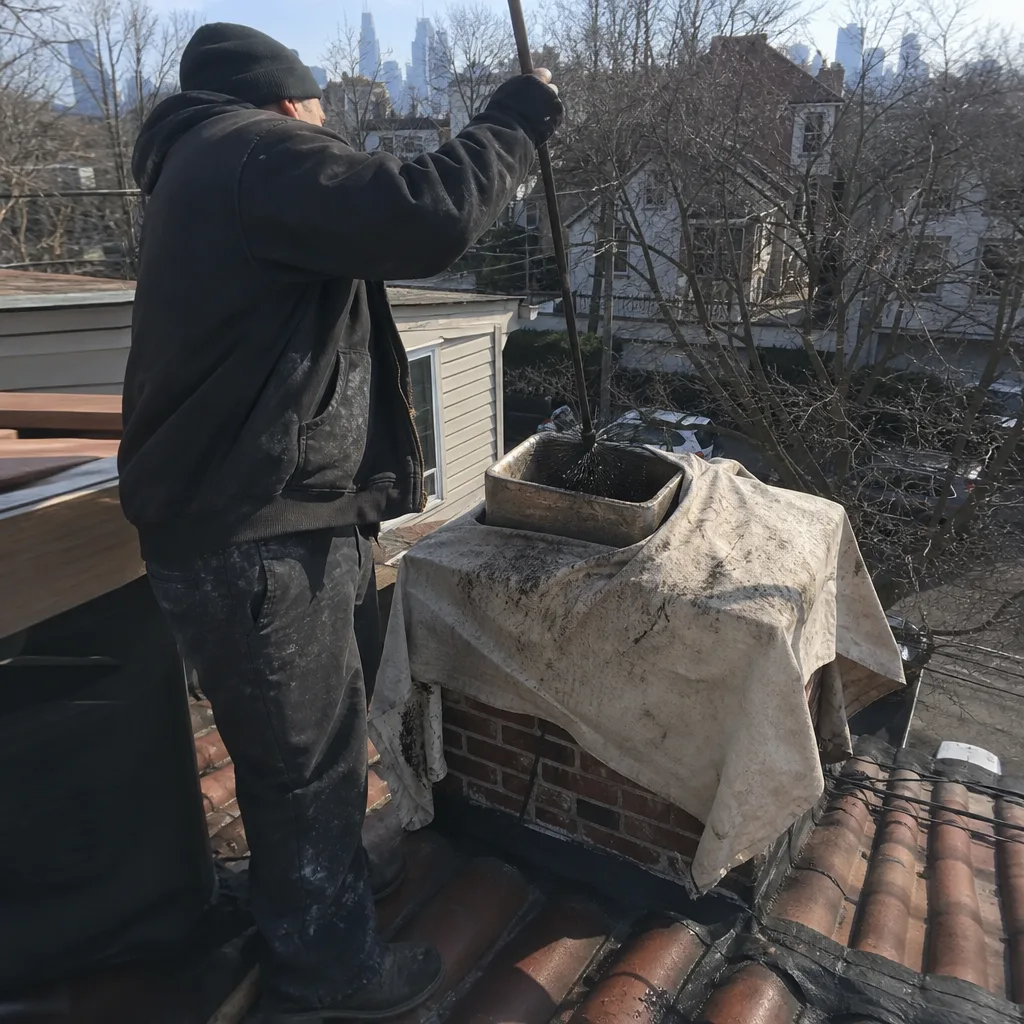
The liner is the surface that actually contains the smoke, heat, and corrosive gases. What it’s made of determines what you should look for during every chimney cleaning in Manhattan.
Clay tile liners are the standard in pre-1980 Manhattan construction. They’re durable but brittle. Manhattan’s freeze-thaw cycles, combined with the thermal shock of fireplace use, cause hairline cracks that widen over time. Once a clay tile cracks, hot gases and sparks can reach the brick surrounding the flue, which was never meant to handle that exposure. A cracked clay tile liner is the single most common escalating finding we document in Manhattan rowhouses built before World War II.
What to check:
- Look for spalling, the flaking or chipping of clay tile surfaces. Spalling is visible evidence of moisture damage or thermal stress.
- Check the mortar joints between tile sections. Eroded joints allow gas and moisture to bypass the liner entirely.
- If the home was built before 1940, assume the original liner is still in place unless records say otherwise. Clay tile liners in Manhattan chimneys of that era are often unlined above the roofline, which means the top section of the flue is raw brick.
- Request a camera scan if the flue is over 40 years old. This is the only way to document hairline cracks that brushing won’t reveal.
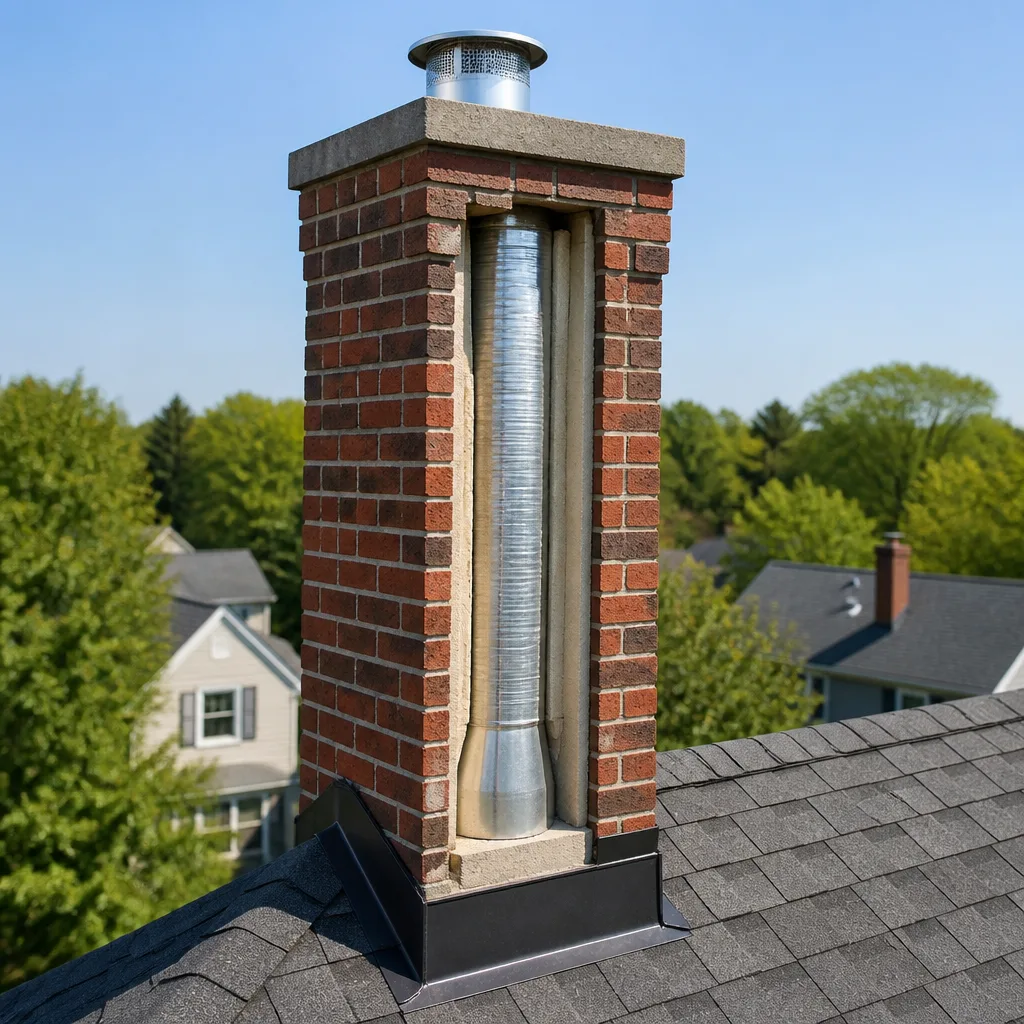
Stainless steel liners are common in newer Manhattan installations and as retrofits. They resist corrosion better than clay and are flexible enough to handle minor masonry movement. But stainless liners can still fail, usually at the seam welds or at the connection to the appliance collar.
What to check:
- Inspect the liner seams for separation or rust staining, especially after the first five years in service.
- Verify the liner is insulated if it runs through an exterior chimney wall. Uninsulated stainless liners in Manhattan’s winter temperatures condense more heavily, which shortens liner life.
- Check the crown-to-liner connection, the point at the top of the chimney where water would enter if the seal failed.
Poured-in-place liners, such as the chimney repair systems using HeatShield or Gelco materials, form a continuous ceramic or refractory lining inside the existing flue. They seal cracks and restore structural integrity without removing the original chimney. These liners are durable but should still be inspected every two years to confirm the casting was complete and no new voids have developed.
What to check:
- Confirm no voids or pinholes exist at the top and bottom of the pour, where incomplete casting is most common.
- Check for discoloration that would suggest moisture penetration behind the liner.
- Verify the manufacturer’s warranty documentation matches the liner product actually installed.
Co-op and Condo Owners: The Documentation Checklist
Manhattan has one of the highest concentrations of co-op and condo housing in the country. If you own a unit with a fireplace, you face a set of maintenance obligations that single-family homeowners never see. The checklist below is what we tell co-op and condo owners to request from any sweep company, because these are the documents your board or managing agent will ask for.
- Written inspection report with photos. Most Manhattan co-op boards require documentation of the flue’s condition before, during, and after service. A camera-scan photo record satisfies this. Under Clause 4 of the Haven Standard, this is included on every job, and we’ve provided it continuously since 2009.
- Written scope of work, signed before any work begins. Clause 1 of the Haven Standard requires a written price and written scope delivered before the technician starts. Your board will want to see this, not an invoice after the fact.
- Certificate of insurance, naming the building as additionally insured if required. Many Manhattan buildings demand this before a contractor enters the building. Ask the sweep company for it before scheduling.
- Shared flue notification. If your Manhattan building has a common chimney that serves multiple fireplaces, work on your unit’s portion may affect neighbors. The managing agent should be notified in writing before work starts.
- Post-service documentation packet. What to hand your managing agent after service: the written report, the photo record, the technician’s signature, and the warranty, if applicable.
Why boards require this: a chimney fire in one unit can spread through a shared flue to other units, and the building’s master insurance policy will want to see maintenance records if a claim is filed. The more documentation you keep, the less exposure you have.
How to Verify Each Checklist Item Was Actually Done
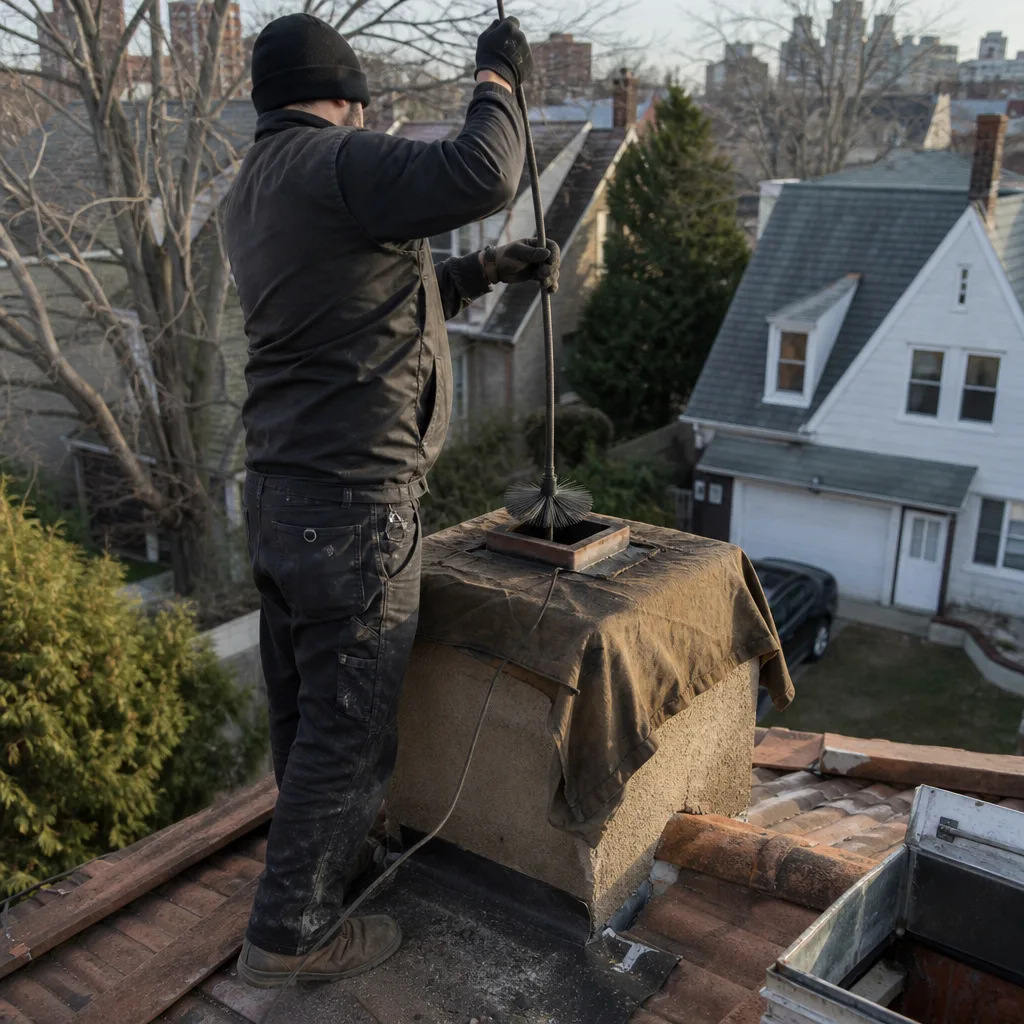
Here’s the uncomfortable truth about chimney cleaning: it’s easy to do a partial job and call it complete. A technician can brush the first six feet of flue, skip the smoke chamber, and walk out with a bill in hand, and you’d never know until a problem develops. Here’s what physical evidence or report notation confirms each checklist item was actually completed.
- Full-height flue brushing: Ask for a photo taken from the top of the chimney looking down, or from the camera at the bottom looking up, showing the flue walls after brushing. If the technician won’t provide post-cleaning photos, the cleaning wasn’t documented.
- Smoke chamber cleaning: The smoke chamber is above the damper and below the flue, and it’s the most frequently skipped area. Confirm the report explicitly notes “smoke chamber brushed and inspected.” If it doesn’t say that, it probably wasn’t done.
- Creosote classification: The report should state the creosote class found, if any (Class I, II, or III), before and after cleaning. A report that says “cleaned chimney” without a classification tells you nothing.
- Liner condition documentation: If a camera scan was done, the report should include captured images of the flue liner at the top, middle, and bottom. If no camera was run, the report should say so plainly, because an unlined or cracked flue cannot be verified by eye.
- Damper operation check: The report should note whether the damper opens, closes, and seats properly. A damper that doesn’t seat leaks air all winter.
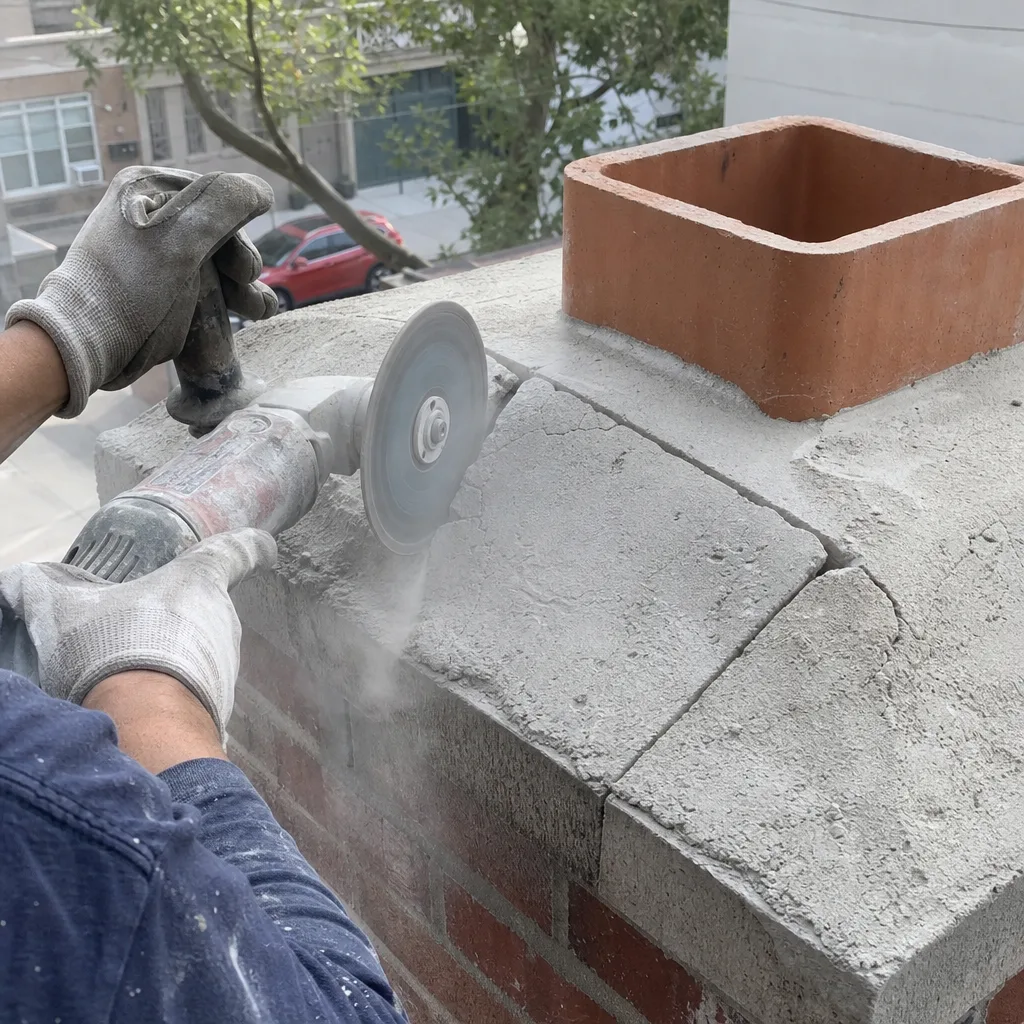
- Cap and crown inspection: The technician should specifically note whether the cap is present and secure, and whether the crown (the concrete slab at the top of the chimney) has cracks. Crown cracks are a major source of water damage in Manhattan chimneys.
This is the difference between a sweep and an inspection. A sweep removes material. An inspection documents condition. At Level Two Chimney Manhattan, every cleaning includes the camera-scan documentation under Clause 4 of the Haven Standard. The photo record is yours to keep, and it’s the evidence you’ll need for a board, an insurer, or a future buyer.
Five Conditions That Escalate a Cleaning to a Level 2 Inspection
NFPA 211, the standard that governs chimney and venting system inspection, defines two levels of inspection. Level 1 is a visual check of accessible portions of the chimney, done during routine cleaning. Level 2 is more involved: it adds camera scanning of the flue interior, inspection of the attic and crawlspace portions of the chimney, and assessment of clearances to combustibles.
These five conditions automatically trigger a Level 2 inspection under NFPA 211:
- A change in fuel type. Converting from wood to gas, or gas to wood, changes the demands on the flue and requires re-evaluation. Many Manhattan homeowners converted from wood to gas decades ago without an inspection, and those flues are frequently in poor condition.
- A change in the appliance. Replacing the fireplace insert, stove, or furnace that vents into the chimney is a trigger. The new appliance may have different venting requirements than the old one.
- A chimney fire or suspected chimney fire. If you’ve heard a loud roaring sound from the chimney, seen flames at the chimney top, or found creosote debris on the roof, the flue needs Level 2 evaluation before any further use.
- A real estate transfer. Manhattan co-op and condo sales frequently require a Level 2 inspection as part of the due diligence package. If you’re buying or selling, the chimney will likely be inspected before closing.
- An external event that could have damaged the chimney. A lightning strike, earthquake, nearby construction blasting, or a chimney cap blown off in a storm all warrant Level 2 inspection. Manhattan’s constant building activity means nearby demolition and foundation work can shift an older chimney enough to open hairline cracks.
If any of these conditions apply to your Manhattan home, schedule a Level 2 inspection rather than a standard cleaning. The camera documentation from a Level 2 is exactly what you’d want to show an insurer or a board if a question ever came up.
What Records to Keep, and Why They Matter
Manhattan real estate is a document-driven market. When you sell your co-op, your board will want maintenance records. If you file an insurance claim for chimney damage, the insurer will want to see that the chimney was properly maintained. Here’s the retention format we recommend to every Manhattan homeowner we serve, along with more guides & resources.
Keep for as long as you own the home:
- The written inspection report from every chimney cleaning or inspection
- The camera-scan photo record from every visit
- The written scope and price for any repair work performed
- The written warranty for any liner installation, crown repair, or cap replacement
- The technician’s name and license number
Keep for seven years minimum:
- Invoices and payment receipts for any chimney work
- Certificate of insurance from the service company
- Any correspondence with your board or managing agent about chimney work
What an insurance claim or building sale will require:
- Proof that cleaning was performed at recommended intervals (annually for wood, every 1-2 years for gas)
- Documentation that any identified defect was addressed or monitored
- The Level 2 inspection report, if one was triggered by any of the five conditions above
- Warranty documentation for liner or crown work
Here’s the practical point: a chimney fire in a Manhattan rowhouse can become a building-wide issue if the flue is shared. Your records are not just your protection. They’re part of the building’s documentation.
When to Schedule in Manhattan
The calendar doesn’t determine what your chimney needs, but it does affect how easy it is to get service. Here’s the Manhattan-specific timing reality.
September through November is peak chimney sweeping season. Every Manhattan sweep company is booked out weeks in advance. If you schedule in October, you may wait until December. If your chimney hasn’t been cleaned in two or more years, schedule in July or August, when crews are available and can address any findings before the burning season begins.
Spring is the best time to address repairs. After a winter of freeze-thaw cycling, crown cracks and spalling brick are visible and the urgency of the heating season has passed. Repair work in spring means your chimney is ready in autumn without a rush.
Fall is the minimum. If you’ve burned wood at any point in the previous year and haven’t had the chimney swept, schedule before the first fire. The creosote from last season isn’t going anywhere on its own.
Manhattan’s climate adds one variable that many checklists ignore: the freeze-thaw cycle. Water enters through crown cracks or failed mortar joints, then expands when it freezes, widening the cracks. After a few winters, what started as a hairline crown crack becomes a full-thickness masonry failure. The timing of your maintenance matters less than whether you catch water entry before another winter passes.
Common Mistakes to Avoid
- Skipping the smoke chamber. The smoke chamber is above the damper and below the flue, and more creosote accumulates there than anywhere else in a Manhattan rowhouse chimney. Ask specifically whether it was cleaned.
- Assuming gas fireplaces don’t need chimney service. Gas produces acidic condensation that attacks clay tile liners from the inside. Every gas chimney in Manhattan should be inspected every 1-2 years.
- Trusting a flashlight inspection instead of a camera scan. A flashlight can’t see around the bends and offsets in a typical Manhattan chimney. Hairline cracks in clay tile liners are invisible without a camera.
- Not documenting the cleaning. A receipt that says “chimney swept” is not documentation. Ask for a written report with photos, and keep it.
- Waiting until October to call. Manhattan sweep companies are booked solid from September through December. Schedule in summer for the best availability.
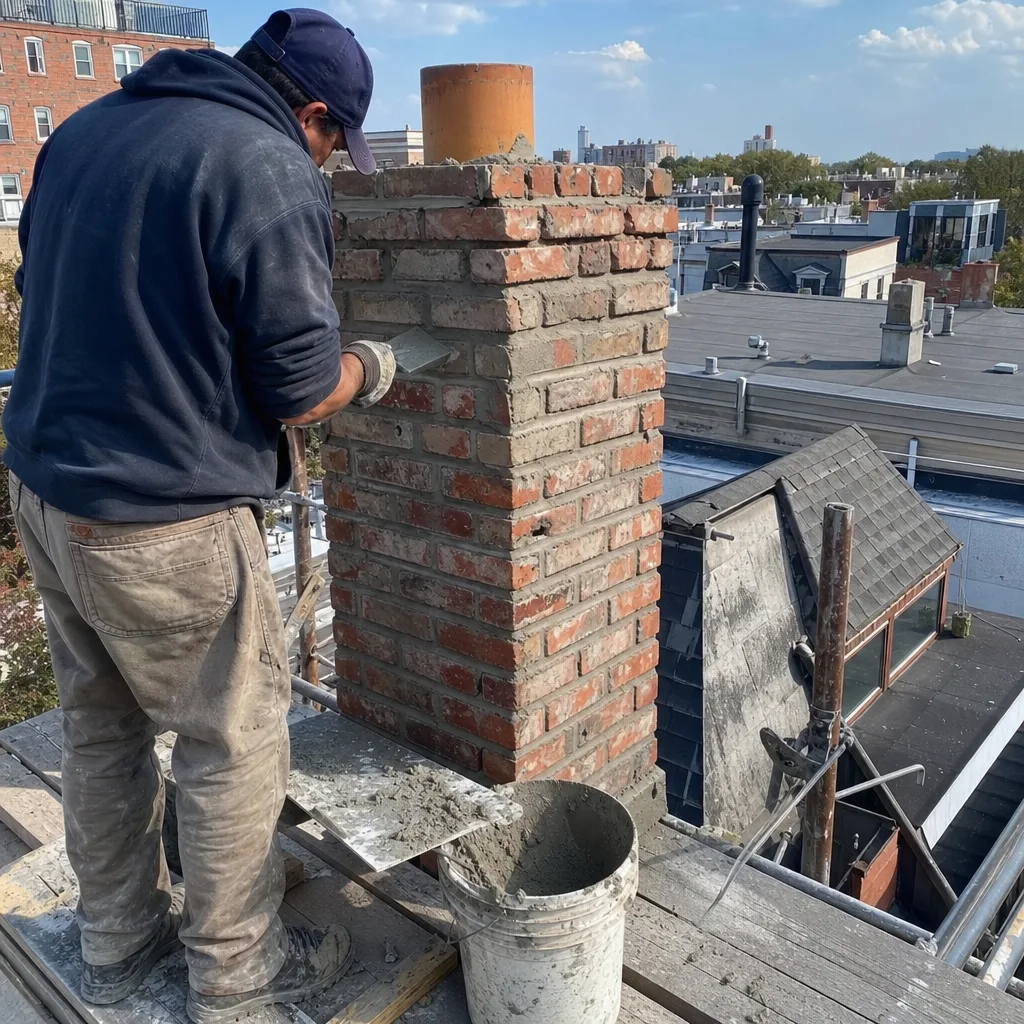
- Ignoring crown cracks. The crown is the concrete slab at the chimney top. Small cracks admit water, and water damage is the leading cause of chimney deterioration in Manhattan’s freeze-thaw climate.
- Failing to notify your co-op board. Shared flues mean your chimney work can affect neighbors. Document the notification, and provide the board a copy of the written report after service.
When to Call a Professional
Call a professional chimney company when you see any of these conditions in your Manhattan home: visible creosote buildup in the firebox or damper area, white staining on the exterior chimney brick (efflorescence, a sign of water entry), a damper that won’t open or close completely, smoke that enters the room during a fire, a strong odor from the fireplace when it’s not in use, or any sign of water in the firebox. These are not DIY items, and the flue interior is not safely accessible without professional equipment. Level Two Chimney Manhattan offers free estimates in Manhattan. Call (862) 319-8047 to schedule.
Frequently Asked Questions
A standard chimney sweep and Level 1 inspection in Manhattan typically costs between $225 and $375, depending on flue height, accessibility, and condition. A Level 2 inspection with camera scan, which is included on every Level Two Chimney Manhattan visit, typically adds $100 to $200 to the base service. Manhattan pricing runs higher than the national average because of building access requirements, union building rules, and the age and condition of the masonry. Call (862) 319-8047 for the exact written price on your home. Estimates are free, and the price is always delivered in writing before work starts.
A wood-burning chimney should be swept after every cord of wood burned, or at minimum once per year. A gas-burning chimney should be inspected every 1-2 years. Oil-burning systems need annual sweeping. The interval depends on fuel type and liner material, not on a fixed calendar. Call (862) 319-8047 for a written quote. Our camera-scan inspection is included on every visit so you know exactly what was found and what it means.
You only need a new liner if the camera scan shows cracks, gaps, or corrosion that compromises the flue. At Level Two Chimney Manhattan, we don’t recommend a liner replacement without camera evidence you can see yourself. The photo record is included on every visit under Clause 4 of the Haven Standard. If the liner is intact, we’ll tell you it’s intact. Call (862) 319-8047 for a written quote, and we’ll tell you plainly whether the liner can wait.
Creosote accumulates and becomes more difficult to remove. At Class II or III, the risk of chimney fire rises significantly. Gas chimneys develop acid damage that eventually opens cracks in the liner, and those cracks let hot gases reach combustible framing. A chimney fire in a Manhattan rowhouse can involve shared walls and multiple units. The cost of a cleaning is a fraction of the cost of a rebuild. Call (862) 319-8047 for a free estimate and written price in Manhattan.
Most Manhattan co-op boards require documentation of chimney condition at purchase, and many require periodic maintenance records as a condition of ongoing occupancy. The exact requirement varies by building, but the safest practice is to request a written report and photo record after every cleaning, and hold onto it for as long as you own the unit.
A Level 2 inspection includes everything in a Level 1, plus camera scanning of the flue interior, inspection of the attic and crawlspace portions of the chimney, and assessment of clearances to combustibles. NFPA 211 requires a Level 2 inspection when fuel type changes, the appliance changes, a chimney fire has occurred, real estate transfers, or external events may have damaged the chimney. Level Two Chimney Manhattan includes the camera-scan documentation on every visit, not as an optional add-on.
The Bottom Line
A Manhattan chimney checklist works only if it’s built around what’s in the flue: the fuel, the liner, the building’s age, and the ownership structure. Wood-burning fireplaces need annual sweeping and creosote classification. Gas fireplaces need venting and moisture checks every 1-2 years. Clay tile liners over 40 years old need a camera scan before you assume a cleaning is enough. Co-op and condo owners must keep written reports, photo records, and board notifications on file. And every checklist item should be verifiable with a photo, a report notation, or both. That’s the standard Manhattan homeowners should expect from any chimney company, and it’s what Level Two Chimney Manhattan home delivers under the Haven Standard: a written price before work starts, a camera-scan photo record when it’s done, and the 365-Day Done Right Promise on every job.
Written by Corrine Halstead, Owner at Level Two Chimney Manhattan, serving Manhattan since 2009.